In a sweeping series of coordinated intelligence-led operations across Kaduna State, Nigerian security forces have successfully apprehended a suspected terrorist kingpin, two members of his immediate syndicate, a female ammunition courier, and a suspected logistics supplier. The decisive military actions underscore the ongoing intensification of counterterrorism efforts in Nigeria’s volatile Northwest region, where state and federal forces continue to confront heavily armed criminal networks.
The operations were executed by troops belonging to the Joint Task Force (JTF) North West, operating under the aegis of Operation FANSAN YAMMA. According to official military disclosures, the multi-pronged campaign targeted known hideouts and transit corridors across three major local government areas: Kubau, Igabi, and Birnin Gwari. The successful raids reflect a growing reliance on actionable human intelligence, community partnerships, and rapid tactical deployment designed to dismantle the operational and logistical architecture of insurgent and criminal factions plaguing the region.
Chronology of the Operations
The intelligence-driven security sweep unfolded throughout Wednesday, September 9, 2026, culminating in a series of high-profile arrests that dealt a substantial blow to local threat networks. The sequence of events began in the early hours of the morning and extended late into the evening, showcasing the operational tempo and responsiveness of Operation FANSAN YAMMA personnel.
The first phase of the operation commenced in the early hours of Wednesday at Dabar Dabo, located within the Kubau Local Government Area of Kaduna State. Acting on verified intelligence regarding the convergence of high-value targets, troops of the Joint Task Force closed in on a suspected terrorist hideout. The raid resulted in the capture of a suspected terrorist kingpin alongside two key members of his syndicate. The primary suspect, whose identity has been withheld pending the conclusion of ongoing military investigations, is believed to have coordinated numerous attacks and criminal activities across the axis. All three individuals were swiftly secured and transferred to a military holding facility for rigorous interrogation and profiling.
Later the same day, a separate tactical operation was launched in the Igabi Local Government Area, focusing on the interception of illicit arms trafficking. Troops operating in the sector intercepted a 50-year-old female suspect who was subsequently identified as an active ammunition courier for terrorist cells operating within the Northwest. A thorough search of the suspect’s belongings revealed a cache of 300 rounds of live ammunition meticulously concealed within a travel bag.
Preliminary military debriefings traced the intricate transit route utilized by the courier. Investigators revealed that the suspect had originated her journey in Zamfara State—another major flashpoint for banditry and terrorism—before traveling to Lafia. In Lafia, she allegedly took possession of the 300 rounds of ammunition, intending to complete the final leg of her journey by delivering the lethal cargo to terrorist elements entrenched in the Birnin Gwari forest region of Kaduna State. The swift interception prevented the ammunition from reaching active combatants, potentially averting imminent violent attacks on civilian or military targets.
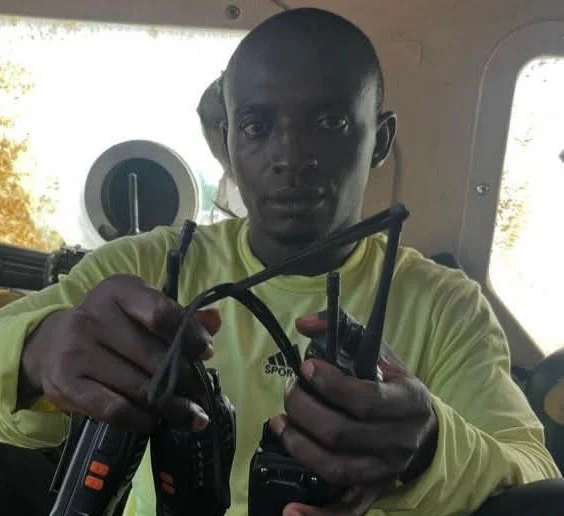
The final phase of Wednesday’s operations took place later in the evening within the Birnin Gwari Local Government Area. In this engagement, troops assigned to Sector 1 of the Joint Task Force partnered directly with a local community vigilante group. This cooperative effort yielded the arrest of a suspected terrorist logistics supplier. During a systematic search and subsequent interrogation, security forces recovered four communication devices suspected of being utilized by the terrorist network to coordinate movements, evade detection, and relay tactical intelligence. The suspect, alongside the confiscated communication hardware, was immediately taken into military custody for forensic analysis and further investigation.
Official Military Statements and Public Engagement
Details of the Wednesday operations were formally made public on Thursday through an official media briefing and statement issued by Lieutenant Colonel Aliyu Danja, the Media Information Officer for the Joint Task Force North West, Operation FANSAN YAMMA.
Lieutenant Colonel Danja emphasized the strategic significance of the arrests, framing them as a direct manifestation of the military’s unwavering commitment to disrupting terrorist networks, restricting the freedom of action enjoyed by criminal elements, and completely choking off the flow of illicit arms, ammunition, and operational logistics across the entire Joint Operations Area.
"These coordinated operations demonstrate our proactive posture in neutralizing threats before they materialize," Lieutenant Colonel Danja noted in his official briefing. He reiterated that all apprehended suspects remain in secure military custody, where they are undergoing comprehensive interrogations designed to extract intelligence that could lead to the unravelling of broader criminal syndicates and the location of hidden arms caches.
Beyond detailing the tactical successes of Operation FANSAN YAMMA, the military leadership used the platform to acknowledge and commend the civilian population for their continued support, resilience, and cooperation. Recognizing that counterterrorism is heavily reliant on timely and accurate information from grassroots communities, Lieutenant Colonel Danja issued a renewed call for vigilance. He urged residents across Kaduna State and the wider Northwest zone to remain alert and promptly report any suspicious movements, unfamiliar faces, or unusual activities to the nearest security agency or military outpost.
Background Context and Regional Security Dynamics
The latest arrests in Kaduna State occur within a complex and deeply challenging regional security landscape. Over the past decade, Nigeria’s Northwest and North-Central zones have experienced an alarming escalation in violence perpetrated by heavily armed groups commonly referred to locally as bandits, alongside splinter factions with ideological ties to broader extremist organizations. These groups operate primarily from dense forest enclaves—such as the Birnin Gwari forest in Kaduna, the Rugu forest spanning Katsina, Zamfara, and Kaduna states, and various sanctuaries in Niger State—using these terrain advantages to launch lightning raids, execute mass kidnappings for ransom, pillage rural agrarian communities, and ambush security patrols.
Kaduna State, owing to its strategic geographic positioning linking the northern commercial hubs to the federal capital territory, has frequently found itself at the epicentre of these security challenges. The western axis of the state, particularly Birnin Gwari and Igabi local government areas, has historically recorded high volumes of transit-related criminality, where illicit supply chains funnel weapons, fuel, and communication gadgets from distant states to foot soldiers embedded in the forests.
The formation and deployment of specialized multi-agency structures like the Joint Task Force North West, Operation FANSAN YAMMA, represent a strategic evolution in the Nigerian military’s approach to these decentralized threats. By integrating conventional military units with intelligence-gathering agencies and localized civilian security structures—such as community vigilante groups—the armed forces have sought to bridge the intelligence gaps that previously allowed criminal logistics networks to operate with relative impunity.
Fact-Based Analysis of Implications
The neutralization of a suspected terrorist kingpin alongside the interception of a high-volume ammunition courier and a logistics supplier carries profound tactical and strategic implications for the security architecture of Kaduna State and the broader Northwest region.
From a logistical standpoint, the seizure of 300 rounds of ammunition and multiple communication devices deals a direct blow to the operational readiness of insurgent cells in Birnin Gwari. Ammunition is a heavily guarded and tightly rationed commodity for non-state armed groups operating under sustained military pressure. Interrupting the supply lines that stretch across state borders—such as the Zamfara-Lafia-Kaduna corridor identified in this operation—degrades the capacity of these groups to sustain prolonged fire fights or execute complex tactical maneuvers. Furthermore, the recovery of communication hardware provides military intelligence units with valuable digital forensics, potentially yielding metadata, contact lists, and operational blueprints that can facilitate follow-up raids and preemptive strikes.
Strategically, the arrest of the female courier highlights a troubling tactical adaptation by criminal and terrorist networks: the recruitment of non-traditional demographics—such as women and elderly individuals—to serve as couriers in an effort to bypass routine security checkpoints where young males are subjected to rigorous profiling. The success of Operation FANSAN YAMMA in detecting this concealment method underscores the need for heightened vigilance and more sophisticated profiling techniques at security checkpoints across high-risk corridors.
Additionally, the active involvement of community vigilante groups in the apprehension of the logistics supplier in Birnin Gwari underscores the indispensable value of civil-military cooperation. In regions spanning vast expanses of rural terrain, conventional military forces alone cannot maintain a permanent presence in every settlement. The synergy between formal security forces and local informants creates an effective early-warning network that closes the operational blind spots exploited by criminal syndicates.
As Operation FANSAN YAMMA continues its clearance and intelligence-led operations across Kubau, Igabi, Birnin Gwari, and surrounding districts, the ultimate measure of success will depend on the thoroughness of the subsequent investigations and the judicial processing of the suspects. Sustaining this operational momentum will be critical to restoring lasting peace, securing vital agricultural and commercial trade routes, and enabling displaced populations to return safely to their homes in Kaduna State.