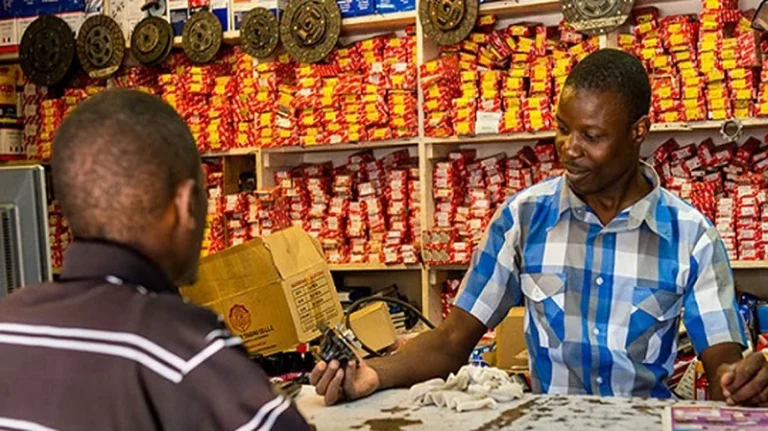
A stark reality is unfolding within Nigeria’s vital Micro, Small, and Medium-sized Enterprises (MSMEs) sector, as a significant majority grapple with meager daily profits and struggle to break free from a survivalist mode. According to the comprehensive "2025 Informal Economy Report" by Moniepoint, a leading financial technology provider, a substantial 38% of these small businesses are generating less than ₦10,000 (approximately $6.78 USD) in daily profit. This data, drawn from an extensive analysis of over 5 million businesses on Moniepoint’s platform and supplemented by direct surveys of small business owners nationwide, paints a concerning picture of an economic engine sputtering under immense pressure.
The report’s findings underscore a critical disconnect between revenue generation and actual profitability. While most informal businesses report daily revenues within the range of ₦20,000 ($13.56 USD) to ₦50,000 ($33.89 USD), the profit margins are alarmingly thin. The data reveals that a significant 70% of these enterprises earn less than ₦50,000 ($33.89 USD) in daily profit, with the median profit hovering precariously between ₦10,000 ($6.78 USD) and ₦20,000 ($13.56 USD). This suggests that for a vast number of Nigerian SMEs, the daily earnings are barely covering operational expenses, leaving little room for reinvestment, expansion, or the accumulation of a financial buffer.
The implications of this persistent profitability squeeze are profound. MSMEs are the undisputed backbone of the Nigerian economy, contributing an estimated 65% to the nation’s Gross Domestic Product (GDP) and serving as the primary source of employment, providing over 80% of all jobs. Their struggle for survival directly impacts national economic growth, job creation, and the overall livelihoods of millions of Nigerians. The current economic climate, characterized by escalating operational costs, appears to be stifling the potential of these crucial enterprises to transition from a state of mere existence to one of sustainable growth and wealth creation.
A Nation’s Economic Pulse: The Informal Economy Under Pressure
The Moniepoint report categorizes these businesses within the informal economy, a sector that, despite its often-unseen nature, forms the bedrock of Nigeria’s commercial activity. The study’s methodology, combining the analytical power of Moniepoint’s extensive transaction data with on-the-ground qualitative research, provides a robust snapshot of the sector’s health. The sheer scale of Moniepoint’s data, representing 5 million businesses, offers a statistically significant foundation, while the physical surveys add a crucial layer of human insight into the daily realities faced by entrepreneurs.
Further highlighting the precarious financial standing of many informal businesses, the report indicates that 44% of them are currently earning below ₦20,000 ($13.56 USD) daily. This figure reinforces the widespread nature of the profitability challenge, suggesting that even modest revenue streams are not translating into meaningful financial gains for a significant portion of the sector.
Gender Disparities in Profitability
A particularly concerning aspect of the report is the revelation of gender-based disparities in profitability within the SME sector. Women entrepreneurs appear to be disproportionately affected by the current economic headwinds. The data shows that 41% of women-owned SMEs earn less than ₦10,000 ($6.78 USD) daily, a figure that surpasses the 34% observed among men-owned businesses. Conversely, men-owned businesses demonstrate a greater capacity for higher earnings, with 16% reporting daily profits exceeding ₦50,000 ($33.89 USD), compared to only 10% of women-owned enterprises. This suggests that existing systemic challenges may be amplified for women entrepreneurs, potentially hindering their ability to scale and thrive in the competitive Nigerian market.
The Profit Squeeze: A Multifaceted Challenge
The core issue driving this profitability crisis is the relentless surge in operational costs. While a majority of informal businesses, 65%, reported revenue growth over the past year, a starkly lower proportion, 47%, witnessed a corresponding increase in profit. This divergence is directly attributed to a dramatic rise in the cost of doing business. An overwhelming 79% of businesses surveyed indicated that their operational expenses have escalated.
The primary drivers behind this cost inflation are multifaceted and interconnected. Higher supplier prices, exacerbated by global supply chain disruptions and currency depreciation, are a significant factor. Additionally, increased transportation costs, driven by fuel price hikes and logistical inefficiencies, add another layer of burden. The weakening of the Nigerian Naira has had a particularly devastating impact, inflating the cost of imported goods and raw materials, which are essential inputs for many businesses.
The Naira’s Descent and its Economic Fallout
The sharp depreciation of the Nigerian Naira in 2024 has been a pivotal factor in the current economic squeeze. Following the Central Bank of Nigeria’s relaxation of longstanding foreign exchange restrictions, the Naira experienced a dramatic devaluation, losing approximately 70% of its value against major currencies. This has had a ripple effect across the economy, particularly for an import-dependent nation like Nigeria.
Nurudeen Abubakar Zauro, Secretary/Head of the PreCEFI Secretariat and Technical Advisor to the President on Economic and Financial Inclusion in the Office of the Vice President, provided a stark assessment of this currency depreciation. He noted that the Naira’s value against the US dollar plummeted from approximately 460 NGN/USD in June 2023 to around 1600 NGN/USD by June 2025.
"This forced price hikes on imported commodities, reduced purchasing power, increased costs and bottlenecks in supply chain networks, logistics and transport, thereby causing many SMEs to become bankrupt and diminishing the contribution of the informal economy to the country’s Gross Domestic Product (GDP)," Zauro stated. His remarks highlight the systemic nature of the problem, where currency fluctuations translate directly into increased costs, reduced consumer demand, and ultimately, business failures.
The inflationary consequences have been severe, with Nigeria experiencing inflation rates soaring to a 28-year high in November 2024, largely fueled by escalating transportation costs. This environment makes it exceedingly difficult for businesses to absorb rising expenses without impacting their profit margins.
Eroding Savings and Growing Reliance on Internal Funds
The escalating cost of doing business is also directly impacting the ability of informal businesses to save. In the past year, only 74% of these enterprises managed to save money, a significant drop from the 92.4% reported in the previous year. This decline in savings capacity further limits their financial resilience and their ability to invest in growth.
When these businesses do save, their preferred channels remain cooperatives and digital banks, reflecting a growing trust in formal financial structures. The majority of these savings are strategically allocated towards business expansion (41%) or the purchase of essential goods and inventory (24%). However, with rising interest rates and more stringent lending conditions, the appetite for external borrowing has diminished.
"Given the aversion to borrowing that has risen in the past year, savings are the primary means by which these businesses access the funding they need to expand their operations or cater to emergencies," Moniepoint observed in its report. This underscores the critical role that internal savings play in the survival and potential growth of these enterprises in the current economic climate.
A Call for Policy Transformation: From Survival to Scalability
The findings of Moniepoint’s 2025 Informal Economy Report have ignited a strong call for a fundamental shift in government policy towards supporting Nigeria’s MSME sector. Experts and industry leaders are emphasizing the need to move beyond fragmented interventions and embrace coordinated, systemic measures that can unlock sustainable growth and foster greater financial inclusion.
Foyinsolami Akinjayeju, CEO of Enhancing Financial Inclusion & Advancement, stressed that government policies must evolve to create an environment where informal businesses can transition from a state of mere survival to one of proactive growth. This requires a deliberate and strategic approach that addresses the root causes of their profitability challenges.
Chinyere Almona, Director-General of the Lagos Chamber of Commerce and Industry, echoed this sentiment, asserting that policies must be intentionally designed to facilitate the evolution of informal businesses into scalable ventures that can become significant employers. She highlighted the foundational importance of structured capacity-building programs.
"A foundational step is the provision of structured capacity-building programs, embedded within local chambers of commerce and trade associations, to upskill operators in bookkeeping, inventory management, and digital tools," Almona suggested. Such programs, she believes, are crucial for equipping entrepreneurs with the necessary skills to navigate the complexities of modern business, improve their financial management, and leverage technology for greater efficiency and profitability.
The path forward for Nigeria’s informal economy hinges on a concerted effort to address the mounting cost pressures, provide targeted support for vulnerable segments like women entrepreneurs, and implement policies that foster a more conducive operating environment. Without such interventions, the critical engine of Nigeria’s economy risks remaining trapped in a perpetual cycle of survival, hindering its potential to drive national prosperity and create widespread economic opportunity. The insights from Moniepoint’s report serve as a crucial wake-up call, demanding immediate and decisive action from policymakers and stakeholders alike.