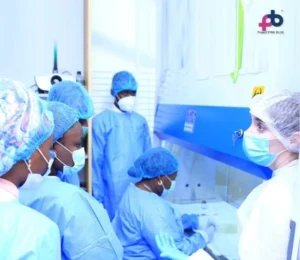
The Coalition for Epidemic Preparedness Innovations (CEPI) has officially announced the commencement of the world’s first human clinical trial for a vaccine specifically engineered to combat the Bundibugyo strain of the Ebola virus. This landmark medical milestone was initiated at the University of Oxford, where the first healthy volunteer has been successfully vaccinated. The trial represents a critical pivot in the global strategy to manage Ebola Virus Disease (EVD), particularly as the Democratic Republic of the Congo (DRC) continues to grapple with a devastating and expanding outbreak of this specific viral species.
The announcement, detailed in a comprehensive statement released by CEPI’s Senior Communications and Advocacy Manager, Jodie Rogers, marks a significant leap forward in pandemic preparedness. Known as the BD-Ebov trial, this Phase I clinical study is designed to rigorously evaluate the safety profile of the experimental vaccine, while simultaneously assessing its capacity to induce a robust immune response in human participants. The vaccine candidate, designated as ChAdOx1 BDBV, was birthed through the collaborative expertise of scientists at the University of Oxford’s Oxford Vaccine Group and the Pandemic Sciences Institute.
A Technological Foundation Built on Proven Success
The ChAdOx1 BDBV vaccine utilizes the same innovative adenoviral vector technology that underpinned the development of the Oxford/AstraZeneca COVID-19 vaccine. This platform, which employs a modified, harmless version of a chimpanzee adenovirus, acts as a delivery vehicle for genetic instructions that teach the human immune system to recognize and neutralize the Bundibugyo ebolavirus. By leveraging a platform that has already been administered to billions of people worldwide during the coronavirus pandemic, researchers have been able to bypass many of the traditional hurdles associated with early-stage vaccine design.
The use of the ChAdOx1 platform is a strategic choice. Its safety profile is well-documented, and its manufacturing processes are highly scalable. For a disease like Ebola, which often strikes in resource-limited settings with fragile health infrastructures, the ability to produce a stable, effective, and mass-producible vaccine is the difference between a contained incident and a transborder catastrophe.
Understanding the Bundibugyo Ebolavirus Strain
Ebola Virus Disease is not a monolithic threat; it is caused by several distinct species within the genus Ebolavirus. While the Zaire strain is perhaps the most well-known due to the massive West African outbreak between 2014 and 2016, the Bundibugyo strain (BDBV) presents its own unique challenges. First identified in 2007 during an outbreak in the Bundibugyo District of Uganda, this strain has historically been associated with lower fatality rates than the Zaire strain, yet it remains highly lethal and capable of causing widespread social and economic disruption.
Currently, the Democratic Republic of the Congo is facing a severe BDBV crisis. Reports indicate that there have been more than 2,500 confirmed cases and over 1,000 deaths attributed to the current surge. Despite the existence of licensed vaccines for the Zaire strain—such as Ervebo—these existing treatments do not provide cross-protection against the Bundibugyo species. This gap in the medical arsenal has left health workers in the DRC and neighboring regions with limited tools to halt the transmission of the virus, underscoring the vital importance of the Oxford-led trial.

The Eight-Week Miracle: From Concept to Clinic
One of the most remarkable aspects of the ChAdOx1 BDBV development program is the unprecedented speed at which the project has moved. David Pulido-Gomez, the Global Chemistry, Manufacturing, and Controls Lead at the Pandemic Sciences Institute, noted that the vaccine candidate transitioned from a conceptual design to active clinical evaluation in just eight weeks.
This rapid progression was made possible by a high-intensity collaboration between the University of Oxford, its Clinical BioManufacturing Facility, the Serum Institute of India (SII), and CEPI. This "speed-of-light" development cycle is a core component of CEPI’s broader "100 Days Mission"—a global goal to develop vaccines against new or re-emerging pathogens within 100 days of their identification.
"Reaching this milestone in such a short timeframe reflects an extraordinary collaborative effort," Pulido-Gomez stated. He emphasized that the synergy between academic research and industrial manufacturing capacity was the primary engine behind this success. By working in parallel rather than in sequence, the partners were able to compress years of traditional development time into a matter of months.
Strategic Manufacturing and Global Equity
The Serum Institute of India, the world’s largest vaccine manufacturer by volume, has played a pivotal role in this initiative. Recognizing the urgency of the situation in the DRC, SII has already manufactured a stockpile of approximately 620,000 doses of the ChAdOx1 BDBV candidate. Of these, 4,000 investigational doses have been earmarked specifically for the ongoing clinical trials.
Adar Poonawalla, CEO of the Serum Institute of India, highlighted that the rapid production of the vaccine demonstrates how scientific innovation can be married to scalable industrial capacity to respond to emerging infectious diseases. "The ability to have hundreds of thousands of doses ready even as Phase I begins is a testament to our commitment to global health equity," Poonawalla remarked. The partners have pledged to ensure that once the vaccine is fully developed and approved, it will be made available at an affordable price to the countries that need it most, ensuring that economic barriers do not prevent life-saving intervention.
Clinical Trial Design and Participant Safety
The Phase I trial is being conducted under the watchful eye of the Oxford Vaccine Group. Dr. Peter Skydmore, the Lead Study Doctor, characterized the vaccination of the first participant as a foundational step. "Over the coming months, we will continue vaccinating and monitoring participants while assessing the vaccine’s safety and immune responses," he explained.
The trial involves healthy adult volunteers who will be monitored closely for any adverse reactions. Beyond safety, researchers are looking for "immunogenicity"—the ability of the vaccine to trigger the production of antibodies and T-cells specifically targeted at the Bundibugyo virus. If the Phase I data proves favorable, the program is prepared to move swiftly into larger Phase II and Phase III trials. These subsequent phases, which may take place in Uganda and other affected regions subject to regulatory approval, will test the vaccine’s efficacy in preventing infection in real-world settings.

Chief Investigator Katrina Pollock noted that the commitment of the volunteers is the backbone of the study. "Their participation is critical to responding to the ongoing outbreak and building a defense for the future," she said.
The Urgency of the DRC Outbreak
The humanitarian context of this trial cannot be overstated. Richard Hatchett, CEO of CEPI, pointed out that the epidemic in the DRC shows no signs of abating. The $8.6 million program funded by CEPI is a direct response to the "worsening outbreak" and the "concerning rate" of new cases.
The DRC’s health system is currently stretched to its limits. Dealing with Ebola requires not just medical treatment, but intensive contact tracing, safe burial practices, and community engagement—all of which are complicated by the lack of a specific vaccine for the Bundibugyo strain. The introduction of a successful vaccine would provide a "firebreak" for health officials, allowing them to protect frontline workers and ring-vaccinate contacts of infected individuals to stop the chain of transmission.
Future Implications for Global Health Security
The development of the ChAdOx1 BDBV vaccine is more than just a response to a single outbreak; it is a blueprint for the future of global health security. The collaboration between a UK-based academic powerhouse, a multi-national funding coalition, and an Indian manufacturing giant provides a model for how the world can respond to "Disease X"—the hypothetical next pandemic pathogen.
By pre-positioning manufacturing capabilities and using adaptable vaccine platforms, the international community is becoming better equipped to handle localized outbreaks before they escalate into global emergencies. The partners involved in the BD-Ebov trial have reiterated their commitment to transparency and data sharing, ensuring that the scientific community can learn from this process.
As the recruitment and vaccination of additional volunteers continue in the coming weeks, the eyes of the global health community remain fixed on Oxford. If successful, the ChAdOx1 BDBV vaccine will not only save lives in the Democratic Republic of the Congo and Uganda but will also mark a definitive victory for the proactive, collaborative approach to infectious disease management. The goal remains clear: to transition from a world that reacts to crises to one that is prepared to prevent them.