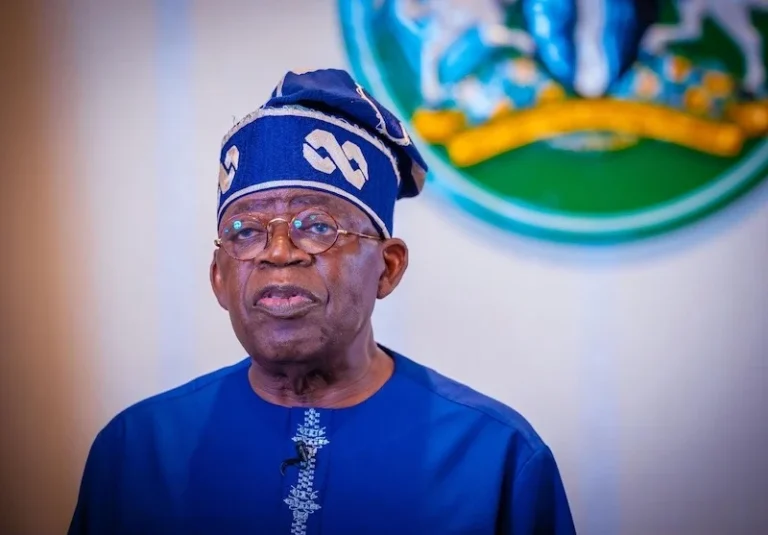
President Bola Tinubu has formally welcomed the launch of Airtel Nigeria’s Open Network initiative, describing the strategic move as a pivotal milestone toward enhanced transparency, rigorous consumer protection, and the radical improvement of telecommunications services across the nation. The groundbreaking initiative was officially unveiled in Lagos during a high-profile industry event that drew key stakeholders, including the Executive Vice Chairman of the Nigerian Communications Commission, Dr Aminu Maida, alongside senior telecommunications executives and digital economy advocates.
The launch of the Open Network platform represents a fundamental shift in how telecommunications service providers interact with their subscribers in Nigeria. By leveraging this digital solution, subscribers gain direct access to comprehensive, real-time information regarding network developments, infrastructure rollouts, and coverage mapping in their specific localities. Crucially, the platform empowers everyday users to report network service difficulties, connectivity gaps, and quality-of-service issues directly to the operator, fostering a more direct line of communication and accountability between telecom companies and the millions of Nigerians who rely on their services daily.
President Tinubu’s official reaction to the development was conveyed through a detailed statement issued by his Special Adviser on Information and Strategy, Mr Bayo Onanuga. Titled “President Tinubu welcomes Airtel’s open network launch, commends investment in telecoms infrastructure,” the communication underscored the administration’s broader vision for the nation’s digital economy. According to the presidency, the initiative aligns seamlessly with the current administration’s overarching policy framework, which prioritizes the creation of an enabling environment for private-sector investment, the aggressive expansion of robust digital infrastructure, and the systematic safeguarding of consumer rights in an increasingly digitalized economy.
Chronology of Engagement and High-Level Partnerships
The unveiling of the Open Network initiative did not occur in a vacuum; rather, it is the culmination of sustained strategic engagements between the Federal Government of Nigeria and global telecommunications heavyweights. A cornerstone of this collaborative trajectory was the high-level meeting held in February 2025 at the State House in Abuja, where President Tinubu hosted the Founder and Chairman of Bharti Airtel, Mr Sunil Bharti Mittal.
During that strategic encounter, President Tinubu explicitly reaffirmed his administration’s unwavering commitment to cultivating a business-friendly ecosystem for telecommunications investments. The discussions in Abuja laid heavy emphasis on strengthening the regulatory framework, streamlining bureaucratic bottlenecks, and establishing institutional safeguards to protect critical national digital infrastructure from vandalism, theft, and illegal fiber cuts—challenges that have historically plagued the sector’s operational efficiency.
The progression from that executive dialogue to the recent rollout of the Open Network initiative highlights a proactive public-private partnership model. Industry analysts note that by maintaining an open-door policy for international investors while empowering local regulatory bodies like the NCC, the Nigerian government has successfully incentivized major network operators to accelerate their capital expenditure programs, specifically targeting infrastructure deficits in both urban centers and peri-urban settlements.
Data-Driven Expansion and Infrastructure Milestones
Airtel Nigeria’s latest strategic moves are underpinned by significant capital outlays directed toward network densification and technological upgrades. According to official performance metrics released during the Lagos launch, the telecommunications giant has experienced substantial infrastructure growth over the past two years, scaling its physical footprint from approximately 15,000 active network sites to more than 17,000 sites nationwide.
This aggressive expansion trajectory gathered intense momentum during the 2025/2026 financial year alone, during which the company successfully integrated over 1,050 new network sites into its grid. A critical highlight of this recent expansion phase is the deployment of 657 fifth-generation (5G) sites, a technological leap designed to meet the exponentially growing demand for high-speed mobile broadband, ultra-low latency data transmission, and enterprise-grade connectivity solutions.
President Tinubu seized the opportunity to spotlight these quantitative metrics, emphasizing that sustained investments in telecommunications infrastructure are non-negotiable prerequisites for modern economic development. “Sustained investment in telecommunications infrastructure is essential to expanding broadband access, improving network capacity, and supporting businesses, education, and economic opportunities across Nigeria,” the President stated.
The administration’s emphasis on infrastructure development is closely tied to the National Broadband Plan, which seeks to achieve near-universal broadband penetration across the country, driving financial inclusion, digital literacy, and e-government services to the farthest corners of the federation.
Regulatory Oversight and Consumer Empowerment
A central theme of the federal government’s response to the Airtel initiative is the vital role played by independent regulatory oversight. President Tinubu specifically commended the Nigerian Communications Commission under the leadership of Dr Aminu Maida for championing a culture of transparency, proactive regulation, and consumer advocacy within the telecommunications sector.
In recent months, the NCC has rolled out several transparency-focused interventions, including the publication of public network coverage maps, granular performance data, and independent consumer satisfaction surveys. These regulatory tools are designed to democratize information, enabling everyday Nigerians to make informed decisions regarding network selection while holding service providers strictly accountable for service delivery standards.
The President noted that the growing emphasis on transparency complements the government’s broader social intervention programs within the digital space. A prime example is the Federal Government’s Zero-Rated Access to Educational Platforms and Content Initiative. Implemented through the NCC in active collaboration with the Federal Ministry of Education and major telecommunications operators, this laudable scheme provides eligible students across the country with up to 100MB of free daily data. This allocation enables learners to access approved educational websites, virtual classrooms, and vital academic research resources without incurring data costs, thereby bridging the digital divide in education.
Implications for the Broader Economy and Service Quality
While acknowledging the monumental financial commitments made by telecom operators, the federal government maintained a firm stance on the practical realities of service delivery. President Tinubu explicitly urged all telecommunications operators operating within the Nigerian market to sustain their capital investments in network expansion—particularly targeting historically underserved and unserved rural communities where connectivity remains sparse.
Furthermore, the administration stressed that the ultimate benchmark for evaluating the success of telecommunications investments is not merely the volume of infrastructure deployed or financial capital expended, but the actual day-to-day experience of the average Nigerian consumer. Citizens depend heavily on telecommunications networks for their livelihoods, micro-enterprises, corporate operations, and essential interpersonal communication. Consequently, the President called upon network operators to translate their multi-billion-naira investments into tangible operational outcomes: drastically improved network coverage, a dramatic reduction in dropped calls and data service disruptions, and highly responsive, customer-centric support systems.
As Nigeria continues to position itself as the dominant digital hub in Sub-Saharan Africa, initiatives like Airtel’s Open Network, backed by robust regulatory frameworks and visionary state policy, point toward a more accountable, transparent, and technologically advanced future. The successful integration of consumer feedback mechanisms into core network infrastructure management sets a new benchmark for corporate responsibility within the nation’s rapidly evolving digital economy.