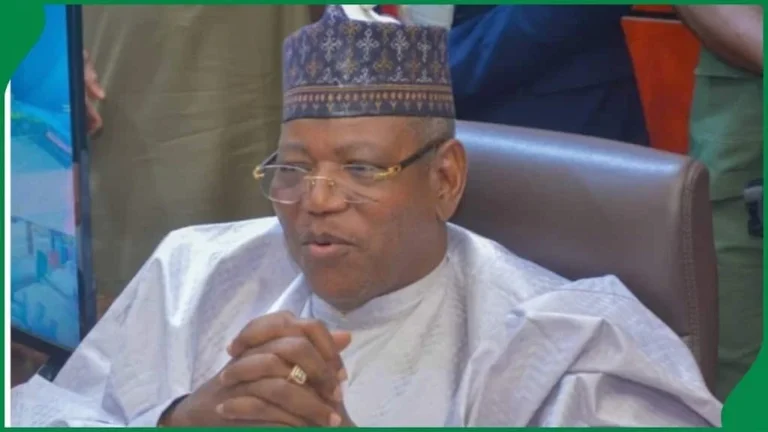
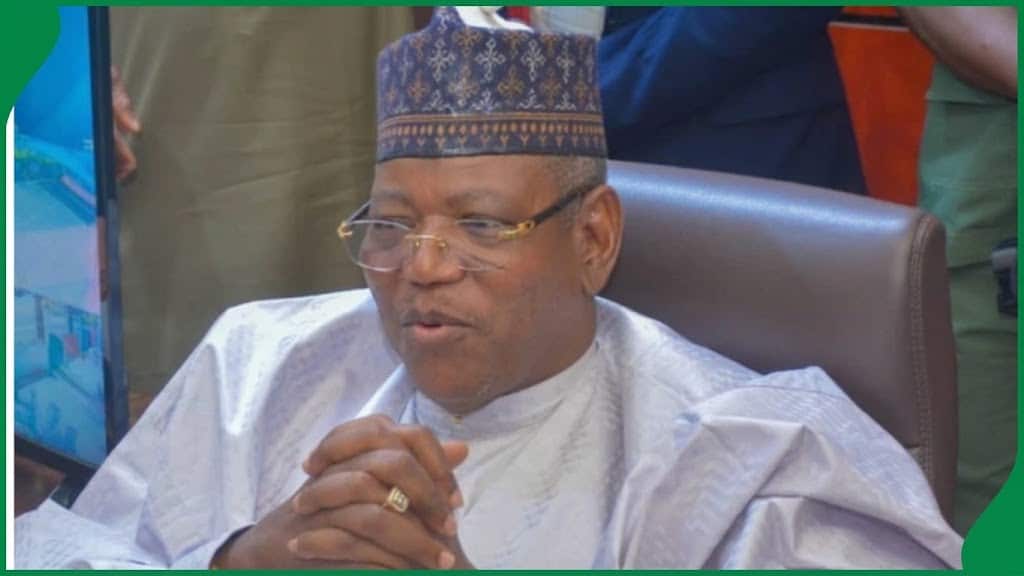
The political landscape in Northern Nigeria is witnessing a flurry of strategic realignments and unsubstantiated claims as the countdown to the 2027 general elections accelerates. Sule Lamido, the former Governor of Jigawa State and a stalwart of the Peoples Democratic Party (PDP), has formally and emphatically rejected recent reports suggesting that he is among the influential political figures in Jigawa State currently throwing their weight behind the All Progressives Congress (APC).
The controversy erupted following a viral post on Facebook, attributed to a social media outlet known as DCL Hausa. The post alleged that Vice President Kashim Shettima had claimed during a recent engagement that several prominent Jigawa-based politicians, including Lamido, had defected or pledged their support to the ruling APC. This assertion sparked widespread speculation regarding the stability of opposition structures in the Northwest region.
The Former Governor’s Rebuttal
Sule Lamido, known for his acerbic wit and unwavering loyalty to his political antecedents, did not mince words in his dismissal of the report. Addressing the claims directly, the former governor highlighted the historical inconsistency of the allegation. He rhetorically questioned the logic behind such a political migration, noting that if he resisted the allure of the APC during its formative and insurgent years in 2014, it is highly improbable that he would seek an alliance with the party in 2026, when the political climate and his personal convictions remain anchored in his established ideological framework.
"God is powerful," Lamido stated in his rebuttal. "I was not with the APC in 2014, so why would I be with it now in 2026?" By emphasizing the year 2014, Lamido was referencing the pivotal period when the APC was formed through a historic merger of opposition parties—a movement he famously opted out of, choosing instead to remain within the PDP. His reaction signals a firm commitment to maintaining his opposition status, effectively quashing rumors of an imminent political defection that could have altered the power balance in Jigawa State.
The Context of Political Rumor-Mongering
The spread of such claims highlights the volatile nature of Nigeria’s pre-election cycle. In the lead-up to any general election, "political kite-flying" becomes a standard tactic used by party strategists to test public sentiment or demoralize the opposition. By attributing such claims to high-ranking officials like Vice President Shettima, political actors aim to create an air of inevitability around the ruling party’s dominance.
For veteran politicians like Lamido, these maneuvers are often viewed as psychological warfare. His dismissal of the claim, while citing the Vice President’s background in a pointed manner, reflects the intense, often regionalized nature of Nigerian political discourse. It serves as a reminder that as the 2027 cycle approaches, the verification of political alliances will become increasingly critical to maintaining electoral integrity and public trust.
Benue State: A Parallel Case of Political Volatility
While the drama in Jigawa continues, similar tensions have manifested in Benue State, further illustrating the charged atmosphere currently gripping the country. The Benue State government has found itself embroiled in a separate controversy involving the Nigeria Democratic Congress (NDC) and its presidential aspirant, Peter Obi.
Earlier this week, allegations surfaced—spearheaded by the NDC’s governorship candidate in Benue, Professor Terhemba Shija—that the state government was orchestrating a plot to disrupt a scheduled rally for Peter Obi. The accusations suggested a state-sponsored attempt to silence opposition voices, potentially leading to violence or logistical blockades.
Official Response from the Benue Government
The Benue State government, through the Commissioner for Information and Orientation, Solomon Iorpev, issued a categorical denial of these allegations. The administration characterized the claims as a "premeditated script" designed to incite sympathy for the opposition by creating a false narrative of persecution.
"It is speculation dressed up as fact, and it is meant to prepare the ground for a familiar script to stage a disruption, blame the government, and harvest sympathy," Iorpev stated. The government’s defense rests on the argument that Governor Hyacinth Alia is currently focused on a "reconstruction agenda," prioritizing infrastructure, security, and economic development over partisan suppression. According to the state government, any attempt to sabotage the rally would be counterproductive to the administration’s stated goals of restoring peace to the state.
Security Implications and the Yelwata Incident
A particularly sensitive aspect of the Benue situation is the mention of the Yelwata killings. The government has cautioned political actors against leveraging the tragic loss of lives in that region for campaign optics. The Commissioner for Information emphasized that a condolence visit should remain solemn and not be converted into a "publicity campaign."
To prevent any escalation, the state government has pledged to provide adequate security for all visitors, regardless of their political affiliation. However, this guarantee came with a stern warning: the state security apparatus is prepared to deal firmly with any individual—regardless of their political sponsors—who attempts to disrupt public order or instigate violence under the guise of political activity.
Analysis: The 2027 Landscape
The convergence of these events in Jigawa and Benue provides a snapshot of the current political environment in Nigeria. Several key themes are emerging as the 2027 election cycle takes shape:
- Information Warfare: The use of social media and unverified news outlets to circulate claims about political defections or government conspiracies has become a dominant trend. The speed at which such rumors spread requires more robust fact-checking mechanisms by political parties and the media.
- The Persistence of Regionalism: Political rhetoric continues to be framed through regional identities. Lamido’s reference to the Vice President’s regional background and the Benue government’s emphasis on "home-grown" development projects underscore that local sentiment remains a potent force in national politics.
- Governance vs. Politics: Both the Jigawa and Benue scenarios highlight a recurring tension where state governments struggle to balance the demands of governance with the pressures of maintaining political dominance. Allegations of state-sponsored disruption, whether true or false, reflect a deep-seated distrust in the electoral process and the impartiality of state institutions.
- The Role of Opposition: The challenge for opposition figures like Sule Lamido and parties like the NDC is to remain relevant in a landscape dominated by the APC. Their ability to debunk misinformation and maintain a clear, consistent policy platform will be the ultimate test of their electoral viability.
Looking Ahead
As the nation moves closer to the next general election, the veracity of claims regarding party alignments will become a central issue for the Nigerian electorate. For stakeholders, the lesson from the recent weeks is clear: the political temperature is rising, and the premium on verified information has never been higher.
The dismissal of the Jigawa defection rumors by Sule Lamido serves as a definitive marker for his supporters, reinforcing his commitment to his current party. Similarly, the Benue government’s proactive stance on the NDC rally suggests a desire to project an image of democratic maturity, despite the intense scrutiny from opposition candidates.
Ultimately, the stability of the 2027 election will depend on the conduct of political actors, the accuracy of the information provided to the public, and the capacity of security agencies to remain neutral arbiters. As these events unfold, the Nigerian political scene remains a dynamic, often unpredictable theater where every statement, denial, and rally carries significant weight for the future of the nation’s democratic trajectory. Whether these tensions will lead to a more robust engagement or further polarization remains the defining question for the coming months.