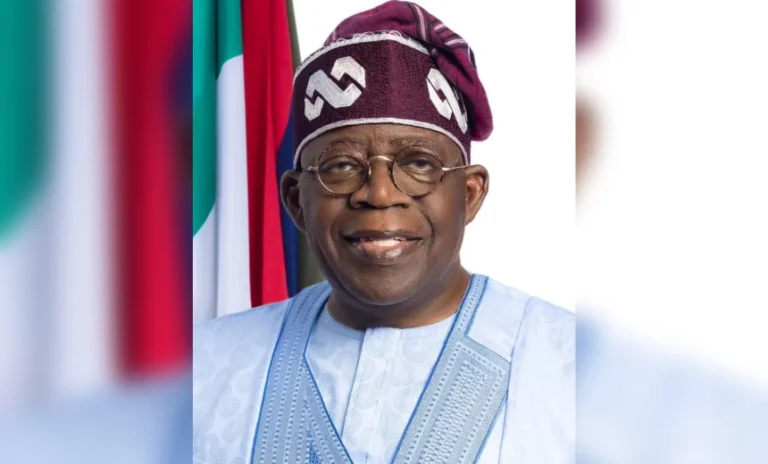
President Bola Tinubu officially launched a new chapter in Nigeria’s fiscal history on Tuesday, commissioning the imposing 16-storey Nigeria Revenue Service (NRS) Headquarters in Abuja. During the landmark event, President Tinubu unequivocally linked Nigeria’s persistent economic challenges to the legacy of colonial-era tax laws, which he characterized as fragmented, inconsistent, and detrimental to national prosperity. He articulated his administration’s vision for a revamped tax system designed to foster economic growth, investment, and public trust, asserting that the old framework had "weakened national prosperity" and contributed directly to the impoverishment of Nigerians.
The commissioning ceremony, a significant milestone in the nation’s ongoing economic transformation agenda, was attended by a high-powered delegation including Senate President Godswill Akpabio, Speaker of the House of Representatives Tajudeen Abbas, federal ministers, state governors, and prominent leaders from the private sector. Their collective presence underscored the national importance and bipartisan support for the ambitious fiscal reforms being spearheaded by the Tinubu administration. Bayo Onanuga, Special Adviser to the President on Information and Strategy, conveyed the President’s pronouncements in a statement titled, "Old tax laws made Nigerians poor, new systems will create opportunities and prosperity, says President Tinubu," emphasizing the transformative potential of the new fiscal architecture.
The Genesis of Reform: Addressing Historical Inefficiencies
President Tinubu’s remarks during the event highlighted a critical historical perspective, asserting that the tax laws inherited from the colonial era were not designed to promote comprehensive national development but rather to serve specific colonial interests. This legacy, he argued, led to a fragmented and overly complex tax landscape characterized by multiplicity of levies, inconsistencies in application, and a general lack of a unified national vision. For decades, this intricate web of outdated regulations reportedly stifled economic growth, discouraged investment, and created an environment ripe for tax evasion and administrative inefficiencies. Nigeria’s historically low tax-to-GDP ratio, often hovering around 6-8% compared to the African average of 15-18% and global averages exceeding 30%, is a stark testament to the ineffectiveness of the previous system. This low ratio meant insufficient government revenue to fund critical infrastructure, social services, and developmental projects, trapping the nation in a cycle of underdevelopment and reliance on volatile oil revenues.
The new tax reforms, which became fully operational in January, represent a decisive break from these outdated colonial structures. They are engineered to create a more inclusive, investment-friendly, and people-centred system, aiming to drive long-term economic growth and strengthen Nigeria’s fiscal foundation. President Tinubu reaffirmed his inaugural pledge made on May 29, 2023, where he committed to "move Nigerians from the dimness of uncertainty into the clear light of renewed hope." He reiterated his resolve to confront structural weaknesses, restore financial stability, and build an economy anchored in discipline, equity, and opportunity, stating, "Today, I stand before you to reaffirm that these words were not rhetoric; they were a covenant with the Nigerian people."
A New Hub for Fiscal Excellence: The NRS Headquarters
The commissioning of the 16-storey Nigeria Revenue Service Headquarters itself symbolizes this new era of fiscal governance. The state-of-the-art edifice is designed to house approximately 3,000 staff members, providing a conducive and modern working environment equipped with cutting-edge facilities. These include a sophisticated data processing centre, a clinic, an auditorium for large gatherings, multiple training rooms, a gym, and a comprehensive library. President Tinubu lauded the Executive Chairman of the NRS, Dr. Zacch Adedeji, for the impressive feat of delivering the new headquarters within a remarkable 30-month timeframe, highlighting it as a testament to commitment and efficiency.
"We are not gathered here merely to commission an edifice. We are here to mark a milestone in a larger national journey: the deliberate strengthening of our fiscal foundation and rebuilding of confidence in public institutions," President Tinubu remarked. He underscored the fundamental principle that no nation can achieve sustainable prosperity with a weak or fragmented revenue system. This conviction, he explained, propelled his administration to embark on "far-reaching tax and fiscal reforms" aimed at correcting long-standing inefficiencies and establishing a robust framework for national development.
Architects of Change: The Presidential Committee on Fiscal Policy and Tax Reforms
A key driver behind these comprehensive reforms is the Presidential Committee on Fiscal Policy and Tax Reforms, inaugurated by President Tinubu in August 2023. Led by the highly respected tax expert, Taiwo Oyedele, who serves as the Minister of State for Finance, the committee was tasked with overhauling Nigeria’s tax system to enhance revenue generation, improve the business environment, and ensure fairness. President Tinubu specifically praised Oyedele for his pivotal role in modernizing the tax framework, acknowledging the committee’s diligent work in conceptualizing and operationalizing the new system.
The committee’s mandate included reviewing existing tax laws, identifying areas of duplication and inconsistency, and proposing reforms that would simplify the tax landscape. This involved streamlining over 60 existing tax laws into a more cohesive and manageable framework, a monumental undertaking aimed at reducing the burden on taxpayers and improving compliance. The objective is to eliminate distortions, foster a fair and transparent system, and protect vulnerable Nigerians from undue tax burdens. "The reforms are designed to simplify our system, eliminate distortions and create a fair, transparent and investment-friendly environment," Tinubu articulated. "Our direction is clear: to have a revenue system that rewards enterprise, supports growth, and ensures that every contribution to the national cause is matched by feasible value for the people."
Early Dividends and Broader Implications
President Tinubu highlighted that early results from the reforms were already visible, pointing to improved fiscal stability, stronger foreign reserves, and increased investor confidence. While specific figures were not detailed, these indicators signal a positive trajectory, potentially manifested in a more stable exchange rate, increased foreign capital inflows, and a more favorable outlook from international credit rating agencies. The reforms are seen as crucial for bolstering Nigeria’s non-oil revenue base, thereby reducing the nation’s vulnerability to global oil price fluctuations and fostering economic diversification.
Beyond the immediate fiscal gains, the implications of these reforms are far-reaching:
- Economic Diversification: By creating a more predictable and equitable tax environment, the reforms are expected to stimulate growth in non-oil sectors such as manufacturing, agriculture, and services, reducing Nigeria’s over-reliance on crude oil exports.
- Infrastructure Development: Enhanced revenue collection will provide the government with greater financial capacity to fund critical infrastructure projects, including roads, power, and digital connectivity, which are essential for economic growth and competitiveness.
- Social Services and Equity: A more efficient and transparent tax system can generate resources for improved social services, including education, healthcare, and social safety nets, directly impacting the welfare of ordinary Nigerians and reducing income inequality.
- Ease of Doing Business: Simplified tax compliance and reduced administrative bottlenecks are expected to significantly improve Nigeria’s ranking in global ease of doing business indices, attracting both domestic and foreign direct investment.
- Governance and Accountability: The emphasis on transparency and efficiency in revenue collection aims to rebuild public trust in government institutions, fostering a culture of accountability and reducing opportunities for corruption.
Stakeholder Reactions and Future Outlook
The unveiling of the new tax system and headquarters garnered widespread commendation from key stakeholders present. Senate President Godswill Akpabio urged Nigerians to exercise patience with the administration, acknowledging that economic reforms, though often challenging in the short term, were beginning to yield positive outcomes. He specifically cited improvements in fuel supply stability, a critical issue that had plagued the nation for years, as an early indicator of the administration’s commitment and effectiveness. Speaker Tajudeen Abbas echoed these sentiments, noting that Nigeria’s previous tax system suffered from fragmentation and overlapping mandates that significantly reduced efficiency, and expressed optimism for the streamlined framework.
Dr. Zacch Adedeji, the Executive Chairman of the NRS, described the reforms as one of the most significant in Nigeria’s fiscal history, emphasizing the achievement of streamlining over 60 tax laws into a single, coherent framework. He reported that revenue collection had grown significantly in recent years, a trend he attributed to improved fiscal governance and enhanced transparency in public finance management. This increase in revenue is vital for the government’s capacity to deliver on its promises and invest in national development.
The new NRS headquarters, a modern architectural marvel, was constructed by the China Civil Engineering and Construction Company (CCECC). Its Managing Director, Guan Shuai, expressed appreciation for President Tinubu’s visionary leadership and his administration’s economic reforms, signaling confidence from international partners in Nigeria’s evolving business environment.
While the new tax regime holds immense promise for Nigeria’s economic future, its successful implementation will require sustained political will, robust public enlightenment campaigns to foster compliance, and continuous capacity building for tax administrators. Addressing potential short-term economic shocks and ensuring that the reforms genuinely protect vulnerable populations will also be critical. However, the inauguration of the NRS Headquarters and the articulation of the new tax philosophy mark a decisive step towards building a resilient, diversified, and prosperous Nigerian economy, fundamentally shifting away from the inefficiencies of its colonial past towards a future of renewed hope and sustainable growth.