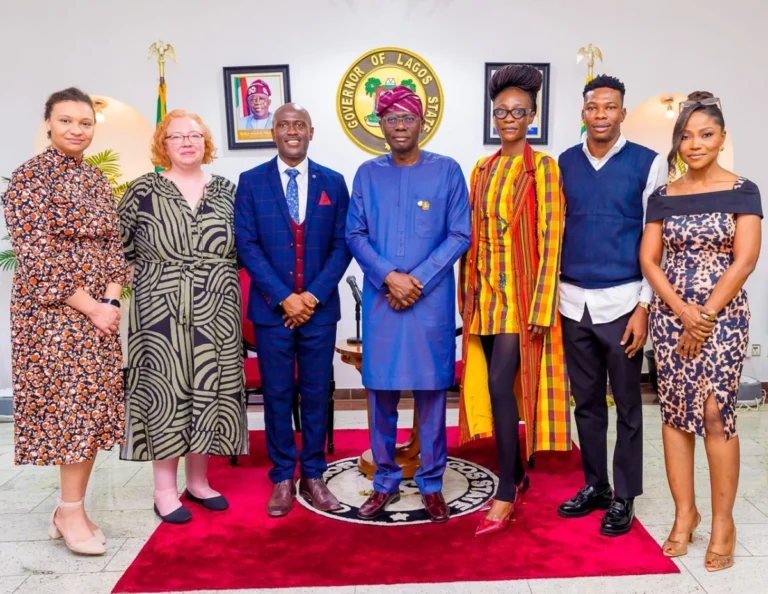
Lagos State Governor Babajide Sanwo-Olu has formally commended Westerfield College for its landmark achievement as the first wholly African-owned educational institution to establish a fully operational campus in the United Kingdom. This commendation was delivered during a high-profile courtesy visit by the leadership of the college to the Governor at Marina House on Thursday. Led by the Chief Executive Officer of Westerfield College, Michael Dosunmu, the delegation briefed the Governor on the institution’s recent milestones and its growing footprint in the international education sector.
The visit coincides with a pivotal moment for the institution, marking the one-year anniversary of its United Kingdom operations and its active participation in the upcoming International Education Fair (IEF) and the School Leaders and Teachers Conference (SLTC 2026). Governor Sanwo-Olu, a staunch advocate for human capital development, described the college’s expansion as a "remarkable achievement" that significantly bolsters Nigeria’s international education profile. He noted that such initiatives serve as a testament to the resilience, intellectual capacity, and entrepreneurial spirit of Nigerian educators and the youth they nurture.
A Historic Milestone for African Education
The emergence of Westerfield College UK represents a significant shift in the traditional educational narrative between Africa and Europe. For decades, the flow of educational expertise was largely unidirectional, with Western institutions establishing branches or curricula within the African continent. By establishing a campus in Worcester, United Kingdom, Westerfield College has effectively reversed this trend, exporting Nigerian educational management and student-centered methodologies to the global stage.
Governor Sanwo-Olu highlighted that this expansion provides a unique platform to showcase the excellence of Lagos and Nigeria to the world. He emphasized that the presence of a Nigerian-owned institution in the UK academic landscape helps to correct global misconceptions and highlights the high standards maintained by private educational providers in Lagos. The Governor’s endorsement underscores a broader strategic goal: positioning Lagos State as a hub for intellectual exports and a leader in the African educational revolution.
Education as a Pillar of the THEMES+ Agenda
During the meeting, Governor Sanwo-Olu reiterated his administration’s unwavering commitment to the education sector, which remains a core pillar of the THEMES+ developmental agenda. The THEMES+ acronym—representing Transportation and Traffic Management; Health and Environment; Education and Technology; Making Lagos a 21st Century Economy; Entertainment and Tourism; and Security and Governance, with an added focus on Social Inclusion, Gender Equality, and Youth—places educational advancement at the heart of state progress.
The Governor reaffirmed the administration’s policy that "no child in Lagos State should be left out of school." This commitment is backed by significant budgetary allocations and infrastructure projects aimed at democratizing access to quality learning environments. To this end, the Governor announced that 36 new schools are set to be commissioned in the Tolu area of Ajegunle in the coming months. This massive infrastructure drive is designed to expand classroom access in densely populated and historically underserved areas, ensuring that the next generation of Lagosians is equipped with the tools necessary for global competitiveness.
Expansion of Tertiary Education and Institutional Oversight
The Governor also took the opportunity to detail the state’s progress in the tertiary education sub-sector. Under his leadership, Lagos State has expanded its portfolio of state-owned universities from one to three. This expansion includes the transition of the Lagos State Polytechnic (LASPOTECH) into the Lagos State University of Science and Technology (LASUSTECH) and the Lagos State College of Primary Education (LACOPED) into the Lagos State University of Education (LASUED).
To manage this growing ecosystem, the state government created a dedicated Ministry of Tertiary Education. This move was designed to provide specialized oversight, improve the quality of higher learning, and ensure that the curricula of state institutions are aligned with the demands of the 21st-century global economy. Sanwo-Olu noted that while much has been achieved, the government remains focused on building sustainable structures that will support future generations long after the current administration’s tenure.
Westerfield College: Bridging the Gap Between Nigeria and the UK
Westerfield College has built a reputation as a leading Sixth Form institution, specializing in preparing students for entry into top-tier universities worldwide. With campuses in Nigeria and now the UK, the college offers a unique blend of British academic standards and a Nigerian perspective, ensuring that students remain grounded in their heritage while gaining global exposure.

Mr. Michael Dosunmu, the CEO, explained that the college’s UK campus, which officially launched its full suite of programs in 2025, offers a range of pathways including Cambridge A-Levels, University Foundation Programmes, and specialized Pre-Medicine tracks. The institution’s "student-centered approach" has been credited with its high success rate in university progression, with many of its alumni securing placements in prestigious Russell Group universities in the UK and Ivy League institutions in the United States.
The UK Summer Camp Programme: Building Global Leaders
A major highlight of the management team’s presentation to the Governor was the Westerfield UK Summer Camp Programme. Designed as an immersive educational and cultural experience, the camp is scheduled to run in three distinct cohorts during the 2025 summer season:
- Cohort 1: 20 July – 1 August
- Cohort 2: 3 August – 15 August
- Cohort 3: 17 August – 29 August
Located in the historic city of Worcester, the program offers students aged 10 to 18 a chance to experience the British education system firsthand. The curriculum is divided into specialist academic tracks, allowing students to explore interests in STEM (Science, Technology, Engineering, and Mathematics), Pre-Medicine, Business and Law, Computing and Coding, and Arts and Humanities.
Mr. Dosunmu emphasized that the program goes beyond traditional classroom learning. "The summer camp is designed to build students’ confidence, global awareness, and leadership skills," he stated. "It offers a blend of academic rigor, sports, leadership workshops, cultural exchange, and networking opportunities that prepare young Nigerians for the complexities of a globalized world." The program also serves as an introductory gateway for families considering international education for their children, providing a safe and structured environment to test the waters of the British academic landscape.
Implications for Nigeria’s Educational Export Strategy
The success of Westerfield College has broader implications for Nigeria’s economy and its "soft power" on the international stage. According to data from the Higher Education Statistics Agency (HESA) in the UK, Nigeria is consistently among the top five countries sending international students to British universities. However, the establishment of a Nigerian-owned school in the UK represents a transition from being a consumer of foreign education to being a provider.
Fact-based analysis suggests that this move could help mitigate some of the "brain drain" concerns associated with Nigerian students studying abroad. By maintaining a Nigerian-owned management structure, the college ensures that students maintain strong ties to their home country, potentially encouraging a "brain gain" where students return to Nigeria after their studies with global expertise. Furthermore, the college’s success encourages other Nigerian entrepreneurs to look beyond domestic borders, fostering a new era of African multinational corporations in the service and education sectors.
Supporting Data and Educational Context in Lagos
The Lagos State Government’s focus on education is a response to the massive demographic pressure facing the state. With a population exceeding 20 million, the demand for quality education at all levels is unprecedented. The commissioning of 36 new schools in Ajegunle is part of a larger "Education Transformation Plan" that has seen the rehabilitation of over 1,000 schools across the state and the training of over 18,000 teachers through the EKOEXCEL initiative.
The expansion of state universities also addresses the "admission deficit" where thousands of qualified candidates are unable to secure spots in tertiary institutions due to limited capacity. By tripling its university offerings, the Sanwo-Olu administration has effectively increased the state’s carrying capacity for higher education by over 60%, providing more opportunities for Lagosians to obtain degrees in critical fields like technology and education.
Conclusion: A Vision for the Future
The meeting at Marina House concluded with a shared vision for the future of education in Lagos and Nigeria. Governor Sanwo-Olu’s commendation of Westerfield College serves as an invitation for more private-sector participation in the state’s educational goals. By fostering an environment where institutions like Westerfield can thrive both locally and internationally, the Lagos State Government is ensuring that the "Center of Excellence" remains not just a slogan, but a reality reflected in the achievements of its people.
As Westerfield College prepares for the 2026 International Education Fair and its upcoming summer cohorts, the institution stands as a beacon of what is possible when Nigerian innovation meets global standards. The Governor’s support reinforces the notion that education is the most powerful tool for social mobility and national development, and that the success of Nigerian schools abroad is, ultimately, a victory for the nation at home.