Saudi Arabia has significantly broadened the scope of its international humanitarian operations, rolling out a series of targeted relief and sponsorship packages aimed at vulnerable children and families across Africa, the Middle East, and Europe. Spearheaded by the King Salman Humanitarian Aid and Relief Centre (KSrelief), these newly unveiled agreements focus on providing consistent financial lifelines, educational resources, essential clothing, and nutritional support to thousands of orphans and displaced households facing acute socio-economic hardships.
The latest wave of interventions highlights a strategic shift toward sustainable, long-term community resilience rather than strictly short-term emergency relief. By partnering with reputable regional and international organizations, KSrelief aims to insulate vulnerable demographics against the compounding pressures of regional conflicts, inflation, displacement, and systemic poverty.
Targeted Interventions in Djibouti, Gaza, and Kosovo
The newly instituted agreements are tailored to address the unique vulnerabilities of the regions they target, combining direct financial stipends with material aid.
In the Horn of Africa, KSrelief has initiated a comprehensive support framework in Djibouti. Working in strategic coordination with the Refaq Association based in Hail, the agency has established a monthly stipend of $80 for participating orphans. Beyond direct financial transfers, the initiative provides beneficiaries with seasonal clothing and commercial vouchers redeemable through contracted local vendors. While directly impacting approximately 400 primary beneficiaries, local assessments project that the broader family units and caregivers—totaling around 1,600 individuals—will experience indirect relief from the financial strain.
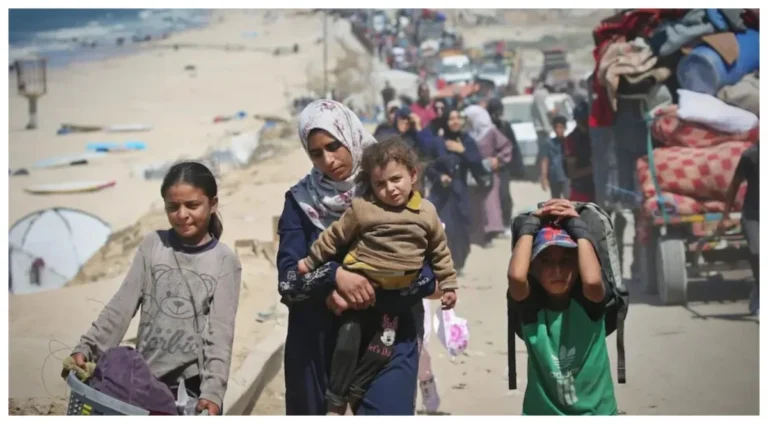
Simultaneously, the humanitarian situation in Gaza remains a primary focal point for Saudi relief efforts. Through a collaborative agreement with the Saudi Center for Culture and Heritage, KSrelief has launched a dedicated assistance package designed to support 1,500 orphaned boys, girls, and families who have lost their primary breadwinners amidst ongoing hostilities.
Unlike standard relief packages, the Gaza initiative is exceptionally holistic. It features a monthly financial allocation of $100 per orphan, coupled with comprehensive educational packages containing school bags, stationary supplies, and essential winter and summer clothing. Furthermore, the programme incorporates psychosocial support elements, funding recreational activities and children’s toys to mitigate the psychological tolls of conflict. Administrative projections indicate that roughly 4,500 secondary family members and caregivers will benefit indirectly from this intervention.
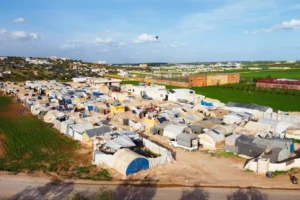
This targeted orphan support complements KSrelief’s continuous emergency operations on the ground in Gaza. Operational logs from the agency indicate intensive daily logistics runs, including the recent distribution of 500,000 liters of potable drinking water and 25,000 hot meals within a single 24-hour window, alongside the ongoing deployment of shelter tents to accommodate displaced households.
In Eastern Europe, KSrelief has cast its net across Kosovo, formalizing a partnership with the Islamic Community of Kosovo. This initiative targets 700 orphans spread across 29 distinct governorates. The structured support mechanism provides regular financial stipends alongside vital scholastic materials, winter apparel, and organized recreational excursions. Crucially, the funding is structured to help recipient families absorb the escalating costs of daily sustenance, domestic housing, primary healthcare, and education.
A Decade of Global Humanitarian Diplomacy
To fully contextualize these latest deployments, one must examine the institutional trajectory of KSrelief since its formal establishment. Founded in May 2015 by royal decree under the directive of King Salman bin Abdulaziz, the agency was conceived as the centralized arm for Saudi Arabia’s international humanitarian and disaster relief efforts, consolidating the Kingdom’s extensive philanthropic footprint under a single, unified administrative umbrella.
Over the past decade, KSrelief has steadily evolved from a regional responder into a major global aid actor. Official institutional metrics underscore the sheer scale of its operations: since its inception, the agency has executed 4,463 distinct humanitarian and development projects. The cumulative financial commitment of these interventions approaches $8.6 billion, deployed across 113 nations in close partnership with 357 local, regional, and international entities, including specialized United Nations agencies and the Red Cross and Red Crescent movements.
While the agency’s geographical reach spans from Southeast Asia to Latin America, its resource allocation reflects acute geopolitical and humanitarian crises. Yemen has historically remained the single largest recipient of KSrelief’s overarching operations, absorbing approximately $4.8 billion in targeted food security, medical, and infrastructural assistance. Similarly, the Horn of Africa—particularly Somalia—has received substantial backing, with cumulative financial aid totaling roughly $258 million to combat recurring droughts, food insecurity, and internal displacement.
International Recognition and Diplomatic Validation
The steady expansion of Saudi humanitarian assistance has increasingly drawn praise from international partners and multilateral organizations, signaling a strengthening of collaborative relief efforts between Gulf states and Western donor nations.
Most notably, UK Development and Africa Minister Kirsty McNeill recently commended Saudi Arabia’s sustained humanitarian commitments, explicitly highlighting KSrelief’s pivotal role in alleviating suffering in crisis-hit and disaster-prone zones. Diplomatic analysts note that such endorsements reflect a broader international consensus regarding the utility of transparent, well-funded philanthropic institutions in stabilizing fragile states and managing mass displacement crises.
By bridging the gap between immediate disaster response and structural social welfare—exemplified by the current scale-up in Djibouti, Gaza, and Kosovo—Saudi Arabia continues to cement its status as a cornerstone donor in the international humanitarian architecture.
Fact-Based Analysis of Implications
The deployment of multi-region orphan support programmes carries several significant socio-economic and geopolitical implications:
- Economic Cushioning in High-Inflation Environments: Providing fixed monthly cash transfers ($80 to $100) in regions plagued by economic instability, such as Djibouti and Gaza, injects predictable liquidity into local markets while allowing guardian families to prioritize essential household needs autonomously.
- Mitigation of Long-Term Educational Deficits: By bundling financial aid with scholastic materials (school bags, stationery), the initiatives actively combat school dropout rates among orphaned children—a demographic statistically at high risk of forced child labor or early marriage during prolonged crises.
- Soft Power and Multilateral Alignment: KSrelief’s ability to operate in complex geopolitical environments (such as Gaza and Kosovo) via trusted local partnerships enhances Saudi Arabia’s diplomatic standing, framing the Kingdom as a reliable, neutral humanitarian actor capable of navigating sensitive security landscapes.
As these programmes roll out across their respective operational zones, international observers will monitor their long-term efficacy, particularly regarding the sustainability of cash-transfer models in conflict-affected regions where market infrastructures remain volatile.