The Kingdom of Saudi Arabia has urgently reached out to France, the United Kingdom, Pakistan, and Egypt for critical air-defense assistance. This diplomatic scramble comes as the nation’s interceptor missile stocks run perilously low under the weight of sustained Houthi aerial assaults. According to regional officials speaking to the Associated Press, dwindling military supplies in the United States have severely constrained Washington’s capacity to replenish the kingdom’s depleted arsenals, leaving Riyadh exposed along multiple strategic fronts.
The immediate crisis highlights a broader, systemic strain on Western and allied weapons inventories. Years of protracted regional conflicts, combined with extensive military aid pipelines to Ukraine and active engagements across the Middle East, have heavily depleted global stockpiles of sophisticated surface-to-air missiles, precision munitions, and raw material inputs like critical rare-earth elements. For Saudi Arabia, the timing could hardly be worse. Tasked with defending a vast expanse of territory containing critical military installations, heavily populated urban centers, sprawling government facilities, and vital oil and gas infrastructure, the kingdom finds itself in an increasingly precarious security dilemma. Furthermore, Riyadh must simultaneously secure vital crude oil export routes traversing the turbulent waters of the Red Sea and the narrow shipping bottlenecks of the Strait of Hormuz.
The Growing Strain on Global Weapons Inventories
The contemporary scarcity of advanced missile interceptors is not an isolated phenomenon, but rather the cumulative result of multi-theater commitments stretching from Eastern Europe to the Persian Gulf. Defense analysts note that industrial manufacturing capacity for high-end military hardware—such as the Patriot missile defense systems and the Terminal High Altitude Area Defense (THAAD) architecture—cannot easily match the consumption rates seen in modern, high-intensity drone and missile warfare.
Supply chain vulnerabilities have exacerbated these manufacturing bottlenecks. Earlier this year, defense sector reports highlighted that global reserves of critical rare-earth minerals necessary for advanced electronics and guidance systems could sustain high-tempo wartime production for only a matter of months. This underlying industrial constraint has now collided head-on with over half a year of intensified military friction involving Iran and its regional proxies.
Compounding the problem, European defense inventories are similarly exhausted. European governments continue to walk a tightrope, desperately trying to replenish domestic military readiness while simultaneously sustaining long-term military assistance for Ukraine’s ongoing war effort. Consequently, European allies possess exceedingly limited surplus interceptors to spare for Riyadh’s immediate requirements.
The Houthi Threat and Regional Geopolitics
The genesis of Saudi Arabia’s acute defense shortfall lies in the relentless bombardment by the Houthi movement in Yemen. Over recent months, the group has intensified its campaign of cross-border drone and ballistic missile strikes targeting Saudi cities, energy hubs, and maritime trade lanes. Beyond these aerial attacks, Houthi forces have continued their tactical advancements along Yemen’s strategic Red Sea coast, aggressively seizing control of offshore islands and positioning themselves near the Bab el-Mandeb Strait—one of the world’s most critical maritime chokepoints for international commerce and energy transport.
Despite the persistent danger to international shipping, commercial vessels continue to navigate the Red Sea corridor, albeit under heavily modified protocols and diminished traffic volumes. Meanwhile, political tensions have spiked following unverified accusations from Riyadh that the Houthis attempted to target the holy city of Mecca with an explosive-laden drone—an allegation strongly denied by the Houthi leadership.
The United States’ Reluctance for Direct Engagement
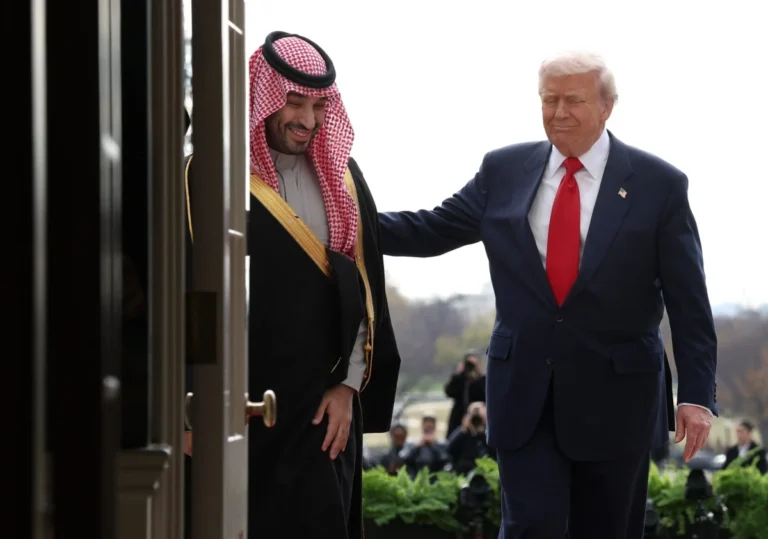
Amid these escalating security challenges, Crown Prince Mohammed bin Salman has actively lobbied Washington for direct military assistance and enhanced defensive backing. However, the United States has stopped short of directly intervening in Riyadh’s renewed hostilities with the Houthi movement.
The administration of U.S. President Donald Trump has declined requests to authorize direct offensive or defensive U.S. military strikes against Houthi positions inside Yemen. Instead, Washington has chosen a more limited approach, offering extensive intelligence-sharing, tactical reconnaissance, and targeted logistical support. This calculated hesitation reflects a broader American strategic shift toward avoiding entanglements in intractable regional conflicts, leaving Saudi Arabia primarily responsible for managing its own immediate air-defense requirements.
Riyadh Widens Its Diplomatic and Security Net
Faced with limited American bandwidth and stretched European resources, Riyadh has accelerated its outreach to alternative defense partners. In addition to approaching France and the United Kingdom, Saudi officials have initiated discussions with Pakistan to explore potential military cooperation and technical support for air-defense operations.
While British officials have publicly acknowledged London’s long-standing and "close defense partnership" with Riyadh, they have declined to comment on whether a formal request for emergency military hardware has been submitted. Similarly, while regional insiders confirm that Saudi Arabia has sounded out Islamabad, Pakistani and Turkish representatives have noted that no formal requests have yet been processed through the framework of the recently established trilateral defense pact linking Saudi Arabia, Pakistan, and Türkiye.
Concurrently, heavy diplomatic machinations are running parallel to these military inquiries. Regional intermediaries, notably Oman and Egypt, have assumed leadership roles in mediating a durable de-escalation framework. These diplomatic efforts recently culminated in direct, closed-door talks between United States and Houthi representatives in Muscat. Observers close to the negotiations suggest that regional powers have deliberately chosen to grant diplomacy a final opportunity to secure a sustainable ceasefire before military escalations spiral out of control.
Long-Term Modernization Versus Immediate Realities
The current crisis over dwindling interceptors stands in stark contrast to long-term military procurement announcements. Washington recently approved a massive, multi-billion-dollar potential foreign military sale to Saudi Arabia, valued at approximately $24.3 billion, authorizing the acquisition of 48 advanced F-35 Lightning II stealth fighter jets.
The comprehensive procurement package encompasses 49 Pratt & Whitney engines, sophisticated communications suites, specialized ground support equipment, and extensive logistical maintenance packages. If the transaction clears the necessary legislative hurdles in the U.S. Congress, Saudi Arabia will secure its status as the sole Arab nation operating the fifth-generation stealth combat aircraft.
However, defense analysts emphasize that the acquisition of advanced strike aircraft does nothing to resolve Saudi Arabia’s immediate, existential operational vulnerability. While the F-35 represents a formidable long-term investment in regional deterrence and air superiority, it addresses an entirely different strategic requirement than the ground-based anti-air interceptors needed today. Intercepting high-speed ballistic missiles and low-flying suicide drones requires specialized surface-to-air missile batteries and continuous munition replenishment—capabilities that cannot be substituted by multi-role stealth fighters, which themselves will take years to manufacture, deliver, and fully integrate into the Royal Saudi Air Force.
Implications for Middle Eastern Stability
The scramble by Saudi Arabia to secure emergency air-defense supplies underscores the fragility of the current regional security architecture. As asymmetrical warfare tactics—exemplified by low-cost drones and cruise missiles—continue to outpace traditional, high-cost defense manufacturing models, nations across the Middle East face mounting challenges in protecting critical infrastructure.
For Riyadh, the path forward requires a delicate balancing act. The kingdom must successfully navigate the limitations of its traditional Western security guarantees, forge pragmatic defense arrangements with alternative international partners, and earnestly pursue political settlements through regional mediation. Until a comprehensive diplomatic resolution is achieved in Yemen and broader regional flashpoints are cooled, Saudi Arabia’s air defenses will remain under intense operational strain, testing the limits of the kingdom’s military readiness and its network of international alliances.