The terrorist attacks of September 11, 2001, serve as a definitive historical inflection point, marking the moment when the post-Cold War era of optimism dissolved into a period of global insecurity. As the Twin Towers of the World Trade Center in New York City crumbled into ash and twisted steel, the geopolitical landscape shifted instantaneously. For Germany, a nation still navigating its post-reunification identity, the tragedy was not merely a distant atrocity but a direct confrontation with the realities of domestic radicalization and the heavy responsibilities of global leadership. German President Johannes Rau, observing the unfolding catastrophe from Berlin, captured the gravity of the moment with a statement that has since become an epitaph for the 20th century: "This day has changed the world."
Nearly 3,000 lives were extinguished on that Tuesday morning when four commercial airliners were converted into guided missiles. While the shockwaves were felt across every continent, the realization that Germany had served as the operational launchpad for the atrocities brought the tragedy to the nation’s doorstep.
A Crucible of Radicalization: The Hamburg Cell
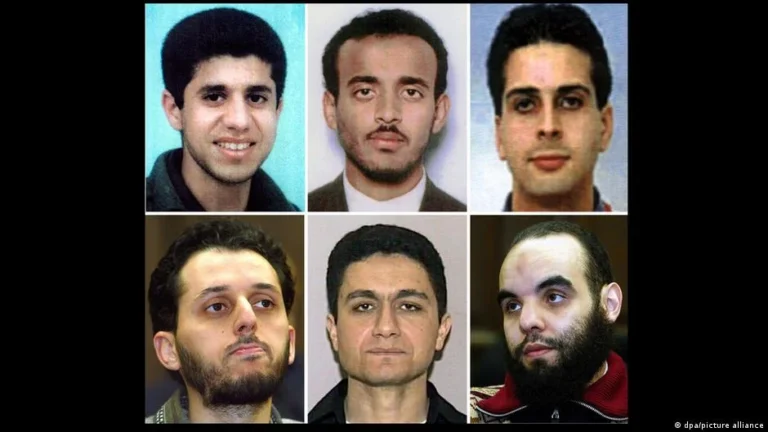
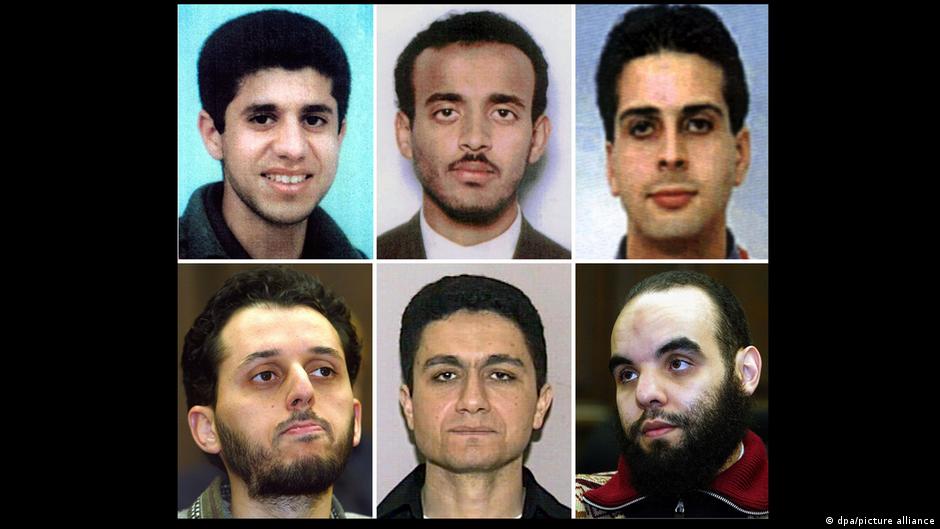
The investigation into the attacks rapidly dismantled the narrative that the 9/11 hijackers were entirely foreign entities disconnected from Western society. Within days, intelligence agencies focused on a cluster of radicalized students living in the Harburg district of Hamburg. At the center of this web was Mohamed Atta, an Egyptian national who had arrived in Germany in 1992 to study urban planning.
The "Hamburg Cell," as it became known, provided the tactical and ideological backbone for the attacks. Atta, alongside co-conspirators like Marwan al-Shehhi and Ziad Jarrah, frequented the Al-Quds Mosque—a facility that would later become a focal point for counter-terrorism scrutiny. The radicalization process, occurring in the heart of a European liberal democracy, exposed a dangerous blind spot in German domestic intelligence. It proved that the perpetrators were not only willing to live in the societies they sought to destroy but were capable of exploiting those very societies’ educational and social structures to plot their demise.
Chronology of the Aftermath and Legal Reckoning
The legal response to the Hamburg Cell was unprecedented in German history. In 2003, the Hanseatic Higher Regional Court presided over the world’s first trial related to the 9/11 attacks, convicting Mounir al-Motassadeq for his role as an accomplice. He was sentenced to 15 years in prison, the maximum allowed, for aiding and abetting thousands of murders and maintaining membership in a terrorist organization.
However, the pursuit of justice often intersected with the complex, and at times controversial, landscape of international detention. The case of Murat Kurnaz, a German-born resident of Turkish descent, became emblematic of the tensions between national security and human rights. Detained in Afghanistan and subsequently transferred to the U.S. facility at Guantanamo Bay, Kurnaz spent nearly five years in custody without trial or formal evidence of involvement in the 9/11 plot.
The ensuing parliamentary inquiry in the German Bundestag brought the highest levels of government under scrutiny. Current German President Frank-Walter Steinmeier, who served as Foreign Minister during the period of the inquiry, faced intense questioning regarding the government’s refusal to facilitate Kurnaz’s early return to Germany in 2002. Steinmeier’s defense—that the government was balanced between the humanitarian obligation to a resident and the sovereign duty to maintain national security—highlighted the moral dilemmas faced by Western leaders in the immediate shadow of the attacks.
Policy Shifts: From Unconditional Solidarity to Legislative Reform
The immediate political reaction from Berlin was one of total alignment with the United States. Chancellor Gerhard Schröder’s address to the Bundestag on September 12, 2001, remains one of the most consequential speeches in German diplomatic history. His pledge of "unconditional solidarity" signaled an end to Germany’s post-war reticence regarding military engagement abroad.
This diplomatic pivot was quickly codified into law. Between 2001 and 2002, the German government enacted sweeping "security packages" that fundamentally altered the relationship between the state and the privacy rights of its citizens. The Anti-Terrorism Act granted intelligence agencies unprecedented access to financial, telecommunications, and airline data. It also provided the legal framework to ban religious organizations deemed to be in violation of the Basic Law—the German constitution.
These measures, while framed as necessary to identify "sleeper agents," met with significant resistance from civil liberties advocates and eventually the Federal Constitutional Court. By 2006, the court began to roll back the more expansive data-mining practices, ruling that broad, suspicionless surveillance was unconstitutional. The legal tug-of-war that followed underscored the difficulty of maintaining a constitutional democracy while simultaneously hardening a state against asymmetrical threats.
Military Consequences and the Legacy of Afghanistan
Perhaps the most lasting impact of 9/11 on Germany was its direct entry into the war in Afghanistan. In December 2001, following the U.S.-led invasion targeting the Taliban and al-Qaeda, Germany deployed forces as part of the International Security Assistance Force (ISAF).
This mission represented a massive psychological and structural shift for the Bundeswehr. For 20 years, German soldiers operated in a combat theater for the first time since the Second World War. The human cost was significant: 59 German soldiers and three police officers lost their lives during the two-decade deployment. The mission’s chaotic conclusion in August 2021, which saw the Taliban return to power, prompted a profound national debate regarding the efficacy of interventionist foreign policy and the long-term objectives of the "War on Terror."
Analysis: A World Permanently Altered
In retrospect, the events of September 11, 2001, did not merely trigger a series of legislative and military reactions; they fundamentally reshaped the architecture of the modern state. For Germany, the attacks forced a transition from a security policy defined by regional stability to one defined by global vigilance.
The socio-political implications are still being analyzed. The rise of surveillance states, the erosion of privacy, and the transformation of the intelligence apparatus were all direct responses to the realization that the threat of terrorism was not limited to borders. Furthermore, the integration of Germany into a globalized counter-terrorism effort created a lasting tension between the protection of democratic values and the necessities of national security.
The legacy of the Hamburg Cell and the subsequent parliamentary inquiries suggests that while the state must be vigilant, the preservation of the rule of law is the ultimate safeguard against the extremism it seeks to combat. As the global community looks back on the 9/11 era, the German experience offers a stark reminder: the most significant changes often occur not on the battlefield, but in the legislative halls and the courtrooms where the balance between safety and liberty is continuously redrawn.
Today, the words of Johannes Rau serve as both a historical record and a warning. The world that was changed on that September morning is one that continues to grapple with the instability and the defensive measures birthed by the collapse of the Twin Towers. Whether the response was entirely proportionate or effective remains a subject of intense academic and political discourse, but the reality remains that the events of that day established a new baseline for global governance—one characterized by a permanent state of alertness and the enduring challenge of reconciling national security with the foundational principles of a free society.