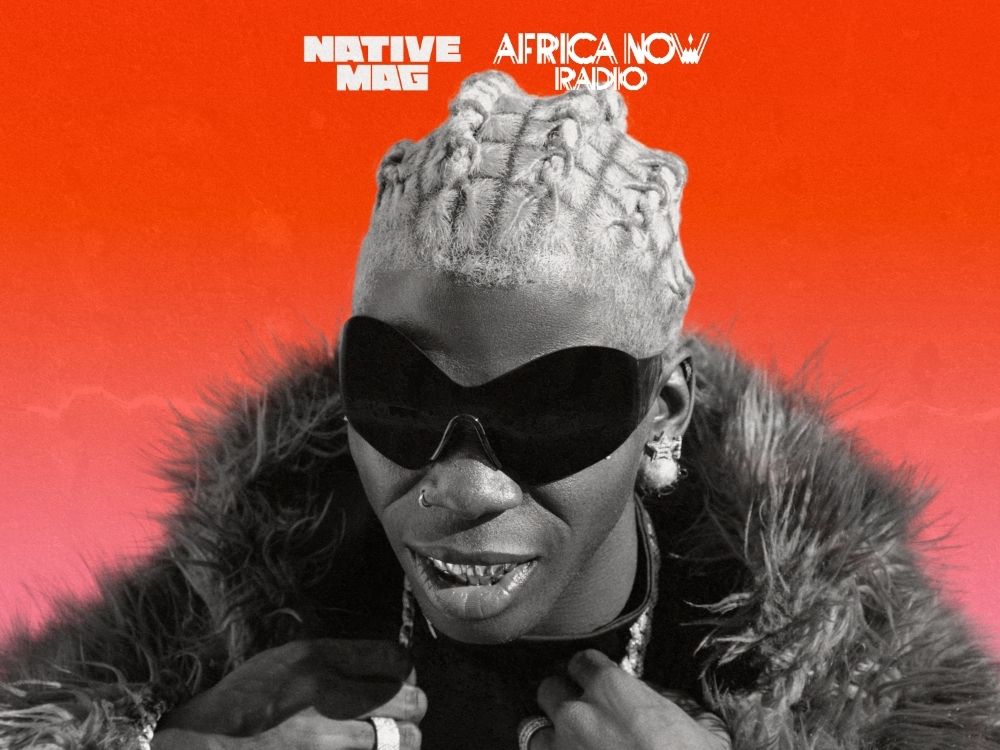
The trajectory of Nigerian Afropop sensation Seyi Vibez has been nothing short of meteoric. Since his breakout period in 2021 with the seminal project NSNV, the artist, born Balogun Afolabi Oluwaloseyi, has transitioned from a localized street-pop icon to a figure of significant international interest. His latest studio album, SWAGUU, released in September 2026, serves as a definitive statement of this evolution, signaling a departure from his strictly indigenous roots toward a soundscape that embraces global R&B, Trap, and House influences. This transition is not merely stylistic but ideological, as the artist recalibrates his identity to match his expanding commercial footprint.
A Chronology of Evolution: From Street-Pop to Global Ambition
To understand the significance of SWAGUU, one must examine the rapid progression of the artist’s career over the last five years. In 2021, Seyi Vibez emerged as the voice of the Nigerian underclass. His lyrics, deeply rooted in the harsh realities of life in Ikorodu and the broader Lagos landscape, focused on themes of predestination, institutional neglect, and the daily grind of the common citizen.
The 2025 release of FUJI MOTO served as the crucial pivot point. In that project, listeners observed a deliberate experimentation with sonic textures that strayed from his traditional Fuji-fused Afropop foundations. By integrating heavier basslines typical of Western Trap and the polished, rhythmic syncopation of House music, Seyi Vibez began constructing a bridge between the Lagos "streets" and the global music market. SWAGUU, arriving just over a year later, represents the completion of this transition. The album features a more refined production quality and a thematic shift toward introspection, love, and the psychological weight of newfound fame.
Thematic Depth and Creative Synthesis
At the heart of SWAGUU lies a desire for artistic maturity. While previous records often focused on the external struggles of survival, the new album delves into the internal life of the artist. Tracks such as "DIAMONDS" and "MELANIN" exemplify this shift, moving away from the gritty street narratives that defined his early career to explore concepts of love, longing, and the complexities of adult emotional expression.
"I feel like, on this album, I’m becoming a man more because I used to be a boy," the artist stated in an interview with Apple Music’s Africa Now Radio. "I’m evolving as an African. I’m a man now. I feel like my emotions are real, and I’m supposed to tell that in my story."
This maturation is particularly evident in "BACK 2 U," a track that functions as a nostalgic bridge to his past. The song reconciles his current global status with the formative memories of his time at Lagos State University, where he first began to conceptualize his musical identity. By juxtaposing the simplicity of his youth with the complex reality of his present, the artist provides a narrative anchor for his listeners.
The Cultural Significance of "Swaggu"
The title of the album is a deliberate linguistic statement. By opting for "SWAGUU"—a localized Nigerian pronunciation of the English word "swag"—the artist asserts his identity while simultaneously rebranding it for a global audience. This duality is central to his current persona. He is no longer just a local hero; he is a global entity that remains tethered to the cultural vernacular of Lagos.
"I feel like my name is Swaggu now," he explains. "I’m really from Lagos. My dad is from Lagos. So, I feel like Swaggu. It’s just about my style and the new guy on the block." This branding exercise reflects a sophisticated understanding of image management in the digital age, where authenticity and localized branding often drive global engagement.
Sonic Landscapes and Environmental Influence
A notable feature of SWAGUU is the song "GTA," which draws inspiration from the Grand Theft Auto video game series. The track utilizes siren sound effects that serve a dual purpose: they mirror the chaos of the gaming experience while simultaneously reflecting the sonic environment of Lagos.
"In Lagos, it’s like everywhere is noisy," the artist noted. "Every art I make is a reflection of where I come from. The security might pass, the police might pass, and the siren is on. In the game, when the guy commits a crime, the police are looking for the enemy, and the enemy is running away—there’s a lot of sirens. So now, it’s like it’s syncing with the Lagos noise, and I feel like that’s a double reflection." This ability to synthesize disparate influences—ranging from digital entertainment to urban sociopolitical reality—is a hallmark of his current creative process.
Strategic Collaborations and Industry Impact
The inclusion of American rapper Quavo on the album’s title track, "SWAGUU," is perhaps the most significant indicator of the project’s global ambitions. The collaboration is not merely a feature for the sake of marketability; it serves as a symbolic alignment between the American Trap movement and the Nigerian street-pop aesthetic.
Industry analysts point out that this collaboration functions as a "stamp of approval" from the global Hip-Hop scene, providing Seyi Vibez with a legitimate pathway into international charts. For the artist, the collaboration is about legacy. "I’m trying to show these young artists they can do better than me," he remarked regarding the collaboration. "I’m trying to show that even a ghetto child can do it."
Broader Implications for the Afropop Genre
The release of SWAGUU comes at a critical juncture for Afropop. As the genre continues to capture significant market share in the United States, Europe, and Asia, the pressure on artists to "internationalize" their sound often leads to the dilution of cultural specificity. Seyi Vibez, however, appears to be navigating this by doubling down on his local identity while expanding his sonic palette.
His work on tracks like "ALUBARIKA," which utilizes a blend of South African and Nigerian rhythmic structures, demonstrates a pan-African approach that is increasingly popular among the new generation of Afropop stars. By centering the theme of "Alubarika" (good fortune) within a celebratory, high-energy beat, he manages to maintain the infectious joy that characterized his earlier work while elevating the production value to meet international standards.
Conclusion: The New Epoch
The transition of Seyi Vibez from an upstart in the Lagos music scene to a globally-minded artist is a testament to the versatility of contemporary African musicians. SWAGUU is not just a collection of songs; it is a declaration of arrival. By merging the raw, unvarnished energy of his origins with a more polished, introspective approach to songwriting, the artist has successfully broadened his appeal without sacrificing the core of his musical philosophy.
As the industry moves into the latter half of the decade, the success of SWAGUU will likely be measured by its ability to maintain its momentum in non-traditional markets. With a clear vision, a evolving sound, and an unwavering connection to his roots, Seyi Vibez has established a blueprint for how an artist can grow into global superstardom while remaining fundamentally, and unapologetically, "Swaggu." Whether his fans and the broader critical establishment will fully embrace this transition remains to be seen, but the initial response suggests that the artist has successfully navigated the most difficult phase of his career: the evolution from a rising star to a seasoned global performer.