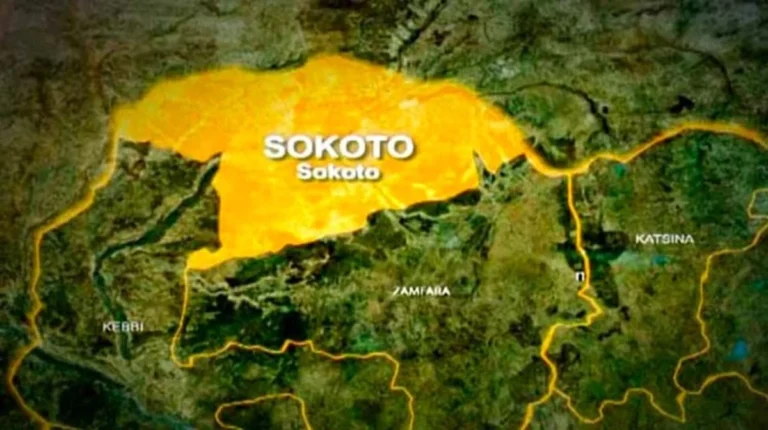
The Sokoto State Government has officially announced September 13 and September 14, 2026, as the designated resumption dates for boarding and day schools respectively, marking the official commencement of the first term of the 2026/2027 academic session. This announcement, which aims to provide clarity and structured planning for millions of students, parents, and educational administrators across the state, comes amidst a complex socio-security landscape that continues to shape educational delivery in northwestern Nigeria.
According to an official statement released on Friday by the Public Relations Officer for the State Ministry of Basic and Secondary Education, Ibrahim Muhammad Iya, boarding school students are expected to return to their respective dormitories on Sunday, September 13, 2026. Meanwhile, day students across all public and private primary and secondary educational institutions will resume academic activities the following day, Monday, September 14, 2026.
However, the state government has maintained a cautious stance regarding educational institutions located in zones severely impacted by banditry and localized insecurity. Schools that were previously shut down due to security concerns will remain indefinitely closed. The ministry emphasized that these shuttered institutions will only reopen when security agencies and state authorities are fully satisfied that the affected areas are safe and secure for the unrestricted movement and habitation of students, teachers, and non-teaching staff. A separate reopening schedule for these vulnerable schools will be communicated to the public once the security situation is deemed stable and appropriate.
The Ministry’s Directive and Compliance Strategy
In the wake of the resumption announcement, the Sokoto State Ministry of Basic and Secondary Education has rolled out a comprehensive compliance and monitoring framework to ensure that academic activities commence without delay. The ministry has strongly urged parents, guardians, School-Based Management Committees (SBMCs), and Parents-Teachers Associations (PTAs) to ensure that students return to their respective schools promptly and in an orderly manner to maximize the instructional time allocated for the new term.
Concurrently, teaching and administrative staff have been directed to report to their duty posts ahead of the resumption dates to prepare classrooms, review syllabi, and welcome incoming students. To guarantee adherence to these directives, the ministry has announced that its corps of educational inspectors will embark on extensive, unannounced monitoring visits to schools across all local government areas of the state. These inspections are designed to assess compliance with the approved resumption schedule, evaluate the readiness of school infrastructure, and ensure that teaching and learning begin in earnest from day one.
Prof. Ahmad Ladan Ala, the Sokoto State Commissioner for Basic and Secondary Education, has further directed the heads of various parastatals and agencies operating under the ministry’s umbrella to maintain an active presence on the ground. These agency heads are tasked with overseeing the resumption exercise within their jurisdictions, troubleshooting operational bottlenecks, and guaranteeing a seamless transition into the 2026/2027 academic year.
Reflecting on the conclusion of the previous academic calendar, Commissioner Ala expressed profound gratitude to education stakeholders, including teachers, community leaders, and development partners, for their invaluable contributions to the successes recorded during the 2025/2026 session. He urged these critical partners to sustain their unwavering commitment, cooperation, and vigilance as the state embarks on a new academic journey, concluding with a formal wish for a successful, safe, and academically productive 2026/2027 session for all students, educators, and administrators.
The Broader Context of Education in Northwestern Nigeria
The announcement by the Sokoto State Government underscores the delicate balancing act required of sub-national administrations in northwestern Nigeria, where the imperative of driving human capital development must constantly be weighed against the stark realities of regional insecurity. Over the past decade, states such as Sokoto, Zamfara, Katsina, Kaduna, and Kebbi have borne the brunt of armed banditry, cattle rustling, and sporadic abductions targeting vulnerable rural communities and, in some high-profile instances, educational institutions.
The systematic targeting of schools by non-state actors has historically led to mass withdrawals of students, prolonged closures, and a general disruption of the educational ecosystem. In response to these asymmetric threats, state governments have increasingly adopted localized security frameworks, coordinating closely with military and paramilitary forces to fortify educational infrastructure, establish early-warning systems, and relocate vulnerable schools to safer urban centers where feasible.
Sokoto State’s policy of maintaining localized closures in high-risk zones reflects a prioritized commitment to the safety of lives over rigid adherence to academic calendars. While this pragmatic approach prevents catastrophic security breaches, it simultaneously creates significant educational disparities between urban centers—where academic calendars proceed with minimal interruption—and rural peripheries, where students face prolonged interruptions in their foundational learning.
Socio-Economic Implications and Policy Analysis
The commencement of the 2026/2027 academic session carries profound socio-economic ramifications for Sokoto State and the broader Nigerian federation. Education remains one of the primary drivers of poverty reduction, social mobility, and long-term economic productivity. Sustained interruptions in schooling not only threaten individual academic progression but also exacerbate the out-of-school-children crisis that disproportionately affects northern Nigeria.
From an economic perspective, the reopening of boarding and day schools stimulates local commerce. The educational supply chain—encompassing textbook publishers, uniform tailors, transport operators, food vendors, and local market traders—experiences a seasonal surge in economic activity coinciding with school resumptions. When schools remain closed due to insecurity, local economies dependent on student populations suffer severe contractions, compounding the economic vulnerability of rural households.
Furthermore, educational analysts emphasize the critical importance of psychosocial support for students returning from conflict-affected or insecure environments. The transition back to structured learning environments requires targeted interventions by school counselors and educational psychologists to address potential trauma, anxiety, and learning regression resulting from prolonged displacement or exposure to community violence.
The proactive stance adopted by the Sokoto State Ministry of Basic and Secondary Education—characterized by strict inspection regimes, stakeholder engagement, and conditional reopening policies—serves as an institutional mechanism to mitigate these systemic risks. However, experts note that sustainable educational recovery in the region ultimately depends on broader, multi-layered security reforms, intelligence-driven rural policing, and enhanced community-level integration between security architectures and local civilian populations.
Looking Ahead: Expectations for the 2026/2027 Academic Year
As educational institutions across Sokoto State prepare to open their gates on September 13 and 14, 2026, the focus shifts squarely to execution and resilience. School administrators face the dual challenge of optimizing instructional delivery within compressed term frameworks while maintaining rigorous safety protocols for residential and day students alike.
Parents and guardians are confronted with the financial planning necessary to meet back-to-school demands amid broader national macroeconomic pressures, including the cost of learning materials, transportation, and tuition fees in private institutions. Meanwhile, civil society organizations and education advocates continue to monitor the situation, calling for increased budgetary allocations to educational infrastructure, enhanced perimeter security for rural schools, and transparent communication regarding the future status of institutions currently shuttered due to insecurity.
Ultimately, the successful navigation of the 2026/2027 academic session in Sokoto State will serve as a vital benchmark for regional educational administration, demonstrating how state governments can maintain the continuity of learning while tenaciously safeguarding the lives and well-being of the next generation of scholars.