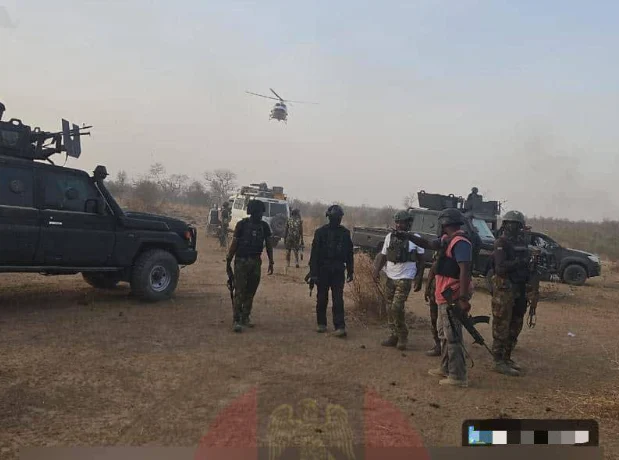
The Nigerian Army has achieved a significant operational victory in Bauchi State, dismantling key bandit enclaves and rescuing kidnapped victims, as troops from the 33 Artillery Brigade under Operation WUTAN DAJI conducted a series of coordinated clearance operations. This major success, announced on Tuesday, April 14, 2026, via the Army’s official Facebook handle, saw security forces penetrate the notorious Kumbodoro Forest and sweep through Kumbodoro Village, dealing a substantial blow to the criminal networks that have long plagued the region. However, this triumph is tempered by the tragic confirmation from the Bauchi State Police Command of the death of a vigilante member in a separate bandit ambush within the Yankari Game Reserve just two days prior, underscoring the complex and persistent nature of insecurity in Nigeria’s North-Eastern flank.
Operation WUTAN DAJI: A Decisive Strike Against Banditry
The offensive, meticulously planned and executed, targeted the heart of bandit operations in the Kumbodoro axis, a challenging terrain often exploited by criminals for its dense cover and strategic location. The 33 Artillery Brigade, a specialized unit known for its precision and firepower, spearheaded the ground operations, supported by the critical intervention of the Nigerian Air Force’s Air Component. This synergy between ground and air forces proved instrumental in achieving the operation’s objectives, allowing troops to effectively neutralize threats from multiple angles and deny bandits opportunities to regroup or escape.
Among the significant achievements of Operation WUTAN DAJI was the successful clearance of several bandit strongholds, including the particularly infamous Azuge camps. These camps, often serving as logistical hubs, detention centers for kidnap victims, and training grounds for new recruits, represented a major threat to surrounding communities. Their dismantling signifies a considerable degradation of the bandits’ operational capabilities, disrupting their command and control structures and limiting their freedom of movement.
During the intense engagements, troops successfully neutralized several bandits, whose exact numbers were not specified but were described as "many," further diminishing the human resources available to these criminal gangs. Crucially, the operation led to the rescue of eight kidnapped victims, a testament to the focused efforts on safeguarding civilian lives. These victims, whose identities and ordeal details were not immediately released, are now receiving necessary medical attention and psychological support, with efforts underway to reunite them with their families. The successful rescue operation brings a ray of hope to communities frequently terrorized by abductions, which have become a pervasive feature of banditry in many parts of Nigeria.
A thorough search of the cleared enclaves yielded a substantial cache of arms and equipment, offering critical insights into the bandits’ armaments and operational methods. Recovered items included four skeletal rifles, four dane guns, one FN rifle magazine, and one AK-47 magazine. The presence of skeletal rifles and dane guns, often crudely fabricated but highly lethal, highlights the diverse and sometimes makeshift weaponry employed by these groups, while the FN and AK-47 magazines point to access to more sophisticated, military-grade firearms. Beyond weaponry, troops also recovered communication devices, including six mobile handsets, radio chargers, and a power bank, which are vital for coordinating their nefarious activities across vast distances. Other significant finds included two pairs of boots, three helmets, a StarTimes decoder, QJC meta links, a jackknife, arrows, OPAY ATM cards, photographs, an identity card, several pairs of security agency uniforms, and leg chains. The recovery of security agency uniforms is particularly alarming, suggesting potential impersonation tactics used by bandits to deceive or intimidate their victims and bypass checkpoints, further complicating the security landscape. The leg chains are a chilling reminder of the inhumane conditions in which kidnapped victims are often held.
Combating Economic Sabotage: Recovery of Stolen Livestock
In a related and equally important development, troops deployed at Duguri, acting on actionable intelligence, successfully recovered 36 cows at Mushen Kura Village. This operation, conducted in collaboration with local vigilantes, saw the livestock abandoned by fleeing bandits due to sustained military pressure. Cattle rustling is a significant economic component of banditry, devastating local economies and depriving pastoral communities of their livelihoods. The recovery of these animals not only denies bandits a source of income but also represents a step towards restoring economic stability for affected communities. Efforts are reportedly ongoing to identify and return the recovered cows to their rightful owners, a process that often requires meticulous verification and community engagement.
Tragedy Strikes in Yankari: Vigilante Member Killed in Ambush
While the Army celebrated its successes, the fragility of the security situation was starkly highlighted by a tragic incident just days earlier. On Sunday, April 12, 2026, a joint patrol team comprising police officers from the Mai-Ari Outpost and local vigilantes came under a sudden ambush by suspected bandits at the Bakin Layi axis of the renowned Yankari Game Reserve. The reserve, a popular tourist destination and a critical wildlife conservation area, has increasingly become a hideout and transit route for criminal elements due to its vast, dense terrain.
During the fierce exchange of gunfire, Hambali Alhaji Sa’adu, a 27-year-old vigilante member, sustained fatal gunshot wounds. He was later confirmed dead by medical personnel and subsequently buried in accordance with Islamic rites, leaving behind a community mourning the loss of a dedicated local defender. The death of Sa’adu underscores the immense risks faced by local vigilantes who often operate with limited resources but possess invaluable local knowledge and commitment to their communities’ safety.
Responding swiftly to the attack, the security team regrouped, demonstrating resilience and tactical prowess. They trailed the assailants into the difficult terrain and engaged them in a sustained gun battle, ultimately forcing the bandits to retreat with suspected injuries. This pursuit operation culminated in the arrest of four suspects, who are currently in custody and undergoing investigation. The apprehension of these individuals is crucial, as their interrogation could provide vital intelligence on the bandits’ networks, operational plans, and collaborators, aiding future security operations. Nafiu Habib, the spokesperson for the Bauchi State Police Command, confirmed these details in a statement, reaffirming the command’s resolve to bring perpetrators to justice.
Contextualizing the Threat: The Scourge of Banditry in Northern Nigeria
The incidents in Bauchi State are not isolated occurrences but are part of a broader, more entrenched security crisis gripping Nigeria’s North-West and parts of the North-Central regions. Banditry, characterized by armed gangs engaging in mass abductions, cattle rustling, village raids, extortion, and sometimes territorial control, has evolved significantly over the past decade. What began largely as localized cattle rustling in states like Zamfara and Katsina has escalated into a sophisticated criminal enterprise, increasingly adopting tactics reminiscent of insurgency.
These criminal groups exploit vast ungoverned spaces, dense forests (such as the sprawling Rugu Forest complex that cuts across several states, and local forests like Kumbodoro), and socio-economic vulnerabilities including widespread poverty, high youth unemployment, and historical grievances. The proliferation of small arms and light weapons (SALWs) across West Africa further fuels their operations, allowing them to outgun and overwhelm local communities and sometimes even security forces.
Bauchi State, while historically less affected by the extreme levels of banditry seen in its western counterparts, faces spillover effects due to its geographical proximity to states like Kaduna, Plateau, and Gombe, which have experienced significant bandit and communal violence. The presence of large forested areas and the Yankari Game Reserve makes it a potential sanctuary or transit route for these criminals, necessitating proactive and sustained security operations like Operation WUTAN DAJI.
The economic impact of banditry is profound. Farmers are displaced from their lands, leading to food insecurity and disruption of agricultural supply chains. Trade routes are jeopardized by kidnapping-for-ransom operations, stifling economic activity. Education is severely affected, with schools frequently targeted for mass abductions, leading to widespread fear and closure of institutions. The humanitarian cost is equally devastating, with thousands displaced and living in precarious conditions, reliant on aid.
Strategic Responses and Inter-Agency Collaboration
The Nigerian Army and the Nigeria Police Force have consistently reaffirmed their commitment to restoring peace and stability across the affected regions. Their strategy revolves around intelligence-driven operations, aimed at denying criminals safe havens and degrading their capabilities. The recent successes in Bauchi underscore the effectiveness of this approach when robust intelligence is coupled with decisive military action.
Inter-agency collaboration, as demonstrated by the joint efforts of the Army, Police, and local vigilantes, is a cornerstone of this strategy. Local vigilantes, despite their vulnerabilities, provide invaluable intelligence, local knowledge, and community trust, which are often difficult for conventional security forces to replicate. Their integration into security operations, while managed carefully, is critical for sustained success. The air component’s role, as highlighted in Operation WUTAN DAJI, provides aerial surveillance, reconnaissance, and rapid strike capabilities, crucial for tracking bandits in difficult terrain and providing cover for ground troops.
Furthermore, the police’s call for residents, particularly those in rural communities, to remain vigilant and report suspicious activities, emphasizes the importance of community participation in security. A robust intelligence network relies heavily on the willingness of citizens to provide timely and accurate information, fostering a collective approach to security.
Implications and Broader Impact
The recent developments in Bauchi carry significant implications for the state and the broader fight against banditry. The Army’s success in clearing bandit enclaves and rescuing victims will undoubtedly boost morale among security forces and instill a greater sense of confidence within the affected communities. It demonstrates that with adequate resources and strategic execution, these criminal networks can be disrupted and their hold on territories loosened. This could potentially encourage displaced populations to return to their homes and resume their livelihoods, slowly rebuilding trust in the state’s ability to protect its citizens.
However, the tragic loss of a vigilante member serves as a stark reminder of the immense sacrifices being made and the persistent dangers faced by those on the front lines. It also highlights the adaptive nature of these criminal groups, who continue to pose threats even in the face of intensified security operations. The arrest of four suspects in the Yankari incident offers a crucial opportunity to gather more intelligence, potentially leading to further breakthroughs in dismantling these networks.
The recovery of security agency uniforms is a particularly concerning revelation. If confirmed that bandits are actively using these uniforms, it points to a sophisticated deception tactic that could undermine public trust in legitimate security forces and complicate counter-insurgency efforts. This necessitates increased vigilance and verification protocols for security personnel operating in affected areas.
Looking ahead, the long-term solution to banditry in Nigeria extends beyond kinetic military operations. While essential in the short term, sustainable peace requires addressing the root causes of the conflict, including poverty, lack of education, climate change-induced resource scarcity, and historical injustices. Government initiatives focused on economic development, social inclusion, conflict resolution, and justice reform will be crucial in preventing future generations from falling prey to recruitment by these criminal organizations. The continued efforts by the Nigerian Army, the Police, and other security agencies, supported by proactive community engagement and strategic partnerships, remain paramount in the ongoing struggle to restore lasting peace and security to Bauchi State and the wider northern region.