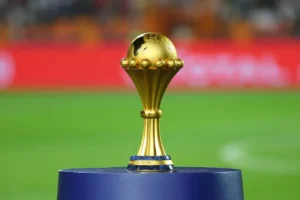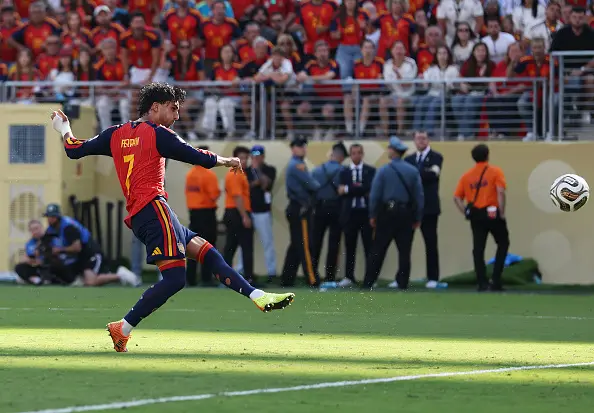
Spain has been crowned the 2026 FIFA World Cup champions, defeating defending champions Argentina 1-0 after a gripping extra-time battle in a final that will be etched into football history. The decisive moment arrived in the 106th minute at the colossal New York New Jersey Stadium in East Rutherford, United States, when Ferran Torres broke the deadlock, propelling La Roja to their second global triumph, 16 years after their maiden victory in South Africa in 2010. The highly anticipated clash pitted the tactical acumen and youthful exuberance of Luis de la Fuente’s Spanish side, spearheaded by teenage sensation Lamine Yamal, against the experience and formidable defensive resolve of Lionel Messi’s Argentina, who were aiming for a historic back-to-back success.
A Tense Final Decided in Extra Time
The atmosphere surrounding the New York New Jersey Stadium, more commonly known as MetLife Stadium, was electric hours before kick-off. Over 82,000 spectators, a sea of red, blue, and white, filled the venue, making it a fitting stage for the culmination of the world’s most prestigious football tournament. Expectations were sky-high, with pundits and fans alike anticipating a tactical masterclass and individual brilliance from both sides. Spain, renowned for their possession-based football and technical prowess, faced an Argentine side known for its grit, defensive solidity, and the unparalleled genius of Lionel Messi.
Pre-Match Atmosphere and Expectations
The final represented a clash of generations and philosophies. For Argentina, it was potentially the last World Cup dance for several stalwarts, most notably their talismanic captain, Lionel Messi, who sought to add an unprecedented fourth star to the Albiceleste jersey. The pressure on the defending champions was immense, carrying the hopes of a nation eager to witness a repeat of their triumphant 2022 campaign. Spain, on the other hand, arrived with a blend of seasoned veterans and a dazzling array of young talent, signaling a new era for Spanish football. Their journey through the tournament had been marked by a return to their traditional passing game, combined with a newfound directness and defensive solidity under Luis de la Fuente. The narrative was clear: a chance for Spain to solidify their new golden generation, or for Argentina to cement their place as one of the greatest footballing dynasties.
First Half: Tactical Stalemate and Martínez’s Heroics
From the opening whistle, the final lived up to its billing as a high-stakes encounter. Spain, as anticipated, immediately sought to impose their possession-based game, meticulously circulating the ball and probing Argentina’s defence. The midfield battle was intense, with Spain’s younger midfielders dictating tempo while Argentina’s experienced engine room, even without Enzo Fernández for the full 120 minutes, worked tirelessly to disrupt passing lanes and launch quick counter-attacks. Despite Spain’s dominance in possession, clear-cut chances were at a premium in the initial exchanges.
The most significant moments of the first half belonged to Argentina’s goalkeeper, Emiliano Martínez. The ‘Dibu’ once again showcased why he is considered one of the world’s elite shot-stoppers. He produced a series of crucial saves, denying Spain on at least two occasions from close range. A particularly memorable save came in the 28th minute when he instinctively parried away a powerful header from a Spanish forward, following a corner kick that looked destined for the net. Later, he spectacularly tipped a curling shot from outside the box over the bar. His heroics kept Argentina firmly in the contest, weathering the early Spanish storm and ensuring the score remained goalless at the interval. Argentina, meanwhile, struggled to create significant opportunities, with Messi often double-marked and their counter-attacks lacking the final incisive pass.
Second Half: Mounting Pressure and Argentina’s Setback
The second half saw a continuation of Spain’s offensive pressure. Coach Luis de la Fuente made tactical adjustments, pushing his wingers higher and encouraging more direct play towards the Argentine box. Lamine Yamal, Spain’s prodigious winger, grew increasingly influential, tormenting Argentina’s left-back with his blistering pace and dazzling dribbling skills. His runs created several half-chances, but Argentina’s defensive line, marshaled by their experienced centre-backs, remained resolute. The tension on the pitch was palpable, reflecting the enormous stakes. Spain’s frustration mounted as chance after chance was either blocked, went wide, or was heroically saved by Martínez.
As the clock ticked towards the end of regulation time, the game became more open, with both teams pushing for a winner to avoid extra time. Argentina, despite being on the back foot for much of the half, managed to launch a couple of dangerous counter-attacks, testing the Spanish defence. However, the most significant moment of the second half, and arguably the entire match, occurred in stoppage time.
Enzo Fernández’s Red Card: A Turning Point
In the 90+2 minute, Argentina suffered a significant blow when midfielder Enzo Fernández was sent off after receiving his second yellow card. The first caution had come earlier in the second half for a cynical foul to break up a Spanish counter. The second, equally impactful, was for a reckless challenge on a Spanish player in the midfield as Spain was attempting to launch another quick attack. The referee, after consulting VAR to confirm the foul but not the card itself, brandished the red, leaving Argentina to face the entirety of extra time with ten men. The decision, though debated by Argentine fans, was deemed correct under the laws of the game. This numerical disadvantage fundamentally altered the dynamic of the match, shifting momentum decisively in Spain’s favour.
Extra Time: Spain Capitalizes on Numerical Advantage
With a man down, Argentina’s strategy in extra time was clear: defend with every ounce of energy and hope for a penalty shootout. They dropped deeper, forming a compact defensive block, and relied on sporadic long balls towards their isolated attackers. Spain, sensing their opportunity, intensified their assault. Wave after wave of Spanish attacks crashed against the Argentine defence, which bent but refused to break for the first 15 minutes of extra time. Fatigue began to set in for both sides, but Spain’s extra man allowed them to maintain a higher tempo and wider attacking formations.
Ferran Torres’s Moment of Glory
The breakthrough finally arrived in the 106th minute. The goal was a testament to Spain’s persistence and tactical discipline. A fluid passing move began deep in Spain’s half, quickly progressing through the midfield. Nico Williams, who had been a constant threat down the left flank, received the ball near the touchline, drove towards the byline, and delivered a perfectly weighted, low cross into the box. Ferran Torres, having made a late, intelligent run into the six-yard box, anticipated the pass flawlessly. He connected with a first-time finish, guiding the ball past the outstretched hand of Emiliano Martínez and into the back of the net. The roar from the Spanish contingent in the stadium was deafening, a mix of relief and euphoria.
Argentina’s Final Efforts
Despite the setback, Argentina displayed incredible resilience. Even with ten men and the clock ticking down, they pushed forward in the final minutes of extra time, desperate for an equalizer. Messi, despite being visibly exhausted, attempted to conjure one last moment of magic, but the Spanish defence, invigorated by the lead, held firm. They defended resolutely, denying Argentina any clear-cut chances in the dying moments. When the final whistle blew, signalling Spain’s victory, the Spanish players erupted in celebration, while their Argentine counterparts collapsed onto the pitch, utterly dejected but having given everything.
La Roja’s Resurgent Journey to the Summit
Spain’s journey to their second World Cup title was a narrative of resurgence, tactical evolution, and the blossoming of a new generation of talent. Under coach Luis de la Fuente, who took the helm following the 2022 World Cup, the team meticulously rebuilt, blending the technical mastery inherent in Spanish football with a newfound resilience and directness.
A New Generation Forges Its Path
De la Fuente’s philosophy centred on trust in youth, integrating players who had excelled at various age-group levels for Spain, many of whom he had coached personally. This culminated in a squad that combined the experience of players like Rodri and Dani Carvajal with the electrifying potential of talents such as Pedri, Gavi (if healthy), Nico Williams, and most notably, Lamine Yamal. Yamal, at just 18 years old, was arguably the breakout star of the tournament, his fearless dribbling, vision, and maturity belying his tender age. He became a symbol of Spain’s renewed attacking verve and creativity, captivating audiences with his performances throughout the group and knockout stages.
Navigating the Knockout Gauntlet
Spain’s path to the final was arduous, showcasing their adaptability and mental fortitude. After topping their group with an impressive record, they faced a series of formidable opponents in the knockout rounds:
- Round of 16 vs. Austria: A professional 2-0 victory, demonstrating their defensive solidity and clinical finishing.
- Quarter-finals vs. Portugal: A tightly contested 1-0 win, where Spain’s tactical discipline shone through against a potent Portuguese attack led by Cristiano Ronaldo (or a younger generation Portuguese star).
- Semi-finals vs. Belgium: A 3-1 triumph, highlighting their attacking prowess and ability to control the midfield against a highly-rated Belgian side.
- Semi-finals vs. France: A dramatic 2-1 victory over the 2018 champions, where they overcame an early deficit to secure their place in the final, proving their mettle against the toughest competition. This match, in particular, was lauded for its tactical intensity and the individual brilliance displayed by Spain’s young stars under immense pressure.
Each victory underscored Spain’s growth as a team, capable of adjusting their game plan, absorbing pressure, and delivering decisive blows. The collective effort, coupled with moments of individual brilliance, built momentum and confidence, culminating in their final triumph.
Echoes of 2010: Spain’s Enduring Legacy
The 2026 victory draws inevitable parallels with Spain’s 2010 triumph in South Africa. While the 2010 team, under Vicente del Bosque, was defined by the tiki-taka philosophy of Xavi and Iniesta, the 2026 squad represents an evolution. This team still values possession but combines it with greater verticality, pace on the wings, and a robust defensive structure. The common thread, however, is the Spanish football identity: technical excellence, intelligent movement, and an unwavering belief in their style of play. This second star cements Spain’s place among football’s elite nations, validating the significant investment in youth development and tactical innovation over the past decade. It signals not just a temporary peak, but a sustainable model for success.
Argentina’s Valiant Defence and Heartbreaking Defeat
For Argentina, the 2026 World Cup final ended in bitter disappointment, a cruel twist of fate for a team that had battled valiantly to defend their title. Despite their formidable defensive display and the enduring brilliance of Lionel Messi, the numerical disadvantage proved insurmountable.
The Burden of Defending Champions
Argentina entered the tournament as the reigning champions, carrying the heavy burden of expectation. Their campaign had been characterized by a blend of their familiar fighting spirit and moments of individual genius, particularly from Messi. They had navigated a challenging group stage and overcome strong opponents in the knockout rounds, displaying the resilience that had defined their 2022 success. Their path to the final was not without its difficulties, but each challenge seemed to steel their resolve, setting the stage for what many hoped would be another historic moment for South American football.
Lionel Messi’s Final Dance
The tournament was widely speculated to be Lionel Messi’s swansong on the World Cup stage. At 39 years old, the legendary forward continued to defy age, showcasing flashes of his unparalleled vision and dribbling prowess. While perhaps not as explosive as in his younger years, his influence on the pitch remained immense, dictating play, creating chances, and inspiring his teammates. In the final, he was a constant target for Spain’s defenders, often double-marked, limiting his direct impact. Despite the valiant effort, this final chapter in his illustrious World Cup career ended in heartbreak, denying him a potentially unprecedented fourth star for his nation. His post-match demeanour, a mix of pride and profound disappointment, underscored the personal significance of the occasion.
Emiliano Martínez: A Guardian Denied
Once again, goalkeeper Emiliano Martínez proved to be Argentina’s bulwark. His performance in the final was nothing short of heroic, making several world-class saves during regulation time that kept Argentina in the game against Spain’s relentless attacks. His agility, command of his area, and psychological edge were on full display, frustrating the Spanish forwards time and again. Without his interventions, the match could have been decided much earlier. His efforts, however, were ultimately not enough to overcome the tide, and even his formidable presence could not repel Ferran Torres’s perfectly placed shot in extra time. Martínez’s frustration was palpable after the goal, a testament to his competitive spirit and the immense pressure he faced.
A Legacy Cemented, Despite the Loss
Despite the defeat, Argentina’s run to the final and their overall performance in the tournament cemented their status as one of the world’s premier footballing nations. The team demonstrated immense character and tactical discipline, particularly in their defensive organization. This loss, while painful, does not diminish the achievements of this generation of Argentine players, especially their 2022 triumph. It will undoubtedly lead to a period of reflection and potential transition, particularly concerning the future of their ageing stars. However, the passion and talent within Argentine football suggest a quick return to contention for future major honours.
The 2026 FIFA World Cup: A Landmark Tournament
The 2026 FIFA World Cup marked a significant milestone in the history of the sport, being the first tournament to feature an expanded 48-team format and to be co-hosted by three nations: the United States, Canada, and Mexico.
North American Grandeur: The Host Nation Experience
The choice of the New York New Jersey Stadium (MetLife Stadium) for the final underscored the ambition and grandeur of the North American hosting. With its massive capacity and state-of-the-art facilities, it provided a spectacular backdrop for the showpiece event. The tournament itself was a logistical marvel, spanning numerous cities across three countries, showcasing diverse cultures and fan bases. The United States, in particular, leveraged its infrastructure and passion for major sporting events to deliver a seamless and memorable experience for players and fans alike. The widespread distribution of matches across various time zones and geographical locations demonstrated the feasibility and success of multi-nation hosting, setting a precedent for future expanded tournaments. The economic impact on the host cities, from tourism to local businesses, was substantial, further highlighting the global appeal and economic power of the World Cup.
The Expanded Format: A Test of Endurance
The 48-team format, a significant increase from the traditional 32, introduced new dynamics to the competition. While it allowed more nations to participate and experience the thrill of the World Cup, it also presented challenges in terms of scheduling, player welfare, and maintaining consistent quality across all matches. The tournament’s extended duration and increased number of games tested the endurance of teams and the depth of their squads. Spain’s success, with its blend of youth and experience, was a testament to their ability to manage player rotation and maintain peak performance through a longer, more demanding schedule, emphasizing the importance of squad depth in the modern era.
Reactions from the Camps
Immediately following the final whistle, emotions ran high on both sides, with initial reactions reflecting the elation of victory and the agony of defeat.
Spain’s Triumph: "A Dream Realized"
Coach Luis de la Fuente, visibly emotional, is expected to have lauded his team’s spirit, tactical discipline, and the belief they showed throughout the tournament. "This is a dream come true, not just for us, but for an entire nation," he might have stated in a post-match interview. "We worked tirelessly, believed in our philosophy, and these players, especially our young talents, have delivered something truly special. This generation has shown the world the future of Spanish football." Ferran Torres, the match-winner, would likely have expressed overwhelming joy. "To score the winning goal in a World Cup final… it’s indescribable. This is for all our fans, for everyone who believed in us. Nico’s pass was perfect, and I just had to put it away." Lamine Yamal, ever humble, would have probably reflected on the collective effort. "It’s incredible to be a World Champion at this age. We fought as a team, and this trophy belongs to every single player, every staff member, and every fan."
Argentina’s Reflection: "Pride Amidst Pain"
The Argentine camp would undoubtedly have been steeped in disappointment. Their coach, while devastated by the loss, would likely have expressed immense pride in his team’s efforts, particularly after playing with ten men. "It’s a tough pill to swallow, but I couldn’t be prouder of my players," he might have remarked. "They gave absolutely everything, fought until the last second. The red card changed the game, but we showed character. We’ll learn from this and come back stronger." Lionel Messi, though heartbroken, would likely have offered a message of gratitude to the fans and acknowledged Spain’s victory. "It hurts, deeply. We wanted to give our people another title. But we fought, and sometimes, football has these moments. Congratulations to Spain; they played a great tournament. I am forever grateful for the support of our fans, who never stopped believing."
FIFA’s Acclaim: A Global Spectacle
FIFA President Gianni Infantino would likely have extended his congratulations to Spain and commended both teams for an unforgettable final. He would also have praised the host nations for their exceptional organization of the expanded tournament. "The 2026 FIFA World Cup has been a resounding success, showcasing the global appeal and unifying power of football," he might have declared. "Congratulations to Spain on their incredible achievement, and to Argentina for their valiant effort. This tournament has set new benchmarks and demonstrated the exciting future of our beautiful game."
Implications: A New Era for Global Football
The outcome of the 2026 FIFA World Cup carries significant implications for the landscape of global football, impacting national teams, player valuations, and the sport’s evolving dynamics.
Spain’s Renewed Dominance
Spain’s second World Cup title unequivocally signals their return to the pinnacle of world football. This victory validates Luis de la Fuente’s vision and the sustained investment in youth development within the Spanish football federation. It firmly establishes a "new golden generation" of players who are poised to dominate international football for years to come. The blend of tactical discipline, technical prowess, and youthful exuberance displayed by this squad suggests a bright future, not just for the national team but also for the quality of play in La Liga as these talents mature further. This triumph will boost national morale and inspire a new wave of young footballers across the country.
The Future of Argentine Football
For Argentina, the defeat marks a potential turning point. While their legacy as defending champions and a footballing powerhouse remains intact, the loss in the final, coupled with the likely retirement of several key veterans, including Lionel Messi from international duty, heralds a period of transition. The focus will shift to identifying and integrating the next generation of Argentine talent, tasked with maintaining the high standards set by their predecessors. The challenge will be to rebuild while retaining their characteristic fighting spirit and passion, ensuring they remain contenders for future honours. The analysis of the red card incident will also be a key talking point in their post-tournament review.
Impact on Player Valuations and Club Football
The World Cup always serves as a global shop window for talent, and the 2026 edition was no exception. The stellar performances of Spanish players, particularly Lamine Yamal, Nico Williams, and Ferran Torres, will undoubtedly see their market valuations soar. Top clubs across Europe will be vying for their services or looking to secure their existing contracts. This will influence transfer market dynamics in the immediate aftermath of the tournament, potentially leading to significant moves and increased financial outlays for clubs seeking to acquire World Cup-winning talent. Similarly, players from other nations who shone will also see their profiles elevated.
The Evolving Landscape of the World Cup
The successful hosting by three nations and the expanded 48-team format have set a new precedent for future World Cups. While initial concerns existed regarding logistics and match quality, the tournament’s overall success suggests that FIFA’s vision for a more inclusive and globally spread event is viable. Future host bids will likely consider multi-nation partnerships, and the format’s continuation will mean more opportunities for emerging footballing nations on the world stage. This evolution reshapes the competitive dynamics of qualification and the tournament itself, making it a truly global festival of football.
Spain’s 2026 FIFA World Cup triumph is more than just a victory; it is a declaration of a new era, a testament to resilience, and a celebration of football’s enduring power to captivate and inspire. As the celebrations reverberate across Spain, the footballing world looks forward to the next chapter, shaped by the legacies forged and the lessons learned in the dramatic summer of 2026.