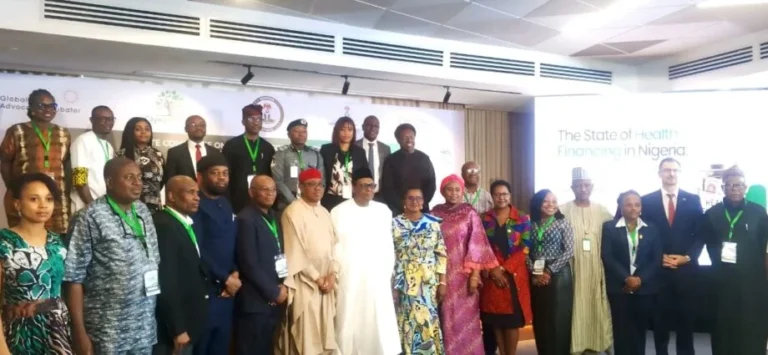
The landscape of healthcare delivery in Nigeria is currently at a pivotal crossroads as critical stakeholders, including government ministers, legislative leaders, and health advocates, converge to demand a radical shift toward sustainable domestic health financing. During the recent National Convergence on Sustainable Health Financing held in Abuja—a collaborative effort spearheaded by the Senate Committee on Health, the Caywood Brown Foundation, and various policy partners—the consensus was clear: the nation’s historical reliance on erratic donor funding is no longer viable for a country with Nigeria’s demographic scale and health challenges.
The summit served as a high-level platform to push for the accelerated passage of pending legislative instruments, specifically Senate Bills 713 and 886. These bills are designed to fortify the Basic Health Care Provision Fund (BHCPF), expand the reach of the Sugar-Sweetened Beverage (SSB) levy, and mandate the domestication of comprehensive health financing reforms across all 36 states of the federation.
The Economic Imperative of Health Sovereignty
For decades, Nigeria has maintained one of the lowest health-spending-to-GDP ratios globally. Coordinating Minister of Health and Social Welfare, Prof. Muhammad Pate, set a somber tone for the conference, reminding attendees that the quality of a nation’s health system is a direct reflection of its fiscal choices. "Health is not cheap," Prof. Pate stated, highlighting that for years, Nigeria operated at a per-capita health spend of less than $20. He argued that the aspiration for a world-class healthcare system cannot be achieved through tokenistic budgetary allocations or a persistent dependence on international development partners.
The minister’s call to action was twofold: he challenged the federal government to optimize existing resources through improved accountability and efficiency, while simultaneously urging state governors to fulfill their long-neglected obligations regarding counterpart funding for the BHCPF. According to federal health data, the failure of many state governments to provide their mandatory matching grants has historically paralyzed the implementation of primary healthcare initiatives at the grassroots level.
Legislative Hurdles and the Path Forward
The legislative arm of government is currently the primary focus for those seeking to cement these reforms. Sen. Ipalibo Harry-Banigo, the Chairman of the Senate Committee on Health and the sponsor of the primary bills under discussion, emphasized that the current legislative session is a critical window of opportunity. The proposed reforms aim to create a predictable financial architecture that separates health funding from the volatility of annual budget cycles.
The urgency is compounded by the 10th National Assembly’s nearing tenure end. Ms. Ibim Banigo, Executive Director of the Caywood Brown Foundation, stressed that there is little time to waste if these bills are to move through both chambers and reach the President’s desk for assent before the current legislative cycle concludes. The House of Representatives, in particular, is being urged to expedite its concurrence with the Senate to avoid the legislative process resetting.
Rep. Amos Magaji, Chairman of the House Committee on Healthcare Services, echoed these sentiments, noting that universal health coverage (UHC) requires robust institutions rather than temporary, fragmented solutions. "The Basic Health Care Provision Fund must become a reliable instrument for strengthening primary healthcare and protecting our poorest and most vulnerable citizens," Magaji stated, signaling a bipartisan commitment to the oversight of these funds.

Shifting the Paradigm: From Treatment to Prevention
A significant portion of the dialogue focused on the changing nature of the disease burden in Nigeria. As the country grapples with an epidemiological transition, the prevalence of non-communicable diseases (NCDs) such as hypertension, diabetes, and cardiovascular conditions is rising sharply. Dr. Jide Idris, Director-General of the Nigeria Centre for Disease Control and Prevention (NCDC), advocated for a structural pivot. He noted that the current financing model is heavily weighted toward episodic, service-based treatment, which is significantly more expensive than preventive care.
Strategic purchasing, championed by the National Health Insurance Authority (NHIA), was identified as a critical tool for this transition. Dr. Kelechi Ohiri, Director-General of the NHIA, noted that the momentum generated by the National Health Financing Dialogue 2025 has created a unique synergy between the health and finance sectors. By shifting the purchasing power of the state toward preventative services, the government expects to lower the long-term cost of managing chronic diseases.
Data-Driven Financial Mechanisms: The SSB Levy
The expansion of the Sugar-Sweetened Beverage (SSB) levy has emerged as a cornerstone of the proposed reform package. Proponents, including Prof. Emmanuel Alhassan of the Global Health Advocacy Incubator, argue that the SSB tax serves a dual purpose: it acts as a fiscal deterrent against the consumption of unhealthy products that contribute to the NCD epidemic, and it generates a sustainable, dedicated revenue stream for health interventions.
Analysis presented at the conference suggests that if the revenue from the SSB levy is ring-fenced and effectively managed, it could significantly bridge the funding gap for primary healthcare. This model of "earmarked taxation" is increasingly viewed as the most viable path to achieving the Abuja Declaration target—which mandates that African nations allocate at least 15% of their annual budgets to the health sector—without placing an undue burden on the general federal treasury.
The Broader Implications for Nigeria’s Health Security
The implications of failing to secure these reforms are severe. Mr. Ademuyiwa Damilola, Director of Programmes at the Legislative Initiative for Sustainable Development (LISDEL), pointed out that Nigeria is currently experiencing a "perfect storm" of economic constraints and declining international donor support. As global health priorities shift toward other regions or emergency crises, the reliance on foreign aid for HIV/AIDS, malaria, and tuberculosis programs is becoming increasingly precarious.
The move toward "domestic ownership" is not merely a policy preference but a matter of national security. A resilient health system, capable of responding to future pandemics and managing the daily health needs of a population exceeding 200 million, requires a stable, domestically-funded foundation. The integration of local manufacturing for essential health commodities, as suggested by Prof. Pate, further underscores the goal of creating an end-to-end self-sustaining health economy.
Timeline and Chronology of Recent Efforts
- 2024 (Q3-Q4): Initial drafting and sponsorship of Senate Bills 713 and 886, focusing on legislative frameworks for sustainable health financing.
- Early 2025: The National Health Financing Dialogue 2025 takes place, establishing a consensus on the need for legislative reform and cross-sectoral collaboration between the Ministry of Health and the Ministry of Finance.
- September 2026: The National Convergence on Sustainable Health Financing is convened in Abuja, bringing together legislators, health experts, and civil society to solidify support for the pending bills.
- Ongoing: The legislative process continues, with stakeholders lobbying for concurrence in the House of Representatives and preparing for the final transmission of bills for presidential assent.
Conclusion: A Test of Political Will
The recent gathering in Abuja represents more than just a call for increased spending; it is a fundamental challenge to the way Nigeria views its citizens’ well-being. By moving toward a model of mandatory, predictable, and domestically sourced funding, the government is attempting to move beyond the cycle of crisis management that has characterized the sector for decades.
As the 10th National Assembly continues its work, the eyes of the public health community remain fixed on the legislative calendar. The success of these reforms will ultimately be measured by the ability of the executive and legislative branches to move past bureaucratic inertia and prioritize the health of the Nigerian populace as a non-negotiable component of national development. The message from the summit was unequivocal: without the legal and fiscal framework currently being proposed, the dream of universal health coverage will remain an elusive target rather than an attainable reality.