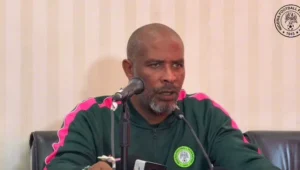
Former Super Eagles head coach Sunday Oliseh has issued a stark warning regarding Nigeria’s qualification prospects for the 2030 FIFA World Cup, asserting that the nation’s preparation is already three months behind schedule. Oliseh fears this delay, coupled with a perceived lack of critical experience within the current squad, significantly jeopardizes Nigeria’s chances of appearing in a third consecutive tournament, a scenario he starkly compares to Italy’s recent World Cup qualification drought.
Nigeria’s recent World Cup history has been marked by disappointment. The Super Eagles last graced the global stage in 2018, and since then, they have endured heartbreaking playoff defeats for both the 2022 and the recently concluded 2026 World Cup tournaments. This period of absence has coincided with a period of strong performances from African nations at the World Cup, highlighting a growing gap that Oliseh believes Nigeria is failing to address.
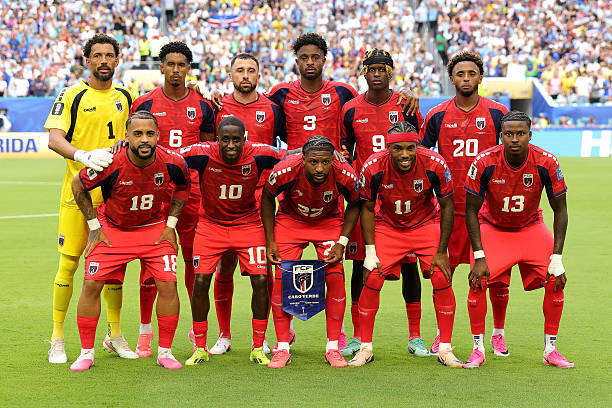
The 2026 FIFA World Cup, hosted by the United States, Mexico, and Canada, saw an expanded field of 10 African representatives. These teams showcased remarkable performances, with several punching above their weight and capturing the attention of global football fans. Among the standout nations was Cabo Verde, whose underdog status and spirited displays, particularly their hard-fought Round of 32 clash against eventual champions Argentina, endeared them to many. The team’s goalkeeper, Vozinha, even garnered significant fan acclaim, with many voting him as the tournament’s best custodian.
This impressive showing by a nation with a significantly smaller population and football infrastructure than Nigeria has not gone unnoticed by Oliseh. He believes that Cabo Verde’s recent World Cup exposure, however limited in terms of progression, provides them with a psychological and practical edge over the Super Eagles in future qualification campaigns.
The Crucial Role of Experience and a Delayed Rebuild
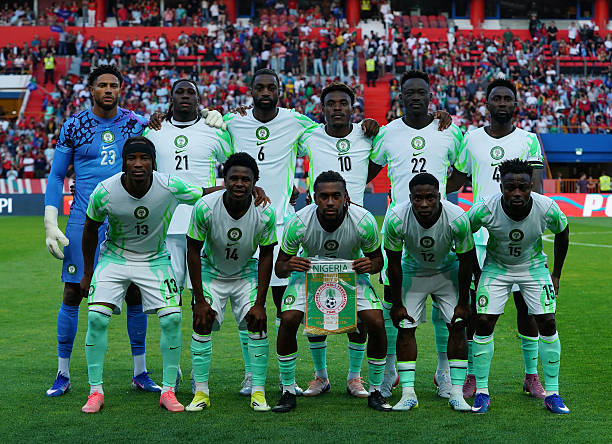
Oliseh, a distinguished former Super Eagles captain who participated in two World Cups himself, has voiced deep concerns over the team’s "slow rebuild" and "inconsistent performances." He argues that the current crop of Super Eagles players lacks the seasoned World Cup experience that is often crucial in high-stakes qualification matches and during the tournament itself.
"It is difficult addressing the issues of Nigerian football because most of our people get emotional and they don’t allow for reason," Oliseh stated, emphasizing the need for objective analysis rather than sentimentality. "It’s scary. If we are not careful, we will be repeating what happened to Italy, who missed a third straight World Cup tournament."
Italy, a four-time World Cup winner, shocked the football world by failing to qualify for the 2018, 2022, and now the 2026 editions. This prolonged absence serves as a cautionary tale for any nation that experiences a dip in form and struggles with rejuvenation. Oliseh’s comparison suggests a fear that Nigeria could be on a similar trajectory if fundamental issues are not addressed with urgency.
A Comparative Analysis: Cabo Verde’s Edge
The former coach elaborated on the disparity in experience, drawing a direct comparison with Cabo Verde. "Imagine now in the next qualifiers that you are grouped with Cape Verde. They just got a huge World Cup experience," Oliseh posited. "The next group of players coming up against Cape Verde – if we find ourselves in the same group – will have no real World Cup experience because of their ages."
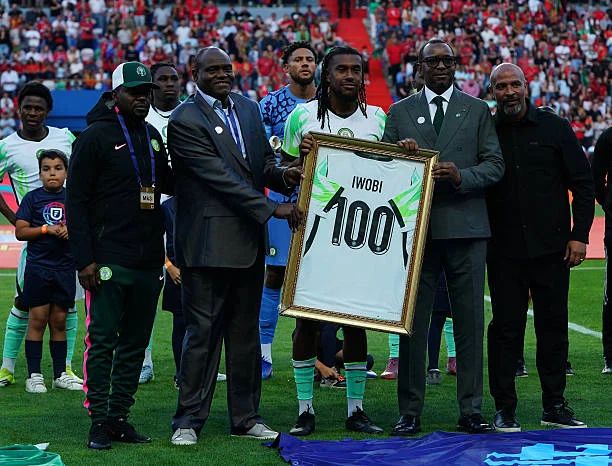
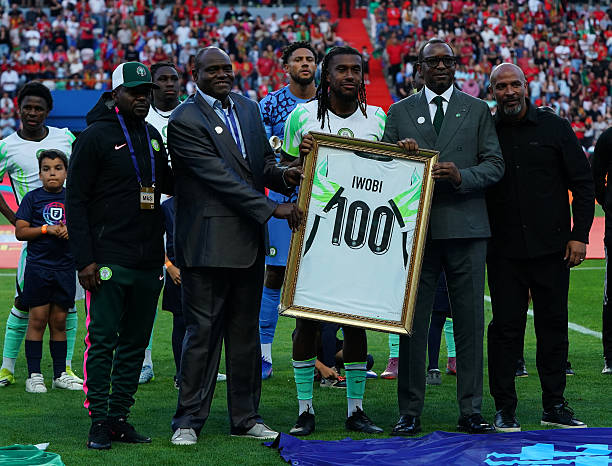
He highlighted the limited number of current Super Eagles players who have significant World Cup experience. "Only Iwobi and Ndidi featured at the 2018 tournament. We are talking in four years’ time," Oliseh pointed out, referring to the build-up to the 2030 World Cup. This suggests that by 2030, the core of the team that played in 2018 will likely be past their prime, and a new generation may not have had the opportunity to gain crucial World Cup exposure.
The Urgency of Action: A Missed Window
Oliseh’s most pressing concern is the lack of proactive planning. "When you have 220 million people, there’s an advantage. You have the numbers; all you have to do is put your house in order," he remarked, acknowledging Nigeria’s vast population as a potential asset. However, he stressed that this potential remains untapped without effective management and strategic development.
"We have to act. In fact, we are already running late," he declared. "Preparation for the next World Cup should have started three months ago." This statement underscores the belief that the foundational work for World Cup qualification – including identifying talent, implementing a playing philosophy, and fostering team cohesion – requires a long-term, consistent approach. The three-month delay he mentions implies that crucial scouting, coaching appointments, or developmental programs have not been initiated as per a strategic timeline.
Historical Context of Nigeria’s World Cup Journey
Nigeria has participated in six FIFA World Cups: 1994, 1998, 2002, 2010, 2014, and 2018. Their best performance was reaching the Round of 16 in 1994, 1998, and 2014. The team is known for its dynamic attacking play and individual brilliance, often producing world-class talents. However, consistent qualification and deep runs in the tournament have remained elusive, often attributed to issues ranging from administrative challenges to tactical inconsistencies.
The recent qualification failures for the 2022 and 2026 tournaments have amplified these concerns. The 2022 World Cup qualification saw Nigeria narrowly miss out on a spot after a dramatic playoff loss to Ghana on away goals. For the 2026 cycle, despite an expanded tournament format that allowed for more African slots, Nigeria again faltered in the qualification stages.
Supporting Data and Trends
The performance of African nations at recent World Cups provides a compelling backdrop to Oliseh’s concerns. Beyond Cabo Verde’s notable campaign in 2026, other African teams have demonstrated significant progress. Morocco’s historic run to the semi-finals of the 2022 World Cup was a watershed moment, showcasing the potential of African football on the global stage. Senegal, Cameroon, and Tunisia have also consistently qualified and delivered competitive performances, demonstrating a growing trend of African teams making their mark.
The expanded 2026 World Cup, with its 48 teams, provides an increased opportunity for African nations. The Confederation of African Football (CAF) has been allocated nine direct qualification spots, with one inter-confederation play-off spot. This presents a more favorable landscape than in previous editions. However, Oliseh’s warning suggests that even with more slots, Nigeria’s current trajectory and approach could lead to them missing out.
Analysis of Implications
Oliseh’s assessment carries significant weight due to his experience as a player and coach. His comparison with Italy serves as a stark warning about the potential for prolonged absence from the pinnacle of international football. The implications for Nigerian football are far-reaching:
- Reputational Damage: Missing consecutive World Cups can erode the nation’s standing in global football and diminish its appeal to potential sponsors and investors.
- Player Development: A lack of World Cup participation limits opportunities for emerging players to test themselves against the world’s best, potentially hindering their development and the overall talent pool.
- Fan Disillusionment: Repeated failures can lead to apathy among the passionate Nigerian fanbase, impacting national team support and engagement.
- Economic Impact: World Cup participation often brings economic benefits through increased tourism, media rights, and commercial opportunities.
The Path Forward: A Call to Action
Oliseh’s critique is not merely a lament but a call to immediate action. For Nigeria to reverse this concerning trend and secure a berth in the 2030 World Cup, a comprehensive and strategic overhaul is necessary. This would likely involve:
- Immediate Strategic Planning: The Nigeria Football Federation (NFF) needs to implement a long-term development plan that extends beyond immediate qualification campaigns. This includes robust scouting networks, youth development programs, and a clear technical roadmap.
- Investment in Coaching and Infrastructure: Upgrading coaching education and improving football infrastructure across the country are crucial for nurturing talent and ensuring a consistent supply of skilled players.
- Stability and Consistency: The NFF must prioritize stability in coaching appointments and technical direction, avoiding the frequent chopping and changing that has plagued the team in the past.
- Focus on Experience and Youth Integration: A balanced approach is needed to integrate promising young talent with experienced players, ensuring a smooth transition and the transfer of vital knowledge.
The Super Eagles have a rich footballing heritage, and the nation possesses an immense pool of talent. However, as Sunday Oliseh warns, talent alone is insufficient without a well-structured, timely, and experienced approach to preparation. The clock is ticking, and the urgency of the situation cannot be overstated if Nigeria is to avoid a prolonged period of World Cup absence.