
As the curtains fall on a remarkable 2026 outdoor athletics season, Nigerian track and field is celebrating a watershed moment defined by shattered national records, historic gold medals, and awe-inspiring podium finishes on the global stage. The culmination of months of grueling international competition, tactical discipline, and exceptional physical conditioning has yielded official dividends: three of Nigeria’s standout individual track and field athletes, alongside three formidable relay squads, have successfully locked in their automatic qualifications for the upcoming 2027 World Athletics Championships in Beijing, China.
This milestone underscores a broader renaissance within Nigerian athletics. Over the past several cycles, the nation’s sports administrators, coaching staff, and athletes have pushed through infrastructural and logistical hurdles to establish a competitive pipeline capable of producing world-class talent. The 2026 season served as the ultimate crucible, testing the mettle of Nigeria’s finest against the absolute best competitors the world has to offer, from the high-octane Diamond League circuits to the pressure cooker of international championship finals.
The Journey to Beijing: A Chronological Overview of the 2026 Season
The pathway to the 2027 World Athletics Championships in Beijing was paved across several high-stakes international meets throughout the spring, summer, and early autumn of 2026. The season began in earnest with the African circuit qualifiers before shifting to the grueling European summer circuit, where qualification standards set by World Athletics are notoriously stringent.
Athletes faced a narrow window of opportunity to either run the designated automatic qualifying times or accumulate sufficient ranking points. For Nigeria’s elite competitors, relying on ranking points was unnecessary; their commanding victories and podium finishes against reigning Olympic and world champions ensured they crossed the strict qualification thresholds directly.
The momentum began building during the early Diamond League stops in May and June, peaked at major continental and Commonwealth events mid-summer, and culminated in record-breaking performances at elite standalone meetings in London, Glasgow, and Gaborone. By the time the season drew to a close in September, Team Nigeria had solidified its status as an undisputed powerhouse in African track and field.
Tobi Amusan: The Reign of the Hurdles Queen Continues
Nigeria’s undisputed hurdles queen, Tobi Amusan, officially wrapped up another stellar campaign at the women’s-only Athlos meeting held at StoneX Stadium in London. Facing a world-class field, Amusan crossed the finish line in second place, posting a season’s best clocking of 12.51 seconds in the women’s 100-meter hurdles.

The race was a masterclass in elite sprinting and hurdling technique, pitting Amusan against some of the most decorated athletes in the discipline. She successfully held off formidable challengers, including the Bahamas’ Commonwealth Games champion Devynne Charlton and Jamaica’s former world champion Danielle Williams. Amusan finished a mere 0.01 seconds behind America’s Alaysha Johnson in a photo finish that thrilled the British crowd.
Amusan’s path to Beijing 2027 was built on remarkable consistency. Throughout the 2026 international circuit, she routinely dipped under the 12.60-second barrier, a testament to her enduring elite status and technical precision under pressure. Her ability to peak at crucial moments reaffirms her position as a cornerstone of Nigerian athletics. Industry analysts note that Amusan’s veteran leadership within the national camp has been instrumental in raising the competitive standards for younger athletes rising through the ranks.
Kayinsola Ajayi: The Meteoric Rise of a Sprint Sensation
Few storylines in global track and field during the 2026 season captured the imagination quite like the meteoric rise of Kayinsola Ajayi. The 21-year-old sprint sensation delivered the performance of his life at the London Diamond League meeting, storming to a sensational victory in the men’s 100-meter dash with a time of 9.84 seconds. This breathtaking performance equaled his own national record, sending shockwaves through the international sprinting community.
In a thrilling dash to the line that left spectators on the edge of their seats, Ajayi fended off reigning world champion Oblique Seville of Jamaica, who clocked 9.87 seconds, and Team GB’s Romell Glave, who crossed in 9.97 seconds. Ajayi’s victory was not a fluke; it followed a stellar collegiate campaign that saw him claim the NCAA Outdoor title.
His repeated sub-10-second performances against elite, world-class fields have effectively silenced any doubters regarding his transition from collegiate success to the senior global stage. By securing his automatic qualification mark in such emphatic fashion, Ajayi has established himself as a genuine medal contender heading into the Beijing World Championships.
Ezekiel Nathaniel: Conquering the Quarter-Mile Hurdles
Ezekiel Nathaniel has firmly cemented his status as one of the premier quarter-mile hurdlers on the planet. The 23-year-old athlete etched his name into the history books at the Glasgow Commonwealth Games by capturing Nigeria’s first-ever gold medal in the men’s 400-meter hurdles, stopping the clock at a blistering 48.47 seconds.
Nathaniel demonstrated remarkable tactical maturity during the race, pulling clear of the pack down the home straight to comfortably defeat England’s Jake Minshull and Jamaica’s Assinie Wilson. His gold-medal-winning performance in Glasgow was the culmination of a season that saw him edge dangerously close to the elusive African record, highlighted by a lifetime best of 47.11 seconds earlier in the year.
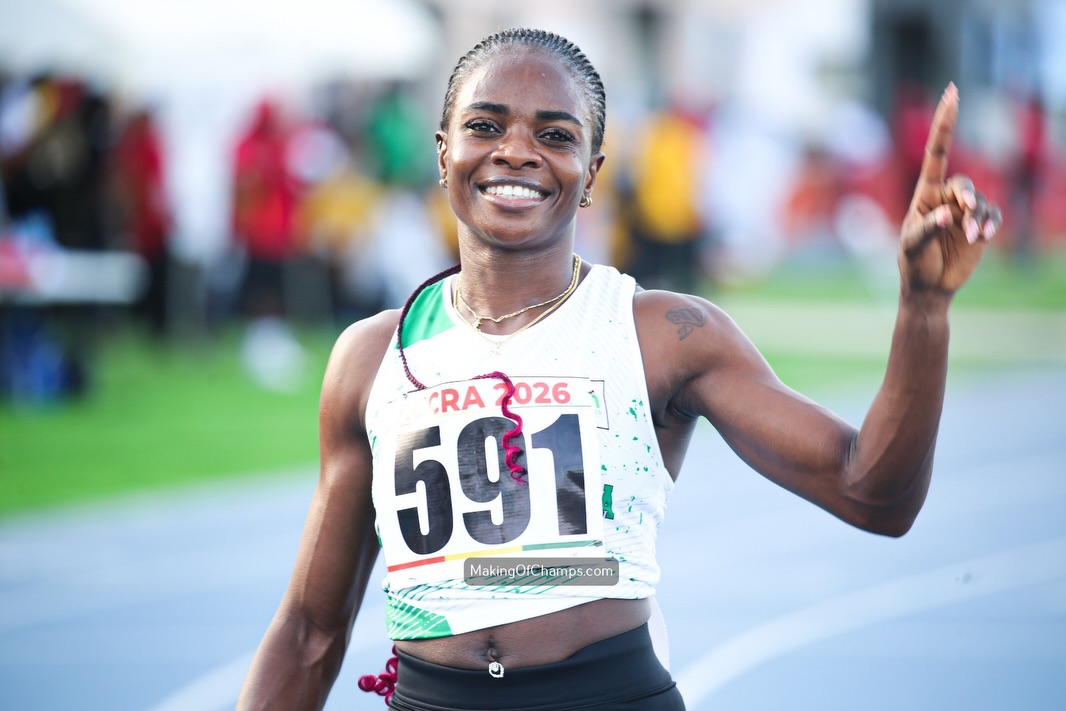
Nathaniel’s ability to consistently execute clean hurdle clearances while maintaining high-velocity running mechanics has made him a formidable competitor on the global circuit. His top-tier individual times throughout the 2026 outdoor calendar guarantee that his automatic qualification for Beijing 2027 is thoroughly well-deserved.
The Relay Squads: Strength in Unity at the World Athletics Relays
While individual brilliance often captures the headlines, the backbone of any successful national track and field program lies in its relay squads. Nigeria’s relay teams matched the stellar achievements of their individual counterparts with standout performances at the World Athletics Relays in Gaborone, Botswana.
Through disciplined baton exchanges, blistering leg speeds, and tactical cohesion, the Nigerian contingent successfully clinched automatic qualification across three key relay events. Sports analysts have long emphasized that qualification in the relay events provides a massive strategic advantage, allowing the Athletics Federation of Nigeria (AFN) to bring a larger, more competitive contingent to global championships while maximizing opportunities for podium contention.
Statistical Breakdown and Performance Analysis
A closer examination of the qualifying data reveals a profound qualitative leap in Nigerian athletics during the 2026 season. Compared to previous cycles, where qualifications were often secured in the dying moments through ranking slots, the current cohort has secured their berths via outright standard-matching performances and victory-laden finishes.
- Tobi Amusan: Multiple sub-12.60 clockings, culminating in a 12.51s season-best at the Athlos meeting.
- Kayinsola Ajayi: A national record-equalling 9.84s in the men’s 100m, backed by multiple sub-10 races.
- Ezekiel Nathaniel: A peak time of 47.11s during the season and a historic gold medal-winning 48.47s at the Commonwealth Games.
This statistical density demonstrates not only peak athletic output but also commendable injury management and peaking strategies implemented by the athletes’ respective coaching teams.
Official Responses and Stakeholder Reactions
Following the conclusion of the outdoor season and the official confirmation of the qualifying slots, stakeholders within Nigerian sports administration have expressed immense pride and cautious optimism.

While officials from the Athletics Federation of Nigeria have lauded the athletes for their dedication and resilience, they have also emphasized the urgent need for sustained institutional support. In various statements released following the athletes’ recent triumphs, federation leaders stressed that early qualification must translate into early and robust financial backing, comprehensive training camp planning, and access to world-class medical and sports science facilities.
"The early qualification of our athletes is a testament to their unwavering discipline and exceptional talent," noted a senior sports administrator close to the federation. "However, the work does not stop here. If we are to convert these qualifications into gold medals in Beijing in 2027, the preparation must begin immediately. We must ensure our athletes receive the necessary resources to sustain their peak form over the next two years."
Broader Impact and Implications for Nigerian Athletics
The implications of this early wave of qualifications extend far beyond the immediate joy of victory. For a nation with a rich sporting history like Nigeria, consistent success on the global athletics stage serves as a powerful cultural catalyst, inspiring the next generation of youth athletes and driving grassroots participation.
Furthermore, the economic and developmental impact of having a heavily represented team at the World Athletics Championships cannot be overstated. High-level international exposure attracts corporate sponsorships, enhances broadcast value for domestic sports media, and validates government investment in athletic infrastructure.
As the focus now shifts toward the indoor season and the preliminary training blocks leading into 2027, the blueprint has been successfully laid down by Amusan, Ajayi, Nathaniel, and the relay squads. With proper planning, administrative stability, and continued dedication from the athletes, Team Nigeria is poised to make an indelible mark when the world converges in Beijing.