The mineral wealth of the Sahel region, particularly its abundant gold deposits, has transformed into a potent catalyst for violence, empowering insurgent groups and intensifying a struggle for regional dominance among the junta-led administrations of Mali, Niger, and Burkina Faso. This complex interplay of resource exploitation and insecurity is creating a volatile predicament, where the pursuit of precious metals is inextricably linked to the perpetuation of conflict and the reshaping of geopolitical alliances.
The Golden Nexus: Resource Wealth and Rising Violence
A recent comprehensive study by conflict monitor ACLED (Armed Conflict Location & Event Data Project) reveals a disturbing trend: armed groups, including those affiliated with al-Qaeda such as Jama’at Nusrat al-Islam wal-Muslimin (JNIM), are increasingly targeting infrastructure and communities situated within a 10-kilometer radius of active mining concessions across the Sahel. This strategic focus underscores a critical shift, where the lucrative nature of gold mining is directly fueling the financial and operational capacities of extremist organizations.
For the three junta-led nations – Mali, Niger, and Burkina Faso – this reality is stark and defining. Having collectively exited the Economic Community of West African States (ECOWAS) to forge their own regional bloc, the Alliance of the Sahel States, they find themselves grappling with a security landscape where an overwhelming 90% of reported security incidents are directly or indirectly linked to gold. This statistic highlights the central role that the gold trade, both formal and informal, plays in the region’s ongoing instability.
A Shifting Landscape: The Alliance of the Sahel States and its Challenges
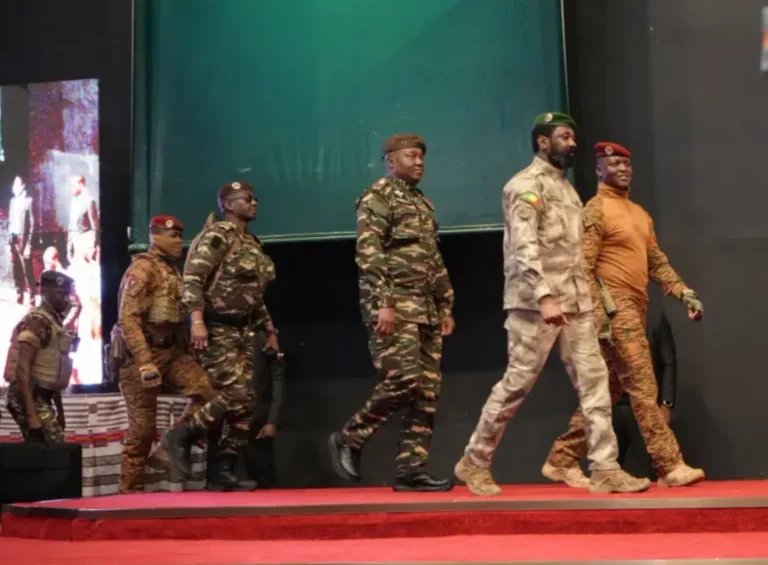
The formation of the Alliance of the Sahel States in September 2023, comprising Mali, Niger, and Burkina Faso, signaled a decisive break from traditional regional governance structures and a pivot towards a more assertive, self-reliant approach. Led by military strongmen Ibrahim Traoré (Burkina Faso), Assimi Goïta (Mali), and Abdourahamane Tiani (Niger), this alliance was ostensibly forged to enhance collective security and economic development in the face of persistent jihadist insurgencies and perceived external interference. However, the underlying economic drivers, particularly the control and exploitation of natural resources like gold, appear to be a significant, if often unstated, element of this new geopolitical configuration.
The region’s vast mineral wealth has long been a source of both opportunity and contention. Mali and Burkina Faso, in particular, rank among Africa’s foremost gold producers. Major international mining corporations such as Barrick Mining Corp., B2Gold Corp., Endeavour Mining Plc, and Allied Gold Corp. operate significant concessions within these countries. While these formal operations contribute to national economies, they also create an ecosystem that can be exploited by non-state armed actors.
The Mechanics of Exploitation: How Insurgents Profit from Gold
According to ACLED’s analysis, the proliferation of gold mining activities across the Sahel provides militant organizations with critical avenues for revenue generation, tactical recruitment, and the expansion of their operational influence. The report, cited by Bloomberg, details how mining areas have become complex "spaces where economic activity, security provision, governance, and armed contestation intersect."
Heni Nsaibia, West Africa analyst at ACLED and author of the report, elaborates on this dynamic: "Armed groups aim to destabilize the wider mining economy rather than simply seizing mineral resources." This strategic approach involves more than just direct raids on mines. "What may begin as attacks on mining personnel, infrastructure, or transport can develop into broader competition over movement, territorial control, local authority, and access to resources," Nsaibia explains.
The nature of these attacks is evolving. While direct assaults on large-scale industrial mines are often too resource-intensive and risky for insurgent groups, they have adapted their tactics. "Most attacks are taking place ‘around the edges of these operations, against security positions or nearby facilities,’" Nsaibia notes in a separate interview. This can include targeting supply routes, vehicles transporting personnel or materials, and smaller, semi-mechanized mining operations.
The Rise of Smaller Targets and Indirect Conflict
ACLED’s report highlights a significant shift in insurgent focus towards smaller, artisanal, and semi-mechanized mining businesses. These operations are often less secure, more dispersed, and thus more accessible targets for armed groups seeking to extract resources or extort payments. This trend has also been linked to increased incidents of kidnapping, particularly of foreign nationals working in these sectors. "That’s also where we have seen several kidnappings of Chinese workers, with around a dozen incidents involving dozens of Chinese nationals over the past year," Nsaibia added.
The implications of this evolving threat landscape are profound for both local populations and international investors. Mining regions in Mali, for instance, have transformed into volatile zones where a complex web of actors – including jihadist organizations, rebel factions, pro-government militias, state security forces, and even foreign military contingents (such as Russian-backed soldiers) – vie for control over land, mobility, and localized influence. This multi-faceted contestation makes effective governance and security provision exceptionally challenging.
Chronology of Escalation and Shifting Alliances
The current crisis in the Sahel is not a sudden development but rather an intensification of pre-existing trends, exacerbated by recent political upheavals.
- Early 2010s: The rise of jihadist groups in northern Mali, initially focused on separatist aspirations, began to expand, taking advantage of weak state presence and porous borders.
- 2013 onwards: International military interventions, led by France (Operation Serval, later Barkhane), aimed to counter these groups, but often proved insufficient to fully pacify the region, inadvertently creating vacuums that armed groups could exploit.
- Mid-2010s: The discovery and increasing exploitation of gold deposits, both by formal mining companies and informal artisanal miners, began to attract the attention of insurgent groups. Revenue from gold became a significant funding stream.
- 2020-2021: Military coups in Mali and Burkina Faso, followed by a coup in Niger in July 2023, saw democratically elected governments replaced by military juntas. These new regimes often adopted nationalist rhetoric and a more confrontational stance towards Western powers, particularly France, while seeking new security partnerships.
- September 2023: Mali, Niger, and Burkina Faso announced the formation of the Alliance of the Sahel States, a military and economic pact aimed at collective defense and regional integration, signaling a departure from previous regional security frameworks.
- Late 2023 – Present: ACLED data and other reports indicate a significant increase in attacks targeting areas around mining concessions, demonstrating the continued and growing link between gold wealth and insurgent activity. This period also saw a notable shift in security partnerships, with some Sahelian nations seeking closer ties with Russia.
Broader Impact and Investor Concerns
The escalating violence and the nexus with the gold trade are creating significant operational risks and safety concerns for investors. The increasing uncertainty surrounding the security situation and the potential for further destabilization are acting as a deterrent to new investments and a reason for caution among existing stakeholders. "They understand that the situation is becoming increasingly uncertain, and that is an argument for being more cautious with investments and engagement," Nsaibia observed.
This dynamic has broader implications for the region’s development prospects. While gold has the potential to be a significant driver of economic growth, its current association with conflict risks undermining these prospects. The diversion of state resources towards security, the displacement of populations, and the disruption of legitimate economic activities all contribute to a cycle of poverty and instability.
Furthermore, the competition for control over these valuable resources can exacerbate existing ethnic and social tensions, creating fertile ground for further radicalization and recruitment by armed groups. The struggle for territorial control, access to routes, and local authority, as described by ACLED, suggests that the conflict is not merely about extracting wealth but about establishing a form of governance and control that benefits insurgent factions.
Official Responses and International Reactions
The junta-led governments of Mali, Niger, and Burkina Faso have consistently prioritized national sovereignty and security in their public statements. They often frame the insurgency as a foreign-backed threat and emphasize their commitment to restoring order and reclaiming control over national territory. The formation of the Alliance of the Sahel States is presented as a testament to their resolve to tackle these challenges independently.
However, their strategies for combating the insurgency and managing the resource wealth remain a point of concern for the international community. While some nations have shifted their security partnerships, the underlying issues of governance, development, and the equitable distribution of resource benefits remain critical.
International organizations and Western governments have expressed deep concern over the deteriorating security situation and the humanitarian impact of the ongoing conflicts. There are ongoing debates about the effectiveness of different approaches to counter-terrorism and state-building in the region, with a growing recognition that addressing the root causes of conflict, including poverty and resource mismanagement, is crucial for long-term stability.
The interconnectedness of gold mining, insurgent financing, and regional power struggles in the Sahel presents a formidable challenge. As armed groups increasingly leverage the region’s mineral wealth to sustain their operations, the quest for stability and prosperity in Mali, Niger, and Burkina Faso will hinge on the ability of their governments to effectively manage their resources, secure their populations, and foster inclusive development that benefits all citizens, not just those who profit from conflict. The current trajectory suggests a perilous path where the allure of gold risks further entrenching violence and instability in an already fragile region.