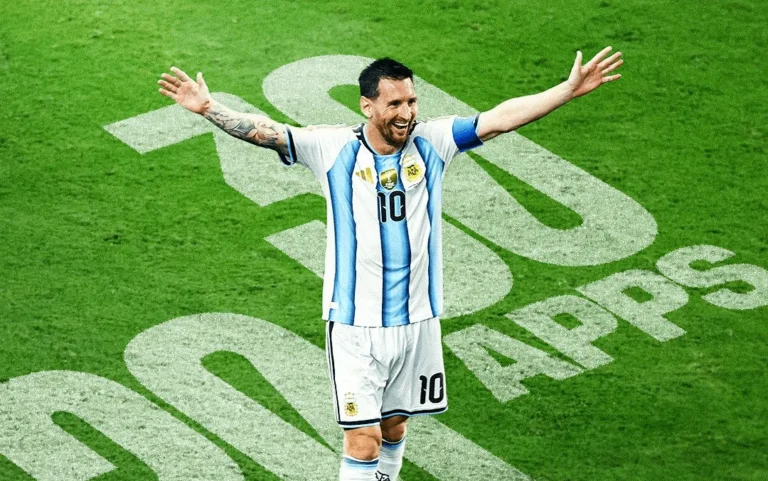
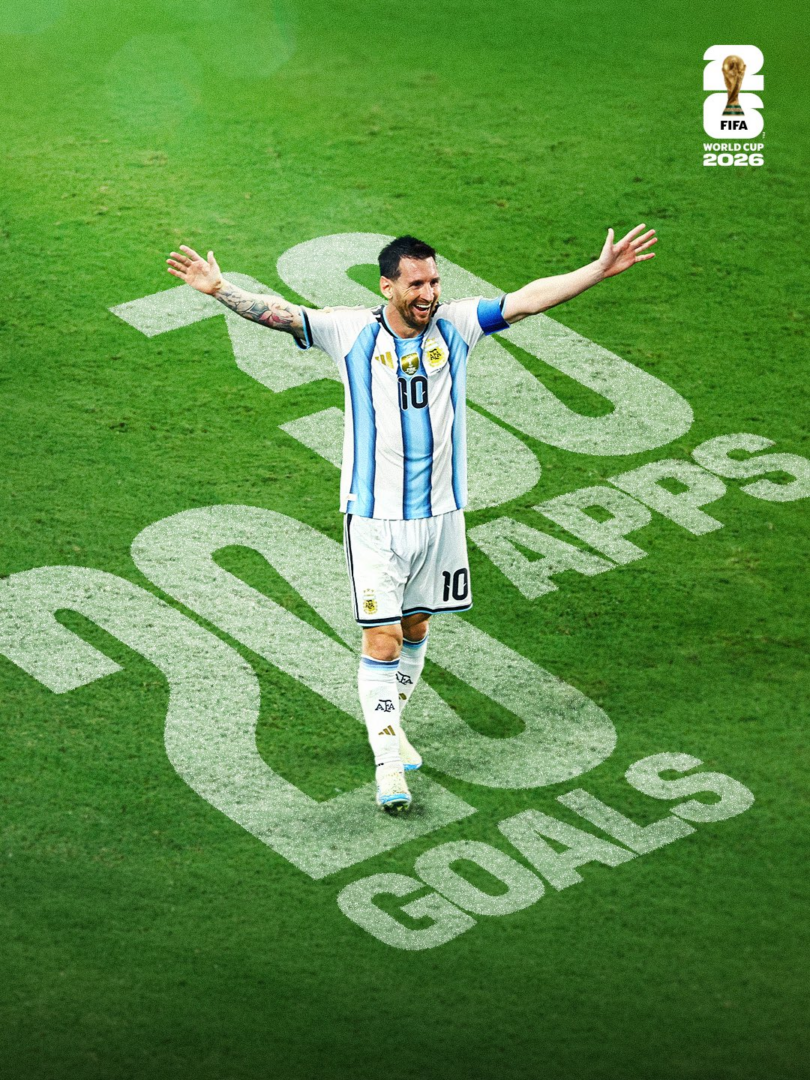
The 2026 FIFA World Cup, poised for its climactic final match between Argentina and Spain, is enveloped in a peculiar and potent duality. While Lionel Messi, the undisputed maestro of the Albiceleste, continues to command universal admiration, his team has, paradoxically, become the most distrusted entity in the tournament. This widespread suspicion, often amplified by the moniker "VARgentina," has led to a groundswell of discontent, including a widely reported petition demanding the team’s expulsion, and a significant portion of football fans, particularly in neighboring Chile, believing officiating has consistently favored the reigning champions. The narrative is no longer solely about the beautiful game; it’s a complex tapestry woven with threads of adoration for an individual and resentment towards the perceived machinations surrounding his team.
This stark contrast between the adulation for Messi and the growing skepticism towards Argentina’s path to the final highlights a complex dynamic in modern football, where the impact of technology, particularly the Video Assistant Referee (VAR), intersects with national pride and the intense pressure of a global tournament. As Argentina stands on the precipice of defending their World Cup title, the air is thick not with unadulterated celebration, but with questions and a palpable sense of unease.
A Controversial Path: Key Incidents Under Scrutiny
Argentina’s journey to the 2026 FIFA World Cup final has been marked by a series of officiating decisions that have ignited fierce debate and fueled the narrative of preferential treatment. While proponents argue that many of these calls were correct under the laws of the game and that VAR’s intervention was necessary to rectify on-field errors, critics point to a pattern that consistently appears to benefit the South American giants.
The Group Stage Incident: Messi’s Close Call Against Algeria
An incident early in the tournament, often overlooked amidst the later controversies, involved Lionel Messi stepping on the calf of Algerian captain Aissa Mandi during a group stage match. Under the laws governing serious foul play, the challenge could have plausibly resulted in a red card. However, no card was shown, and Messi went on to score a hat-trick in the game. According to data compiled by Archivo VAR, a group dedicated to tracking major officiating decisions, this was the only instance where a call genuinely favored Argentina, and even then, it was considered borderline. By their meticulous count, Argentina was on the wrong end of five out of six major decisions reviewed throughout their campaign up to the semi-finals, with three of these requiring VAR intervention to correct an initial on-field error.
The Round of 16: Egypt’s Grievances and FIFA’s Defense
The controversy truly began to escalate in the Round of 16 clash against Egypt. With Egypt leading 1-0 and mere minutes away from a historic quarter-final appearance, a series of pivotal moments shifted the momentum. In the 79th minute, what appeared to be a goal for Egyptian midfielder Mostafa Zico was disallowed for a marginal foul in the buildup, with Marwan Attia penalized for a slight clip on Lisandro Martínez. Egypt’s coach, Hossam Hassan, expressed profound frustration, publicly questioning the fairness of the decision.
The situation intensified in stoppage time. Just moments before Enzo Fernández netted Argentina’s equalizer, Egypt had two strong penalty appeals waved away. First, Alexis Mac Allister’s challenge on Hamdi Fathi in the box was not penalized. Subsequently, Mohamed Salah went down after a collision with Julián Álvarez. Referee François Letexier allowed play to continue, and crucially, VAR did not intervene.
The Egyptian Football Federation swiftly lodged an official complaint, citing serious errors and double standards in officiating. Coach Hassan controversially suggested that FIFA’s desire to keep Messi and the defending champions in the tournament influenced these decisions. FIFA, however, mounted a firm defense. Refereeing chief Pierluigi Collina, a respected figure in the sport, addressed the Salah-Álvarez incident point by point, arguing that Álvarez had won the ball before contact occurred. FIFA President Gianni Infantino also weighed in, stating he had reviewed the footage multiple times and found no irregularities. Despite these reassurances, the comeback victory for Argentina was undeniably overshadowed by this controversial sequence.
The Quarter-Final: Switzerland’s "Mistaken Identity" Red Card
The quarter-final against Switzerland became a flashpoint for the burgeoning controversy. With the score tied at 1-1 in the 67th minute, Leandro Paredes received a yellow card for a tackle on Breel Embolo. VAR then intervened under a relatively new and largely untested rule concerning "mistaken identity." Instead of simply correcting the recipient of the card, the referee reversed the entire decision, booking Embolo for diving and, because Embolo had already been cautioned, sending him off. Switzerland, reduced to ten men, ultimately lost 3-1 in extra time.

The decision drew sharp criticism from the Swiss camp. Coach Murat Yakin described the rule that led to his team’s disadvantage as "unacceptable," while captain Granit Xhaka stated it fundamentally altered the game’s complexion. Even neutral football analysts expressed unease. Christina Unkel, a former FIFA referee and rules analyst, argued that the protocol had been stretched beyond its intended scope, effectively allowing a re-refereeing of the incident. She emphasized the significant damage to fan trust in officiating, a sentiment that has become a defining characteristic of this tournament’s latter stages.
The Semi-Final: England’s Frustration and Fernandez’s Unpunished Challenge
The semi-final against England provided further fuel for the fire of suspicion. Just three minutes into the match, Enzo Fernández challenged Elliot Anderson for the ball and made contact with an elbow to the back of Anderson’s head. Referee Ismail Elfath assessed the incident as a natural collision and did not issue a card. This decision, however, appeared inconsistent to many observers, especially when contrasted with an earlier incident where Jude Bellingham was shoved by an elbow from Paredes without a card being shown, and a subsequent tangle involving Anderson and Messi resulted in Anderson receiving a yellow card.
Former English refereeing chief Keith Hackett stated that the referee needed to exert better control over the match. The perceived leniency towards Fernández became even more poignant as he went on to score Argentina’s equalizer with five minutes remaining, and Lautaro Martínez secured the winning goal deep into stoppage time. For an English press and public already primed to suspect bias, this sequence solidified frustration into a potent, albeit unproven, theory of unfair advantage.
Statistical Insights and the VAR Data
Beyond individual incidents, statistical analyses have added another layer to the debate surrounding Argentina’s officiating record. Northeastern University’s sport analytics group, which has tracked VAR intervention rates for all teams in the tournament, revealed striking patterns. Argentina emerged as the second-highest beneficiary of VAR calls overall, and notably, had not had a single VAR decision go against them through the Round of 16. Only co-host Mexico ranked higher in overall VAR benefit. Teams like Croatia and Iran, conversely, appeared to have absorbed a disproportionate number of unfavorable decisions. Researchers cautioned that these figures reflect fouls identified by VAR, not necessarily intentional bias, but the consistent trend is difficult to dismiss.
It is important to note that some of these statistical trends may be influenced by genuine rule adaptations for the 2026 tournament. The expansion of VAR to include mistaken-identity cases and the rectification of wrongly awarded second yellow cards, particularly the "mistaken identity" rule, seems to have been implemented with unforeseen consequences, potentially stretching its intended application.

The Spanish Challenge: Order vs. Chaos
Argentina’s opponent in the final, Spain, presents a stark contrast. The Spanish side has been characterized by its defensive solidity, conceding remarkably few goals throughout the tournament. Their success has been built on disciplined structure and collective execution rather than the reliance on individual brilliance that defines Messi’s Argentina.
Messi’s Argentina, on the other hand, embodies a brand of football that is often described as chaotic and genius-driven, a style that has undeniably led them to the brink of glory. While many of the decisions that have propelled them forward may stand up to strict interpretation of the rulebook, the general perception of the footballing world is less concerned with technicalities and more with the perceived narrative of their progress. Some commentary has even framed Sunday’s final as a clash of civilizations: order represented by Spain against the perceived disorder, or at least controversy, surrounding Argentina.
The Uncomfortable Truth: Adoration and Resentment
Ultimately, the narrative surrounding Argentina’s presence in the 2026 FIFA World Cup final rests on an uncomfortable duality. Lionel Messi remains an artist whose skill and character evoke widespread admiration, a figure adored well beyond his nation’s borders. Yet, the team he captains has become a focal point of suspicion and resentment. This is a sentiment that can coexist: one can hold deep admiration for the player while simultaneously harboring doubts about the circumstances that have facilitated his team’s success.
As Argentina chases a historic feat—becoming the first team since Brazil in 1962 to defend their World Cup title—many neutral observers will be watching with a mixture of anticipation for Messi’s potential final triumph and a quiet hope that their perceived run of fortunate officiating will finally conclude, allowing the tournament to be decided solely on the merits of the game itself. The final match, therefore, serves not only as a sporting contest but as a referendum on the integrity of the officiating and the enduring power of both individual brilliance and collective perception.