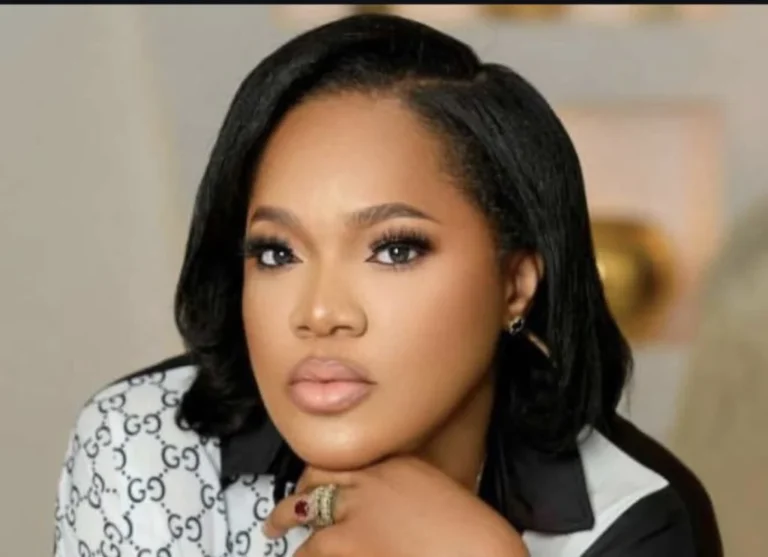
Renowned Nigerian filmmaker and actress Toyin Abraham has publicly rejected her inclusion in the All Progressives Congress (APC) campaign council for Lagos State, firmly reiterating her decision to distance herself from partisan politics. The announcement comes in the wake of a controversy that erupted after her name was published on a high-profile entertainment and creative sector committee list released by the media team of the Lagos State Deputy Governor, Obafemi Hamzat.
The inclusion of Abraham’s name immediately generated widespread public discussion across various social media platforms, compelling the award-winning actress to issue an unambiguous disclaimer. The incident highlights the complex and often precarious intersection between Nigerian celebrity culture, public influence, and partisan politics, particularly within the country’s vibrant entertainment capital, Lagos.
The Anatomy of the Announcement and Immediate Rejection
The controversy began on a Thursday when the media directorate attached to the office of Lagos State Deputy Governor Obafemi Hamzat published an extensive roster of entertainment industry figures appointed to various sub-committees. Among these designations was the entertainment and creative economy directorate of the campaign council, which was formulated to harness the considerable cultural and social influence of Nollywood actors, musicians, and industry stakeholders ahead of upcoming political engagements.
Leading this specific directorate is lawyer and public servant Toke Benson-Awoyinka, working alongside veteran Nollywood actor Jide Kosoko, who was appointed as co-director. Prominent actress Eniola Badmus was also designated as the deputy director, giving the committee a strong representation of industry heavyweights.
However, within hours of the list circulating across mainstream and social media networks, Toyin Abraham took to her official handle on X (formerly Twitter) to categorically deny any association with the council. In a concise yet forceful statement, the filmmaker sought to clear the air and manage public expectations regarding her political neutrality.
"I’m not a member of any campaign council. I have said it recently; I am staying out of politics. Please disregard the supposed inclusion of my name in any campaign committee," Abraham wrote.
Her swift rebuttal was designed to preempt any misinterpretation by her vast fan base and the general public, who closely monitor the socio-political alignments of prominent Nigerian public figures. By drawing a sharp boundary between her professional career in filmmaking and government-linked political mobilization, Abraham underscored her commitment to personal boundaries regarding state-level political participation.
A Star-Studded Roster of Industry Figures
While Toyin Abraham swiftly distanced herself from the initiative, the comprehensive campaign council list featured a cross-section of Nigeria’s creative sector. The inclusion of numerous veteran actors, popular musicians, and cultural icons underscored the strategic importance political parties place on leveraging celebrity endorsements to mobilize youth and urban demographics.
Aside from Benson-Awoyinka, Kosoko, and Badmus, the expansive list of appointees featured a diverse array of prominent names within the Nigerian entertainment ecosystem. Notable Nollywood practitioners listed included Biola Adebayo, Bimbo Akintola, Yinka Quadri, Foluke Daramola, Abbey Lanre, Fathia Balogun, Adebayo Salami, and Bukky Wright.
The music industry was equally well-represented, featuring legendary fuji and juju musicians as well as contemporary street-pop artists. Among them were Adewale Ayuba, Abass Akande Obesere, Saheed Osupa, Sule Alao Malaika, and the popular street-pop artist Small Doctor.
In Nigerian politics, the integration of creative industry practitioners into campaign structures is a long-standing strategy. Entertainers command massive social capital, commanding millions of followers across digital platforms and serving as influential opinion leaders. Consequently, political campaigns frequently seek to co-opt their popularity to drive voter turnout, project inclusivity, and foster grassroots engagement. However, this practice often places celebrities in delicate positions, as political alignment can alienate segments of their fan base who hold opposing partisan views.
Contextualizing the Backlash: The 20th General Elections and Public Scrutiny
Abraham’s emphatic rejection of the APC campaign role cannot be viewed in isolation; it is deeply rooted in the heavy public backlash she experienced during and after the 2023 general elections. Like several other high-profile figures in the Nigerian entertainment industry, Abraham openly declared her support for Bola Ahmed Tinubu, then the presidential candidate of the APC and now the President of the Federal Republic of Nigeria.
While public political expression is a fundamental constitutional right in a democratic society, the hyper-polarized nature of Nigerian electoral politics often transforms celebrity endorsements into high-risk endeavors. Following the fiercely contested 2024 political landscape and the subsequent economic realities faced by ordinary citizens, various public figures who campaigned for the ruling party faced severe online criticism, boycotts, and targeted cyberbullying from opposition supporters and frustrated members of the public.
For Abraham, the intense digital scrutiny and prolonged social media friction took a noticeable toll on her personal and professional life. The backlash prompted deep introspection regarding her public engagement with political matters. In the aftermath of the sustained online campaigns directed against her, the actress publicly vowed never to openly declare her political affiliations or participate in partisan alignment moving forward, prioritizing her artistic output, entrepreneurial ventures, and family over political branding.
This background explains the urgency and firmness of her recent disclaimer. Having suffered the reputational and emotional costs of political polarization, Abraham appeared determined to prevent any inadvertent association from dragging her back into the center of partisan controversy.
Prior Political and Quasi-Political Inclusions
Despite her stated desire to remain politically neutral, Abraham’s name has occasionally surfaced in connection with government-backed initiatives, raising questions about the administrative processes behind committee appointments.
In April of the same year, Abraham was similarly listed as a member of the entertainment committee for the National Women Mega Empowerment and Rally. This large-scale civic and empowerment initiative was organized under the auspices of the Federal Ministry of Women Affairs. Unlike partisan campaign councils, government-led empowerment programs are theoretically framed as non-partisan state activities designed to deliver social welfare and institutional support to vulnerable segments of the population.
Nevertheless, the overlap between government programs and ruling party optics in Nigeria often blurs the lines between state duty and political mobilization. While participation in a federal empowerment program carries a different connotation than an explicit political campaign council assignment, critics and observant members of the public frequently view them through the same political lens.
Abraham’s acceptance or association with such state-sponsored initiatives, contrasted against her strict avoidance of partisan campaign structures, illustrates the nuanced tightrope high-profile personalities must walk when navigating invitations extended by state actors or governing authorities.
Broader Implications for Nollywood and Political Endorsements
The decision of a leading box-office titan like Toyin Abraham to publicly reject a campaign council appointment carries significant implications for the broader Nollywood industry and the dynamics of political communication in Nigeria.
First, it reflects a growing awareness among creative entrepreneurs regarding the commercial risks of partisan politics. Nollywood operates largely as a private-sector-driven market that relies heavily on cross-demographic appeal, corporate sponsorships, and pan-Nigerian audiences. When filmmakers or actors become polarizing political figures, their commercial viability can be compromised, leading to alienated audiences, reduced box-office returns, and strained relations with corporate brands seeking neutral ambassadors.
Second, Abraham’s actions highlight potential administrative shortcomings within political campaign communication teams. The inclusion of an individual’s name on an official political document without explicit prior consent or finalized agreement points to a reliance on presumptive networking. In many cases, political committees are compiled based on informal associations, past affiliations, or generalized assumptions of support, rather than verified, binding acceptances from the nominees. This procedural flaw not only places celebrities in awkward positions but also damages the credibility of the campaign documentation itself.
Furthermore, the episode underscores a broader cultural shift among Nigerian youth and public figures toward political accountability and personal autonomy. As social media continues to democratize public discourse, celebrities are increasingly recognizing that their primary asset is their independent brand equity. Aligning unconditionally with political establishments can dilute that equity, particularly in an environment where governance outcomes are subjected to intense public critique.
Conclusion
Toyin Abraham’s decisive rejection of the Lagos State APC campaign council appointment marks a clear boundary in her professional journey. By prioritizing her commitment to staying out of partisan politics, she has sought to protect her artistic legacy, brand value, and peace of mind from the turbulent waters of Nigerian electoral politics.
As political parties continue to court creative industry heavywaters for electoral leverage, incidents of this nature serve as a crucial reminder of the importance of consent, institutional transparency, and the personal agency of public figures. Whether other celebrities will adopt a similarly guarded approach to political appointments remains to be seen, but Abraham’s resolute stance has established a firm precedent for creative independence in the face of political co-optation.