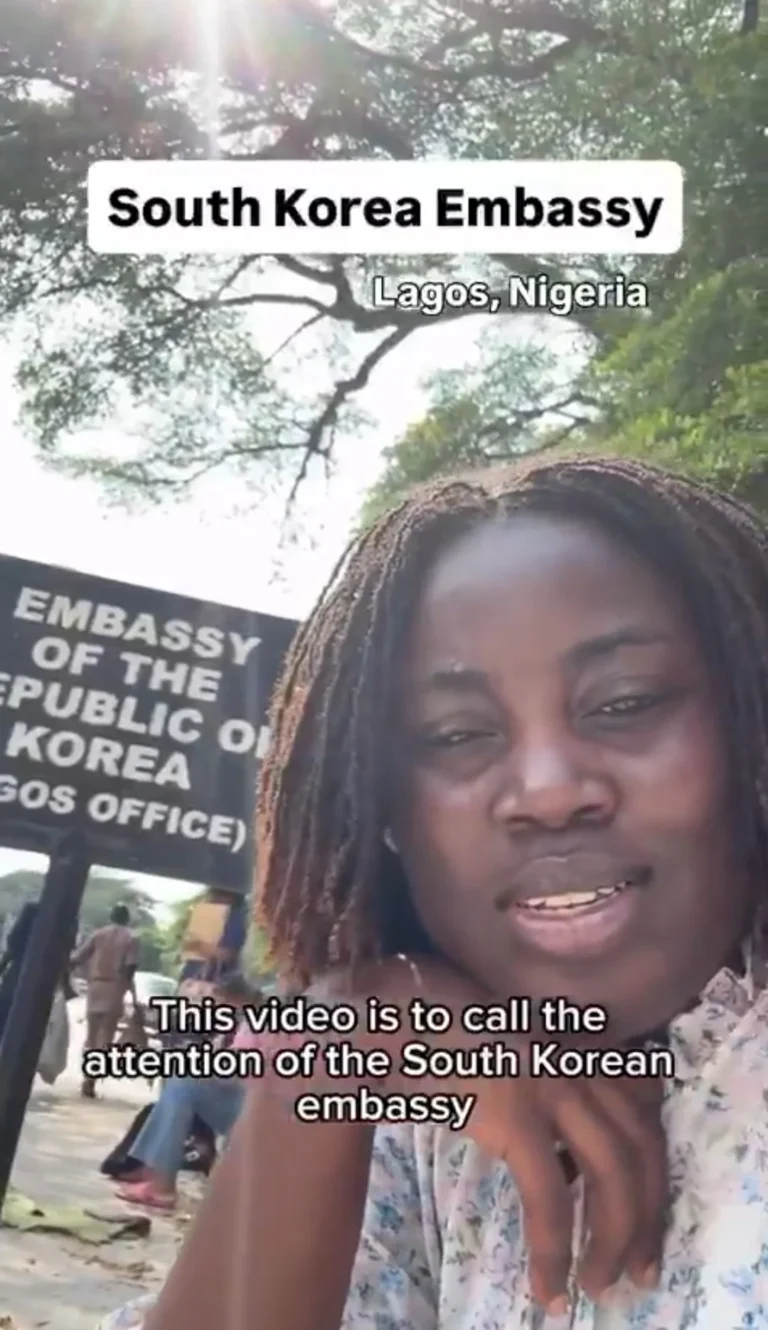
A viral video shared on social media has brought to light a distressing account of a Nigerian woman’s experience at the South Korean Embassy in Lagos, igniting widespread concern over the conditions faced by visa applicants. The woman, whose identity remains anonymous but has been widely identified as a concerned citizen through her social media advocacy, has implored the diplomatic mission to implement significant improvements to its visa application process, citing inhumane treatment and a lack of basic amenities for those seeking to travel to South Korea.
The core of her complaint, articulated in a compelling video that has garnered considerable attention, centers on the severe lack of a designated waiting area for visa applicants. According to her testimony, individuals were compelled to endure prolonged periods sitting on pavements and exposed to the harsh elements, including the sun, without any form of shelter or organized queuing system. This situation, she detailed, was exacerbated by the sheer volume of applicants present at the embassy premises, creating an environment of discomfort and potential health risks.
A Day of Disappointment and Futility
The applicant recounted arriving at the embassy premises at approximately 9:30 a.m., a time when many official institutions are still in their early operating hours. Upon arrival, she was issued a queue number, a seemingly standard procedure that suggested a systematic approach to handling the influx of visitors. However, this initial expectation of order was quickly shattered. Later in the day, she was informed that the embassy would cease accepting visa applications after 11:00 a.m. This abrupt cutoff, after hours of waiting in what she described as a chaotic and uncomfortable environment, meant her efforts were in vain, forcing her to return on another day.
This particular anecdote highlights a critical flaw in the embassy’s current operational strategy: the disconnect between the issuance of queue numbers and the actual capacity or willingness to process applications throughout the day. For individuals who have invested time, resources, and emotional energy into preparing for their visa applications, such a scenario represents not only a logistical failure but also a significant personal setback.
The Plight of Long-Distance Travelers
The distress caused by the embassy’s application policy is amplified when considering the lengths to which some applicants are forced to go. The lady’s video drew attention to the plight of individuals who had undertaken substantial journeys from other states to reach the Lagos embassy, only to be turned away after hours of fruitless waiting. She specifically mentioned applicants who had traveled from states like Abia and Ibadan, geographical locations that necessitate significant travel time and expense within Nigeria. To endure such arduous journeys and then be met with a closed-door policy after an extended wait is not only disheartening but also an undue burden on individuals who are already navigating the complexities and costs associated with international travel.
This aspect of the complaint underscores the need for greater consideration of the logistical realities faced by applicants, particularly those residing outside the immediate vicinity of the embassy. A more transparent and predictable application system would prevent such wasted journeys and the associated financial and emotional strain.
A Call for an Appointment-Based System
In her appeal, the woman fervently questioned the rationale behind the embassy’s apparent abandonment of an appointment-based application system. She posited that reinstating such a system would be a logical and effective solution to the prevailing issues. An appointment system, by its very nature, allows for a controlled and scheduled flow of applicants, thereby mitigating overcrowding and ensuring that each applicant is allocated a specific time slot for their submission.
This approach not only benefits the embassy by enabling better resource management and workflow optimization but, more importantly, provides a structured and predictable experience for the applicants. It would eliminate the need for individuals to arrive at ungodly hours in the hope of securing a place in a seemingly endless queue, and it would prevent the frustration and disappointment of being turned away after investing considerable time and effort. The lady’s argument is grounded in the principle of efficiency and respect for the applicant’s time and resources.
Dignity and Order: The Core of the Plea
The overarching message conveyed by the Nigerian woman is a profound plea for dignity and humane treatment. Her concluding remarks in the video directly implore the South Korean Embassy to "treat us like human beings" and to provide a "more comfortable and organized application process." This statement transcends mere logistical complaints; it speaks to a fundamental expectation of respect and consideration from diplomatic missions.

The current situation, as described, paints a picture of an environment that is neither comfortable nor organized, and one that potentially strips applicants of their dignity by subjecting them to prolonged discomfort and uncertainty. In the realm of international relations and diplomatic services, the manner in which citizens of one nation are treated by the representatives of another carries significant weight, reflecting on the broader relationship between the countries.
Background and Broader Context
The South Korean Embassy in Lagos serves as a crucial gateway for Nigerian citizens aspiring to visit, study, work, or immigrate to South Korea. The demand for South Korean visas, particularly for tourism and educational purposes, has seen a steady increase in recent years, fueled by the growing popularity of Korean culture, including K-Pop, K-dramas, and advancements in technology and education. This rising interest naturally translates into a higher volume of visa applications, necessitating robust and efficient administrative processes at the embassy.
Historically, many embassies and consulates worldwide have grappled with managing applicant queues, especially during periods of peak demand. Some have transitioned to online appointment systems, while others have implemented hybrid models. The choice of system often reflects a balance between operational capacity, security considerations, and the desire to provide a positive applicant experience. The situation at the South Korean Embassy in Lagos suggests a potential disconnect between the growing demand and the current infrastructural or procedural capacity to meet it effectively and humanely.
Supporting Data and Potential Implications
While specific statistics on the number of visa applications processed daily at the South Korean Embassy in Lagos are not publicly available, anecdotal evidence and the woman’s testimony suggest a significant daily influx. The fact that applicants are traveling from distant states like Abia and Ibadan indicates a considerable geographic reach of the embassy’s services and the high desire among Nigerians to travel to South Korea.
The implications of the current application process are multifaceted:
- Economic Impact: Individuals who are turned away or face prolonged delays may incur additional costs for travel, accommodation, and lost workdays. This can be particularly burdensome for those with limited financial resources.
- Reputational Damage: Negative experiences shared widely on social media can significantly impact the perception of the South Korean Embassy and, by extension, South Korea as a destination and a partner. This can deter potential tourists, students, and business visitors.
- Strain on Diplomatic Relations: While this is a micro-level issue, consistent reports of poor treatment of citizens by a foreign diplomatic mission can, if unaddressed, contribute to broader sentiments of dissatisfaction and strain bilateral relations.
- Health and Safety Concerns: Prolonged exposure to the sun and inadequate seating arrangements can pose health risks, especially during hot weather conditions. In a post-pandemic world, crowded conditions without proper social distancing also raise concerns.
Reactions and Potential Official Responses
As of the time of reporting, there has been no official statement released by the South Korean Embassy in Lagos or the South Korean Ministry of Foreign Affairs in response to the viral video and the allegations made by the applicant. However, based on standard diplomatic protocols and the gravity of the concerns raised, it is reasonable to infer that such feedback would typically be reviewed internally.
A responsive and responsible diplomatic mission would likely consider the following:
- Investigation: Conducting an internal review of the daily operations at the visa application center to ascertain the veracity of the claims.
- Process Review: Evaluating the current application system, including queue management, waiting area facilities, and processing timelines.
- Implementation of Improvements: If deficiencies are identified, the embassy would be expected to implement corrective measures. This could include expanding waiting facilities, optimizing staffing levels, reintroducing an appointment system, or improving communication regarding application cut-off times.
- Public Communication: Issuing a statement acknowledging the concerns raised and outlining the steps being taken to address them. This would demonstrate a commitment to applicant welfare and transparency.
The Path Forward: Towards a More Dignified Process
The experience shared by the Nigerian woman is a stark reminder that the efficiency of a diplomatic mission is not solely measured by the speed of visa processing but also by the dignity and respect afforded to individuals who seek its services. The call for treating applicants like "human beings" is a universal one, resonating with the fundamental expectation of humane treatment in all public interactions.
The South Korean Embassy in Lagos has an opportunity to address these concerns proactively. By embracing a more organized, transparent, and applicant-centric approach, such as a robust appointment system, improved waiting facilities, and clear communication, the embassy can not only alleviate the current frustrations but also enhance its reputation and foster more positive interactions with the Nigerian public. The future success of South Korea’s engagement with Nigeria, in terms of cultural exchange, education, and economic ties, will undoubtedly be influenced by the initial impression created by its diplomatic missions. The current situation presents a clear imperative for change, a change that prioritizes the welfare and dignity of every individual seeking to connect with the Republic of Korea.