Turkey has cultivated significant oil interests, secured strategic access to the vital Horn of Africa, forged robust defense partnerships, and garnered considerable goodwill through over $1 billion in aid to Somalia. Despite these deep and multifaceted ties, Ankara maintains a cautious stance towards Somali travelers, conspicuously excluding the nation from its e-Visa system. This discrepancy between extensive engagement and restricted entry highlights a complex geopolitical balancing act for Turkey, as it navigates its growing influence in the region while managing security perceptions and immigration policies.
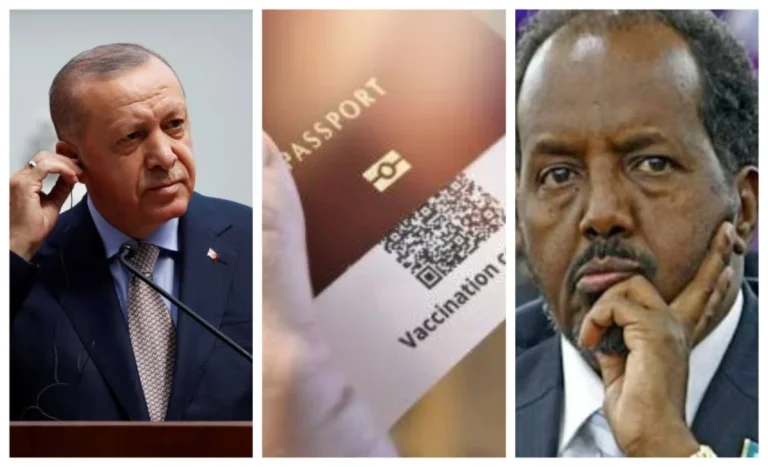
The Turkish Electronic Visa Application System, launched on April 17, 2013, was intended to streamline travel for numerous foreign nationals. Over a decade later, the system has been expanded to include a wide array of African countries, such as Algeria, Cabo Verde, Egypt, Equatorial Guinea, Libya, Mauritius, Namibia, Senegal, and South Africa. These nations, some with arguably less extensive bilateral ties with Turkey than Somalia, benefit from the convenience of online visa applications. In stark contrast, Somali passport holders, both for ordinary and official travel, are still required to navigate a more arduous process, applying through Turkish diplomatic missions or authorized visa centers. This differential treatment underscores a persistent barrier for Somali citizens seeking to enter Turkey, creating a friction point in an otherwise deepening relationship.
Turkey’s expansive involvement in Somalia began to accelerate following President Recep Tayyip Erdoğan’s visit during the 2011 famine. Since then, Turkey has become one of Somalia’s most significant international partners. According to Turkey’s Ministry of Foreign Affairs, Ankara has channeled over $1 billion in humanitarian and development assistance, encompassing critical sectors like healthcare, education, infrastructure development, municipal services, and institutional strengthening. This substantial aid package has not only fostered goodwill but has also laid the groundwork for increased Turkish commercial and strategic interests.
Beyond aid, Turkish companies have made significant commercial investments, estimated at around $100 million. These investments are particularly visible in the operation of Mogadishu’s international airport and seaport, two of Somalia’s most crucial logistical and economic hubs. Bilateral trade has also witnessed a notable increase, rising from $187.3 million in 2018 to $250.85 million in 2019, representing a nearly 34% surge. These economic metrics underscore the tangible scale of Turkey’s commitment and its growing stake in Somalia’s development, making the continued exclusion of Somali nationals from the e-Visa system all the more perplexing to observers.
Somalia: A Cornerstone of Turkey’s Regional Ambitions
Somalia’s strategic location along the Indian Ocean is a key driver of Turkey’s engagement. This positioning grants Ankara crucial access to the Gulf of Aden and vital shipping lanes connecting the Arabian Sea, the Red Sea, and the Suez Canal. This geopolitical significance has intensified in recent years, particularly following Israel’s recognition of Somaliland, a move that has heightened regional competition and underscored the strategic importance of maintaining strong ties with Mogadishu.
Turkey’s commitment to Somalia’s security infrastructure is substantial. The country operates Camp TURKSOM in Mogadishu, its largest overseas military training facility. Here, Somali officers and soldiers receive specialized training to bolster their capabilities in counter-terrorism operations against the al-Shabaab militant group. This military cooperation is further solidified by a 10-year defense and economic cooperation agreement signed in February 2024. Under this pact, Turkey has pledged to assist in rebuilding, training, and equipping Somalia’s navy, while also committing to help safeguard the nation’s territorial waters against threats such as piracy, terrorism, and illegal fishing.
Turkey’s influence extends to diplomatic mediation as well. Ankara played a pivotal role in mediating talks between Somalia and Ethiopia after an agreement between Addis Ababa and Somaliland ignited a significant regional dispute. This diplomatic intervention highlights Turkey’s growing role as a regional mediator and its ability to leverage its relationships to manage complex geopolitical challenges.
Deepening Energy Ties and Strategic Exploration
In a significant development underscoring the expanding scope of their bilateral relationship, Turkey has recently intensified its focus on Somalia’s energy sector. In April 2026, President Erdoğan met with Somali President Hassan Sheikh Mohamud in Istanbul to discuss a wide range of issues, including trade, security, and energy cooperation. A key outcome of these discussions was Turkey’s deployment of the "Arar Bey" drilling vessel to explore for oil off the Somali coast. This marked a significant milestone, representing Ankara’s first deep-sea drilling operation outside its own territorial waters.
Prior to this expedition, Turkey and Somalia had already established agreements pertaining to the exploration, development, production, and transportation of oil and natural gas from both offshore and onshore blocks within Somalia. These agreements signal a long-term strategic partnership aimed at unlocking Somalia’s hydrocarbon potential, with Turkey positioned to be a major player in its exploitation. The move also aligns with Turkey’s broader energy strategy, seeking to diversify its energy sources and expand its influence in resource-rich regions.
Somalia Navigates Geopolitical Pressures and Economic Realities
Despite its growing strategic importance and the significant international attention it commands, Somalia remains one of the world’s most fragile economies. Its strategic location and potential natural resources have rendered it a focal point for geopolitical maneuvering by various global and regional powers. The recent Israeli recognition of Somaliland, for instance, has added another layer of complexity to the region’s already delicate political landscape.
Furthermore, Somalia finds itself indirectly impacted by broader international trends, such as the immigration crackdown and fraud investigations initiated by the Trump administration in the United States. These policies have disproportionately affected Minnesota’s large Somali diaspora, complicating wider U.S. engagement with Mogadishu and underscoring the interconnectedness of international relations and diaspora communities.
However, Somalia possesses significant inherent strengths that attract international interest. These include substantial remittance flows, a large and active diaspora, a robust telecommunications and mobile money sector, valuable livestock exports, an extensive coastline, and considerable untapped potential in oil, gas, and fisheries. The challenge for Somalia lies in translating these assets into widespread prosperity, a goal hampered by ongoing conflict, the recurrent impact of climate shocks, and underdeveloped infrastructure. These internal vulnerabilities, coupled with global migration concerns, continue to shape how Somali passport holders are perceived and treated internationally, potentially influencing Ankara’s cautious approach to visa policies.
The persistent exclusion of Somalia from Turkey’s e-Visa system, despite the substantial investments and strategic alignment between the two nations, remains a point of contention and raises questions about the underlying rationale. While security concerns are often cited in visa policy decisions, the depth of Turkey’s engagement with Somalia suggests a complex calculus that may involve balancing strategic interests with domestic security perceptions and broader immigration management strategies. As Turkey continues to solidify its position as a key player in the Horn of Africa, its approach to visa facilitation for its closest partners will undoubtedly remain under scrutiny. The discrepancy between substantial aid and strategic partnership on one hand, and restrictive entry policies on the other, presents a paradox that warrants continued observation and analysis.