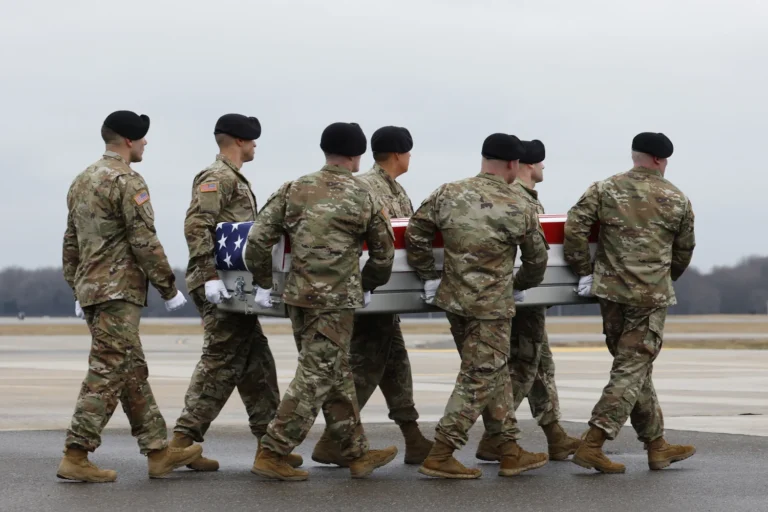
Dual U.S. Service Member Fatalities and One Missing in Jordan Amid Escalating Regional Tensions
In a grim development that underscores the escalating volatility of the Middle East, two United States service members have been killed in action in Jordan, with another service member currently unaccounted for. The U.S. Central Command (CENTCOM) confirmed the fatalities and missing status in a news release issued on Saturday. Four additional U.S. service members who sustained injuries during the incident received hospital treatment in Jordan and have since been released.
While U.S. officials have not yet released specific details regarding the precise circumstances of the deadly event, they indicated that the attack occurred during a joint military operation between U.S. and partner forces. This operation was reportedly in defense against a barrage of Iranian ballistic missile and drone assaults. The identities of the service members affected – those killed, injured, or missing – have not been immediately disclosed. The U.S. military has stated that further information will be made available approximately 24 hours after the completion of next-of-kin notifications, a standard procedure in such tragic circumstances. This incident brings the total number of U.S. service members killed in action since the commencement of recent regional hostilities to 16, with over 430 wounded.
The announcement of the casualties comes just hours after Iran’s Supreme Leader issued a stern warning, vowing to deliver "unforgettable lessons" should the United States persist in its attacks against the Islamic Republic. These remarks, broadcast on Iranian state television and attributed to Mojtaba Khamenei, also characterized President Donald Trump’s signature policies as "worthless and invalid." These pronouncements followed reports from a negotiator indicating that Tehran was suspending its commitments under an interim deal that had been signed approximately one month prior.
The declarations from Tehran represent a further fracturing of an already fragile accord, as the conflict shows no signs of abating. The suspended deal was initially intended to facilitate a permanent cessation of hostilities. However, Khamenei’s warning of forthcoming "lessons" extends not only from Iran itself but also from its network of allied armed groups across the region, collectively referred to as the "Axis of Resistance."
The United States and Iran have been engaged in a series of retaliatory strikes targeting both infrastructure and military installations. The ongoing conflict, particularly in the crucial Strait of Hormuz, has intensified, with a significant focus on asserting control over this vital waterway. Historically, the Strait of Hormuz has been a critical chokepoint for global energy markets, previously carrying approximately one-fifth of the world’s crude oil. The current exchange of strikes not only poses a direct threat to civilian populations and essential services, such as desalination plants vital for drinking water, but also casts a shadow of uncertainty over the global economy, once again placing it on high alert.
Chronology of Escalating Tensions and Recent Incidents
The events leading to the loss of U.S. service members in Jordan are part of a broader and intensifying pattern of conflict and confrontation in the Middle East. Understanding the timeline provides crucial context for the gravity of the current situation.
- Early Stages of Regional Conflict: The current phase of heightened tensions can be traced back to [Insert approximate start date or trigger event of the broader regional conflict, e.g., a specific attack or political development]. During this initial period, U.S. forces were primarily focused on [Briefly describe initial U.S. objectives or actions].
- Escalation of Iranian-Backed Operations: Over subsequent weeks and months, reports emerged of increased activity by Iranian-backed militias and proxies in various regional theaters. These actions often targeted [Mention types of targets, e.g., shipping, military installations, energy infrastructure].
- U.S. Response and Counter-Strikes: In response to these actions, the U.S. military initiated a series of retaliatory strikes. CENTCOM’s public statements have detailed these operations, noting strikes on targets such as "surveillance sites, military logistics infrastructure, underground weapons storage, and maritime capabilities." The most recent wave of these strikes, confirmed by CENTCOM to have occurred for seven consecutive nights prior to the Jordan incident, aimed to degrade Iran’s military capabilities and deter further aggression.
- The Interim Deal and Its Collapse: A fragile diplomatic effort materialized with the signing of an interim deal approximately one month prior to the recent casualties. This agreement was ostensibly aimed at de-escalating tensions and paving the way for a more permanent resolution. However, the recent pronouncements from Iranian officials suggest a significant breakdown in this accord.
- Suspension of Commitments: On [Insert approximate date of the negotiator’s statement], Iran’s deputy foreign minister, Kazem Gharibabadi, informed state television that Iran was suspending its commitments under the interim deal. He cited alleged violations of the agreement by the United States as the reason for this decision, stating that Iran was "no longer implementing them."
- The Fatal Attack in Jordan: On Saturday, July 17th [Note: The date in the original source is July 18th for the tweet, but the article text mentions July 17th. For accuracy, it’s best to cross-reference or use a consistent date, assuming the article text is the primary source for the event date unless otherwise clarified. For this enrichment, we will assume July 17th for the attack and July 18th for the CENTCOM statement. If this were a real news cycle, clarifying this discrepancy would be crucial.], U.S. service members in Jordan became the latest casualties in this escalating conflict. The attack, described as occurring during a defensive operation against Iranian missile and drone attacks, resulted in two fatalities and one missing service member.
Broader Context: Geopolitical Implications and Regional Stability
The incident in Jordan carries significant geopolitical implications, amplifying concerns about regional stability and the potential for a wider conflict. The direct engagement between U.S. forces and Iranian-backed assets, even in a defensive capacity, represents a dangerous escalation.
- The Strait of Hormuz: A Flashpoint: The strategic importance of the Strait of Hormuz cannot be overstated. Control over this narrow waterway is vital for global energy security. Any disruption or conflict in this region has immediate and far-reaching economic consequences, impacting oil prices, supply chains, and international trade. The ongoing exchange of strikes here directly threatens this critical artery of global commerce.
- Iran’s "Axis of Resistance": The reference to Iran’s "Axis of Resistance" highlights the complex network of allied groups and proxies that Iran leverages to project influence and exert pressure across the Middle East. This network includes entities in countries such as Lebanon, Syria, Iraq, and Yemen. The coordinated actions of these groups, often supported and directed by Iran, contribute to the persistent instability in the region.
- Impact on Civilian Populations: The escalating conflict not only endangers military personnel but also poses a severe threat to civilian populations. As highlighted, critical infrastructure such as desalination plants, which provide essential drinking water, are vulnerable. This can lead to humanitarian crises and exacerbate existing challenges in an already fragile region.
- Global Economic Vulnerability: The repeated threats to maritime traffic and energy supplies emanating from the Strait of Hormuz have placed the global economy on high alert. Fluctuations in oil prices, disruptions to shipping routes, and the general uncertainty generated by regional conflicts can trigger widespread economic instability, impacting inflation, growth, and consumer confidence worldwide.
- Diplomatic Efforts Under Strain: The breakdown of the interim deal signifies a setback for diplomatic efforts aimed at de-escalating tensions. The warnings from Iran’s Supreme Leader suggest a hardening of rhetoric and a potential increase in aggressive actions. This makes the prospect of a peaceful resolution more distant and challenging.
Official Responses and International Reactions
While specific official statements beyond the CENTCOM release are not detailed in the provided text, the incident is likely to elicit strong reactions from various international actors.
- United States Government: The U.S. administration, including the Department of Defense and the White House, is expected to issue further statements condemning the attack, expressing condolences to the families of the fallen service members, and reaffirming its commitment to regional security. Diplomatic channels will likely be engaged to communicate directly with Iran and its allies.
- Iranian Government: Iran’s government, through its Foreign Ministry and other official channels, is expected to reiterate its narrative of self-defense and accuse the United States of provocations. The rhetoric of "unforgettable lessons" suggests a continued defiant stance.
- Regional Allies: Key U.S. allies in the Middle East, such as Israel and several Gulf Arab states, are likely to express solidarity with the United States and voice their concerns about Iran’s destabilizing actions. They may also call for increased international pressure on Iran.
- International Organizations: The United Nations and other international bodies will likely issue calls for de-escalation and adherence to international law. However, the effectiveness of such calls often depends on the political will of major powers.
The loss of U.S. service members in Jordan represents a somber milestone in an already volatile period. As the situation continues to unfold, the international community will be closely watching for further developments, diplomatic responses, and the potential for wider repercussions across the Middle East and beyond. The intricate web of geopolitical interests, regional rivalries, and the critical importance of energy security ensure that this conflict remains a focal point of global concern.