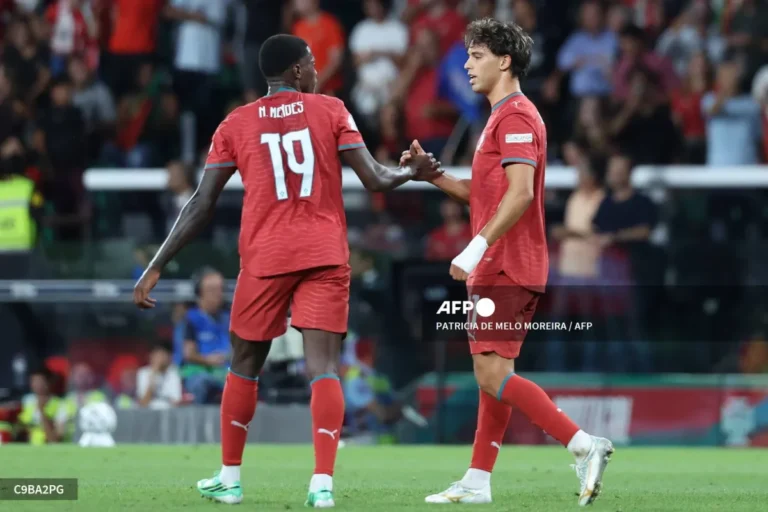
Reigning UEFA Nations League champions Portugal commenced their latest tournament campaign with a narrow yet dominant 1-0 victory over Wales at the Estádio José Alvalade in Lisbon. Joao Felix emerged as the decisive figure of the night, securing the crucial three points with a first-half strike that deflected past the Welsh defense. However, the fixture proved to be a night of frustration for veteran talisman Cristiano Ronaldo, who endured a rare off-target performance before being substituted in the second half.
The match marked the managerial debut of Jorge Jesus at the helm of the Portuguese national team, injecting a fresh tactical perspective into a squad looking to rebound from a disappointing round-of-the-exit at the World Cup earlier in July, where they fell to Spain. Despite controlling the tempo, overwhelming possession statistics, and unleashing a flurry of attempts on goal, Portugal’s inability to capitalize on their dominance left the contest uncomfortably close until the final whistle.
Main Facts of the Encounter
The Group A4 fixture unfolded largely in Portugal’s attacking half, with the home side setting a relentless pace from kickoff. Portugal registered a staggering 19 shots over the course of the 90 minutes, completely starving Wales of sustained offensive rhythm and limiting the visitors to just four attempts on goal.
The breakthrough arrived in the 22nd minute. Joao Felix, operating on the edge of the penalty area, unleashed a low, scuffed effort that took a definitive deflection off Wales captain Ben Davies. The slight deviation completely wrong-footed goalkeeper Danny Ward, causing the ball to skip inside the far post and sending the Lisbon crowd into raptures.
Despite the overwhelming volume of opportunities created by Jorge Jesus’ side—including 13 shots in the opening 45 minutes alone—the scoreline remained fragile. Cristiano Ronaldo, playing his milestone-filled international career into his 41st year, experienced a night where fortune deserted him. He found the side netting, misdirected an inviting close-range volley over the crossbar, and saw a neatly converted finish chalked off due to an offside infringement just past the hour mark. Following his substitution in the 67th minute, Portugal’s attacking impetus visibly waned, almost allowing a resilient Welsh side to steal a late equalizer.
Chronology of Events
The tactical battle at the Estádio José Alvalade followed a clear chronological trajectory defined by Portuguese dominance followed by late defensive anxiety:
- Pre-Match: Anticipation reached its peak as fans welcomed the team under new head coach Jorge Jesus, while Wales prepared to weather an expected storm from the reigning champions.
- 0 to 20 Minutes: Portugal immediately established territorial superiority. Midfielder Bruno Fernandes dictated the tempo, orchestrating waves of attacks that kept the Welsh defensive block pinned deep inside their own half.
- 22nd Minute (The Breakthrough): Joao Felix broke the deadlock. After receiving the ball near the box, his low shot clipped Ben Davies, eluding Danny Ward to make it 1-0 in favor of the hosts.
- Half-Time: Portugal walked into the locker room having dominated possession and registering an impressive 13 shots, while Wales managed virtually no offensive threat of note.
- 60th to 67th Minutes (Ronaldo’s Frustration): Cristiano Ronaldo thought he had doubled the lead when he slid the ball past Ward, but the linesman’s flag cut short his celebrations. Visibly dismayed, the veteran forward was withdrawn by Jorge Jesus in the 67th minute.
- Post-Substitution (Welsh Resurgence): With Ronaldo off the pitch, Portugal lost their attacking shape. Wales seized the opportunity to launch their most dangerous offensive sequences of the match.
- Late Drama: Brennan Johnson came agonizingly close to equalizing for Wales, chipping goalkeeper Diogo Costa only to see his effort strike the crossbar. A scramble on the goal line ensued, but defender Rúben Dias managed to block the subsequent attempts, preserving the clean sheet.
- Full-Time: The referee blew the final whistle, confirming a hard-fought 1-0 victory for Portugal to kick off their League Phase campaign.
Supporting Data and Match Statistics
The statistical breakdown of the Group A4 encounter underscores the extent of Portugal’s dominance, while simultaneously highlighting their ongoing clinical deficiencies in the final third:
- Possession: Portugal controlled 68% of the ball over the course of the match, compared to Wales’s 32%.
- Total Shots: Portugal accumulated 19 shots, while Wales managed just 4.
- Shots on Target: Portugal tested Danny Ward on 7 occasions, whereas Wales registered only 1 shot directly on target.
- Corner Kicks: The home side forced 9 corners, maintaining continuous pressure on the Welsh backline.
- Discipline: The match was relatively clean, with refereeing interventions kept to a minimum, though both sides committed tactical fouls to disrupt transitional play.
- Historical Context: Portugal has captured two of the four UEFA Nations League titles since the competition’s inception in 2018, establishing themselves as tournament heavyweights. Meanwhile, Cristiano Ronaldo extended his record-breaking international appearance tally, boasting an unmatched 146 goals for his country since making his debut in 2003.
Official Responses and Post-Match Reactions
Speaking to the media after the final whistle, players from both camps reflected on a match that provided plenty of control but plenty of anxiety.
Portugal midfielder Bruno Fernandes emphasized the positive aspects of the result, prioritizing defensive solidity and the acquisition of three points over a high-scoring margin.
"We scored one, and we didn’t concede," Fernandes told the BBC. "That’s the big thing. I think it was a very good game. We controlled it and had a lot of chances, but were not capable of scoring more. We wanted the three points, and we got that."
Match-winner Joao Felix echoed his teammate’s sentiments regarding the team’s offensive output, noting that the sheer volume of chances created is a positive indicator for future fixtures under their new manager.
"We had 13 shots in the first half, that’s a lot," Felix remarked. "I can’t recall them having a single clear-cut chance; we had several. You can expect this from us. We only scored one today, but if we carry on like this, we’ll score more."
From the opposing dugout, the mood was a mixture of pride in the defensive effort and bitter disappointment over missed opportunities that could have altered the outcome. Wales midfielder Ethan Ampadu addressed the razor-thin margins of elite international football.
"We are disappointed with the goal," Ampadu stated. "It’s tough, and there were a couple of chances at the end where we could’ve got a goal, and that would have made it a better feeling, but it’s never nice to lose."
Broader Impact and Implications for Group A4
The opening round of fixtures in Group A4 of the UEFA Nations League sets a fascinating precedent for the remainder of the group phase. For Portugal, securing a victory under Jorge Jesus provides immediate stability and momentum as the squad transitions into a post-World Cup rebuilding phase. While the defensive performance—highlighted by clean sheets and composure under late pressure—will please the coaching staff, the lack of clinical finishing against a lower-block defense remains an area requiring fine-tuning.
For Cristiano Ronaldo, the match serves as another chapter in an unprecedented international career, though it also raises tactical questions regarding how Jorge Jesus intends to manage the veteran forward’s minutes as the rigorous tournament schedule progresses. The dip in Portugal’s attacking coherence following Ronaldo’s substitution demonstrates that the team remains tactically anchored around his presence, a dynamic the coaching staff must manage carefully.
For Wales, despite the scoreline, the resilience shown in the dying moments of the match offers encouraging signs. Rob Page’s side demonstrated that they can frustrate elite opposition and capitalize on momentary lapses in concentration. However, if Wales are to contend for qualification out of a competitive group, they will need to translate defensive resilience into greater offensive productivity in future fixtures. As the UEFA Nations League group phase unfolds, both teams leave Lisbon with clear areas of growth ahead of their next test.