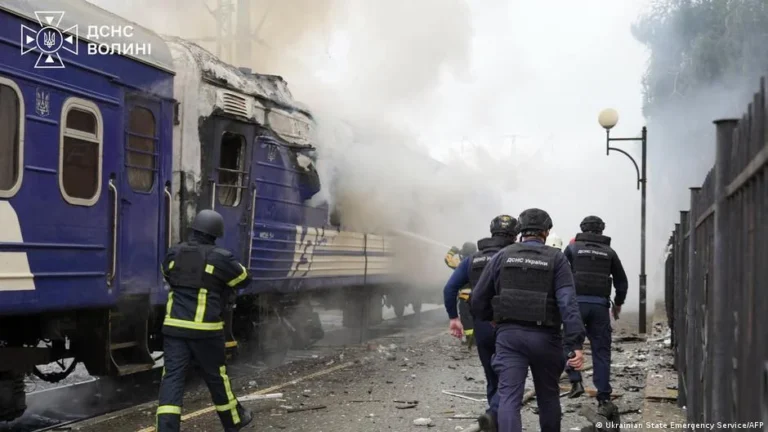
In the first eight months of 2026, Russian forces launched more than 1,600 drone attacks specifically targeting locomotives, rail stations, and critical infrastructure across Ukraine. This intensified campaign of aerial bombardment has transformed the country’s state-owned rail operator, Ukrzaliznytsia, into a frontline entity, forcing the company to shift its entire operational model from a standard logistics provider to an emergency services organization operating under constant, lethal threat.
The strategic focus of these attacks is clear: by destroying the locomotives that power Ukraine’s economy, Russia seeks to disrupt the transport of grain, essential cargo, and the movement of civilians away from high-risk zones. The human and material costs are mounting, as the railway attempts to maintain its "unbreakable line" despite an increasingly sophisticated aerial offensive.
A Chronology of Escalation
The mid-September 2026 period marked a peak in this tactical aggression. On September 16, a passenger train operating on the critical Kyiv-Mykolaiv route was struck by a Russian drone, serving as a stark reminder of the risks faced by daily commuters. This followed an attack just 24 hours earlier in the Volhynia region, near the border with Poland.
Perhaps the most alarming incident occurred two days prior to these strikes at the Yahodyn border crossing. A Russian drone hit the locomotive of a passenger train just two kilometers from the Polish border. Thanks to Ukrzaliznytsia’s real-time monitoring systems, which detected the incoming drone, the train had been evacuated 15 minutes before the impact. Notably, the station was hosting high-profile international guests at the time, including CIA Director David Petraeus and a delegation of former European leaders, among them former British Prime Minister Boris Johnson. Intelligence assessments suggest the diplomatic train was the primary target, but the delegation’s early departure narrowly averted a potential international crisis.
The Anatomy of the Logistical Strike
The deliberate targeting of locomotives is not merely a tactic of general destruction; it is a calculated effort to force a complete standstill in Ukrainian commerce. Vasyl Shevchenko, a former Ukrainian deputy transport minister, notes that locomotives are "ideal" targets from a technical perspective.
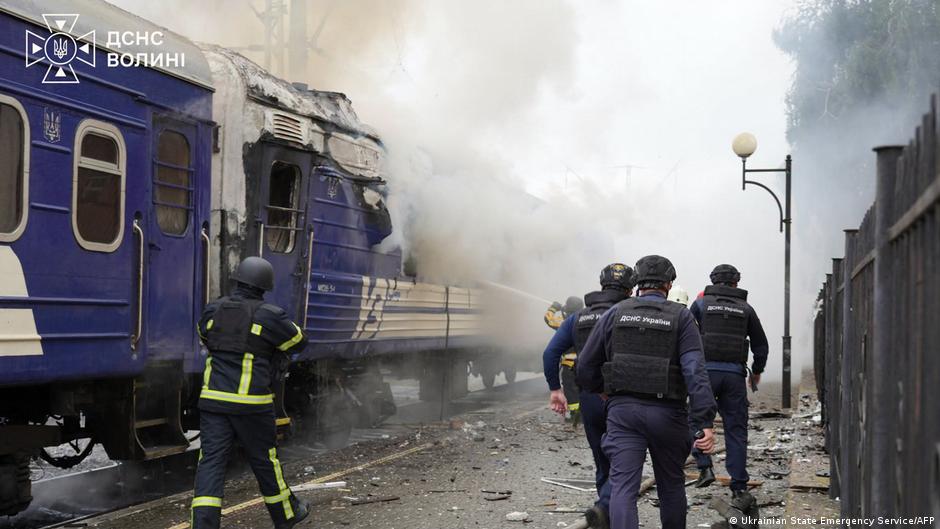
"A locomotive’s thermal signature is very large, and almost impossible to miss," Shevchenko explained. The physics of these strikes are devastating. A direct hit by 50 kilograms of explosives on a diesel locomotive can trigger the detonation of several metric tons of onboard fuel, obliterating the machine. For electric locomotives, the damage is equally paralyzing; a successful strike results in fire and electrical failure, often rendering an entire segment of track unusable for extended periods.
Since the beginning of the full-scale invasion in 2022, Russia has damaged or destroyed more than 500 Ukrainian locomotives. According to Ukrainian Foreign Minister Andrii Sybiha, over 50% of these losses have occurred within the 2026 calendar year. Sybiha has characterized these strikes as a core component of "Putin’s terror," intended to destabilize the nation’s logistics system at its most vulnerable points.
Official Responses and International Appeals
The Ukrainian government is currently engaged in a multi-pronged response to mitigate these losses. President Volodymyr Zelenskyy, following a September 15 meeting of the staff of the Supreme Commander-in-Chief, ordered a comprehensive review of critical infrastructure protection. The directive includes the procurement of advanced protection systems, the reorganization of mobile fire teams to intercept drones, and the expansion of electronic warfare (EW) capabilities to scramble drone guidance systems.
Minister Sybiha has issued an urgent appeal to international partners, calling for both tightened sanctions on Russian military supply chains and increased financial support to replace the destroyed fleet. The technical challenge is significant: Ukraine’s rail system utilizes the Soviet-era 1,520-millimeter broad-gauge track, requiring specialized locomotives that are not readily available in the global market.
Ukrzaliznytsia has already entered into contractual agreements with the French industrial giant Alstom to supply new, compatible locomotives starting in 2027. However, the lead time for such manufacturing means the railway must survive on a dwindling fleet in the interim.
Operational Adaptations and the "Train Plus Bus" Concept
To counter the threat, Ukrzaliznytsia has established a national monitoring center to track drone movements and train locations in real-time. The integration of high-speed, jet-powered "Shahed-type" drones into the Russian arsenal has severely compressed the time available for emergency responses.

Oleh Holovashchenko of Ukrzaliznytsia noted the shift in protocols: "We used to wait longer to stop trains so we could evacuate passengers. Now, there are more precautionary stops." This reality has birthed the "train plus bus" contingency model. In high-risk zones, passengers are often transferred to buses to bypass dangerous stretches, a process that is as complex as it is vital.
The railway is also focusing on passenger safety protocols. Train staff are now trained in psychological support, and passengers are provided with updated guidance on emergency evacuation procedures. As winter approaches, the challenge becomes significantly more harrowing. The company is working with international humanitarian donors to stockpile blankets, rain jackets, and emergency heating equipment, anticipating that trains may be forced to stop in isolated areas during freezing conditions to avoid aerial attacks.
Broader Implications: The Economic and Military Toll
The systematic destruction of the rail network carries implications that extend far beyond the immediate damage to rolling stock. Ukraine’s economy relies heavily on the rail sector for the export of grain—the country’s economic lifeline—and for the movement of heavy raw materials.
Analytically, the strategy mirrors a broader Russian effort to force a total societal fatigue. By targeting the trains that transport civilians, Russia aims to create a pervasive sense of insecurity, disrupting the normal functions of the state. Conversely, the resilience of the Ukrainian railway has become a symbol of national defiance. The fact that the system continues to operate despite the loss of hundreds of locomotives is a testament to the grit of the thousands of workers who continue to maintain the tracks and operate the trains under the constant threat of fire.
The international community is now faced with a logistical dilemma. Providing air defense systems to protect every kilometer of Ukrainian rail is physically impossible given the vast geography. Consequently, the focus has shifted toward technological defense: better radar coverage, more robust EW jamming, and the rapid replacement of critical rolling stock.
As the war enters its next phase, the rail line remains the most vital artery of the Ukrainian state. Whether that artery remains open will depend not only on the courage of the rail workers but on the ability of the international community to provide the technical and financial support necessary to replace what has been lost and to shield what remains. For now, the trains continue to run, often by the narrowest of margins, carrying a nation that refuses to be brought to a halt.