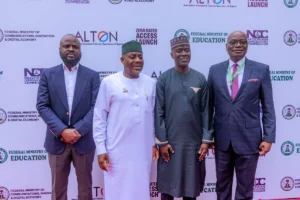
The University of Lagos (UNILAG) Department of English Alumni (UDEA) recently convened its maiden reunion, marking a significant milestone in the history of one of Nigeria’s most prestigious academic departments. Held at the Afe Babalola Hall on the university’s Akoka campus, the event served as both a celebratory homecoming and a strategic forum for discussing the evolving role of humanities graduates in a globalized, technology-driven economy. The gathering brought together a diverse array of distinguished alumni, ranging from veteran academics and literary icons to high-ranking corporate executives, all of whom converged to celebrate what they termed the "Akoka Legacy."
The central theme of the reunion, “Unlocking Global Opportunities with English Studies: The Akoka Legacy,” was designed to challenge the traditional perception that a degree in English is limited to roles in teaching or creative writing. Instead, the discourse emphasized that the foundational skills of critical thinking, linguistic precision, and cultural empathy inherent in English studies are more relevant than ever in the age of Artificial Intelligence (AI) and global digital transformation.
The Keynote Address: Bridging the Gap Between Humanities and Finance
The highlight of the event was the keynote lecture delivered by Dr. Jekwu Ozoemene, the Group Executive of The Alternative Bank. Dr. Ozoemene, an alumnus whose career trajectory exemplifies the versatility of an English degree, transitioned from his academic roots in literature and linguistics to a prominent career in the Nigerian banking sector. His address focused on the concept of career adaptability and the necessity of lifelong learning for modern graduates.
Dr. Ozoemene argued that a first degree should be viewed as a launchpad rather than a restrictive cage. He noted that his background in English studies provided him with the analytical tools necessary to navigate the complex world of finance. “Your starting point does not determine your destination; what determines your destination is your willingness to learn, to adapt, and to invest in yourself as a student,” he told the audience. He urged current students and recent graduates to remain open to new markets and to build expansive networks that transcend their immediate academic circles.
Furthermore, Dr. Ozoemene addressed the looming influence of Artificial Intelligence on the job market. While many fear that AI will replace roles traditionally held by humans, he posited that English graduates possess a unique advantage. He explained that the future of the workforce is not merely about technical proficiency but about contextual decision-making, critical interpretation, and complex social interaction—areas where humanities graduates typically excel. He emphasized that AI lacks the nuanced understanding of human emotion and cultural context that a trained linguist or literary critic brings to the table.
The Importance of Teaching and the Human Element in Technology
Adding a cultural and social perspective to the discussion, renowned veteran actress and director Joke Silva addressed the gathering on the intersection of technology and humanity. Silva expressed concern over the rapid pace of technological advancement, which she argued often occurs without sufficient consideration for the human element. She called for a recalibration of values, urging graduates to prioritize people-centric roles.
A significant portion of Silva’s address was dedicated to the profession of teaching. In Nigeria, teaching is often viewed as a "fallback" career for those who cannot find placements in more lucrative sectors like oil and gas or telecommunications. Silva challenged this narrative, urging English graduates to embrace the classroom with pride. “If you get the opportunity to teach, grab it with confidence,” she asserted. She lamented that Nigeria remains "very relaxed" in developing its next generation of educators, a gap that she believes English graduates are uniquely positioned to fill.
Her remarks underscored a broader national issue: the need for high-quality education in communication and critical thinking to foster a more informed and capable citizenry. By reframing teaching as a prestigious and vital contribution to nation-building, Silva highlighted the social responsibility that comes with an English degree from a premier institution like UNILAG.
Academic Excellence and the Evolution of Digital Linguistics
The reunion also featured insights from Professor Tunde Ope-Davies, a Professor of Digital Linguistics and Discourse at the University of Lagos. Professor Ope-Davies shared his personal academic journey, illustrating how a foundation in English studies can lead to cutting-edge research and international collaboration. He recounted how a scholarship to Germany allowed him to pivot toward Digital Linguistics, a field that examines how language functions in digital spaces and how computational tools can analyze discourse.
His testimony focused on the "soft" and "hard" virtues required for success: grit, discipline, faith, and perseverance. Professor Ope-Davies revealed that he had made significant personal sacrifices, including the use of personal funds, to help establish and sustain academic programs he believed in. His story served as a reminder that the "Akoka Legacy" is built on individual sacrifice and a commitment to institutional growth. His work in Digital Linguistics specifically highlighted how the Department of English is evolving to meet the demands of the 21st century, blending traditional philology with modern data science.
Institutional Support and Student Welfare
Representing the University of Lagos administration, the Vice-Chancellor, Professor Folasade Ogunsola, conveyed her support for the alumni initiative. In her remarks, which were delivered by a representative, she emphasized the importance of alumni networks in the growth of the university. Beyond academic and professional networking, the Vice-Chancellor’s message focused on the safety and well-being of the student body.
The administration’s call for prioritizing student welfare reflects a broader institutional goal to create a conducive environment for learning that extends beyond the classroom. The Vice-Chancellor encouraged the alumni to not only provide career guidance but to also act as mentors who can help students navigate the social and psychological challenges of university life. This holistic approach to education is a cornerstone of the UNILAG philosophy, ensuring that graduates are not only academically sound but also resilient and well-adjusted individuals.
Chronology of the Maiden UDEA Reunion
The maiden reunion was the result of months of planning by the interim executive committee of the UDEA. The event followed a structured program designed to maximize engagement between different generations of graduates:
- Morning Session: Registration and Networking: The event began with the registration of alumni from various decades, dating back to the early years of the department. This provided an opportunity for older graduates to meet with younger alumni and current students.
- The Keynote Lecture: Dr. Jekwu Ozoemene delivered the thematic address, setting the tone for the day’s discussions on career versatility.
- Panel Discussion and Interactive Q&A: Following the keynote, a panel featuring Joke Silva and Professor Ope-Davies engaged the audience in a dialogue about the practical applications of English studies in the arts, academia, and technology.
- Alumni Business Meeting: The formal proceedings included a session dedicated to the structure of the UDEA, discussing how the association can support the Department of English through scholarships, infrastructure development, and internship placements for students.
- Recognition and Awards: The event concluded with the recognition of notable alumni who have made significant contributions to their respective fields, further reinforcing the "Akoka Legacy."
Analysis: The Economic and Professional Value of Humanities in Nigeria
The reunion comes at a time when the value of humanities degrees is being debated globally. However, data from various labor market reports suggest that "soft skills"—such as communication, emotional intelligence, and analytical writing—are increasingly sought after by employers. According to the World Economic Forum’s "Future of Jobs" report, analytical thinking and creative thinking remain the most important skills for workers in 2023 and beyond.
In the Nigerian context, English graduates are finding success in diverse sectors:
- Corporate Communications and Public Relations: As companies look to manage their brand image in a digital world, the demand for skilled writers and strategic communicators has surged.
- Fintech and Banking: As highlighted by Dr. Ozoemene, the ability to interpret complex regulatory frameworks and communicate value to customers is essential in the financial sector.
- The Creative Economy: Nigeria’s "Nollywood" and its burgeoning music and literary scenes rely heavily on the storytelling and script-editing skills of English graduates.
- User Experience (UX) Writing: In the tech sector, English majors are increasingly employed to design the "voice" of apps and websites, ensuring that human-computer interactions are intuitive and clear.
The maiden reunion of the UDEA has effectively signaled that the University of Lagos Department of English is not just a repository of literary history, but a dynamic engine for professional excellence. By fostering a strong alumni network, the department is positioning its graduates to lead in an era where the ability to interpret and communicate information is the ultimate currency.
Conclusion and Future Outlook
The maiden reunion of the University of Lagos Department of English Alumni served as a powerful testament to the enduring relevance of the humanities. By bringing together leaders from finance, the arts, and academia, the event demonstrated that the "Akoka Legacy" is one of adaptability, intellectual rigor, and social impact.
As the UDEA moves forward, the association aims to formalize its mentorship programs and create a robust database of alumni to facilitate job placements and collaborative projects. The message from the Afe Babalola Hall was clear: an English degree is not an end point, but a versatile foundation upon which a world-class career can be built. Through integrity, continuous self-investment, and a willingness to embrace new technologies, UNILAG English graduates are poised to remain at the forefront of Nigeria’s professional and cultural landscape.