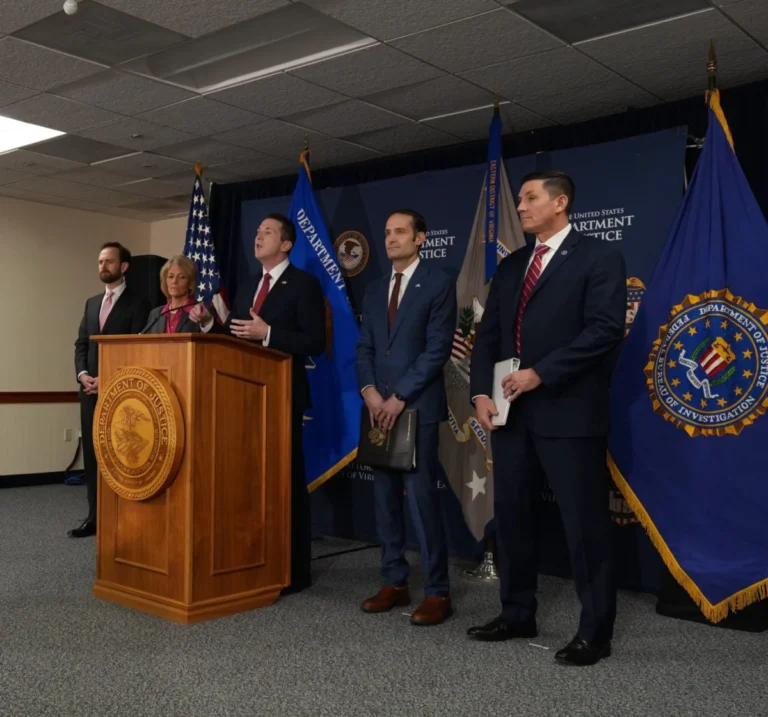
The United States Department of Justice has formally charged five individuals in connection with a sophisticated, nationwide student-aid fraud ring that exploited institutional systems to siphon millions of dollars in federal funds. Unveiled on October 29, 2026, the sweeping multi-agency initiative—designated "Operation Ghostbusters"—targets international criminal networks operating across U.S. borders and into East Africa, with a primary nexus in Kenya.
According to federal prosecutors, the enterprise relied on stolen American identities to register nonexistent, or "ghost," students at colleges and universities across the United States. By manipulating the Free Application for Federal Student Aid (FAFSA) system and federal loan disbursement frameworks, the conspirators secured vast sums of taxpayer-funded financial aid. Once educational institutions deducted direct charges such as tuition and housing fees, the remaining financial aid refund balances were routinely siphoned into domestic bank accounts controlled by the syndicate before being laundered overseas or converted into digital assets.
The crackdown highlights growing vulnerabilities in automated digital enrollment systems and federal student assistance programs. Investigators estimate that the wider illicit enterprise, which federal records indicate has been active since at least 2021, could exceed $200 million in cumulative losses. As law enforcement agencies ramp up cross-border cooperation, Operation Ghostbusters stands as one of the most significant international efforts to combat identity theft and fraud targeting the U.S. higher education financial infrastructure.
Anatomy of a Multi-Million Dollar Fraud Scheme
The mechanisms utilized in the ghost-student scheme reflect a high degree of technical coordination and exploitation of administrative processes within higher education. Federal indictments outline a systematic approach wherein perpetrators acquired vast troves of Personally Identifiable Information (PII) belonging to U.S. citizens without their knowledge or consent.
Using these compromised identities, the conspirators created fraudulent profiles within the Department of Education’s digital infrastructure. They subsequently submitted thousands of FAFSA applications, portraying the fabricated personas as low-income domestic students eligible for maximum federal Pell Grants, subsidized loans, and other financial assistance programs designed to aid vulnerable populations.
The targeted institutions, unaware that the enrolled students existed solely on paper, processed the applications and disbursed federal financial aid funds. In a standard academic lifecycle, once tuition, fees, and campus housing costs are covered, any surplus money is refunded directly to the student for living expenses. In this scheme, these surplus refund checks or electronic fund transfers (EFTs) were directed to bank accounts managed by domestic intermediaries or money mules. The capital was then rapidly fragmented, moved through multiple shell accounts, and ultimately funneled back to co-conspirators in Kenya via traditional wire services or decentralized cryptocurrency networks.
Chronology and Indictments Across Federal Districts
Operation Ghostbusters has manifested through coordinated actions across multiple federal judicial districts, highlighting the decentralized yet highly organized nature of the fraud network.
The initial wave of public legal actions has concentrated in Virginia, Nebraska, and New Jersey:
- October 19, 2026 (Nebraska District): Kenyan citizen Francis Mogambi was formally indicted by a federal grand jury on five counts of government-money theft and five counts of aggravated identity theft. Prosecutors allege Mogambi played a central role in utilizing stolen personal data to infiltrate institutional aid portals and direct federal disbursements to accounts under his control.
- October 21, 2026 (Eastern District of Virginia): A federal indictment was unsealed against another Kenyan national involved in a scheme exceeding $1.4 million in fraudulent student aid. According to court filings, the defendant managed more than 700 fraudulent aid-refund deposits totaling approximately $1.44 million, with at least $1.3 million swiftly transferred outward to domestic and international accounts in Kenya.
- New Jersey District: Three separate defendants were indicted on charges connected to a parallel enterprise involving over $1 million in misappropriated federal student-aid funds. The suspects allegedly received the capital via a network of U.S. bank accounts before routing the proceeds overseas to Kenyan associates.
Beyond these initial indictments, the scope of the operation expanded dramatically during a data-audit surge in September and October 2026. Investigators identified more than 830,840 potentially fraudulent Federal Student Aid identification accounts linked to nearly $130 million in proposed or distributed funds. The Department of Justice subsequently recommended that the U.S. Department of Education immediately deactivate these compromised credentials to prevent further losses.
Official Statements and International Law Enforcement Response
The scale of the operation prompted strong rebukes from federal law enforcement leadership during the October 29 announcement. Officials emphasized that the abuse of educational safety nets places an unfair burden on American taxpayers while depriving genuinely needy students of vital educational resources.
"Today, we are announcing the first results of Operation Ghostbusters—a nationwide effort to stop a major fraud scheme targeting federal student aid, low-income Americans, and the American taxpayer," stated Assistant Attorney General Colin M. McDonald of the Justice Department’s National Fraud Enforcement Division.
Directing his remarks at the international actors behind the syndicate, McDonald issued a stark warning: "If you steal American identities, if you steal taxpayer dollars, if you exploit programs meant to help students build a future—we will find you. Whether you are in Nebraska, New Jersey, Virginia, or Nairobi, we will pursue you."
The Federal Bureau of Investigation (FBI), which has spearheaded the intelligence-gathering aspects of the probe alongside domestic regulatory bodies, reported that broader preliminary assessments indicate losses exceeding $32 million across similar ghost-student iterations, with tens of millions more under active review.
Law enforcement agencies have leveraged international treaties and bilateral partnerships to coordinate with Kenyan law enforcement authorities. The collaborative effort has already yielded tangible financial recovery results, most notably the successful seizure of more than $750,000 in cryptocurrency from a digital wallet linked to a Kenyan national central to the illicit network.
Despite the aggressive enforcement measures, the Department of Justice reiterated that all individuals named in the indictments are presumed innocent until proven guilty in a court of law.
Broader Implications for Higher Education and Financial Systems
The revelations surrounding Operation Ghostbusters underscore critical vulnerabilities in the digitization of federal administrative services. As government agencies and educational institutions increasingly adopt online portals to streamline applications and disbursements, malicious actors have adapted by leveraging stolen personal data at an industrial scale.
The implications of this investigation are multifaceted, touching upon institutional compliance, cybersecurity, and international relations:
- Heightened Compliance and Verification Protocols: Colleges and universities nationwide are expected to face stricter federal mandates regarding identity verification for remote and online enrollments. The rise of ghost-student schemes demonstrates that institutions can inadvertently become conduits for international money laundering if robust "Know Your Customer" (KYC) principles are not strictly enforced within admissions and financial aid departments.
- Reforms to Federal Student Aid Systems: The Department of Education faces mounting pressure to overhaul its identity-matching algorithms within the FAFSA ecosystem. The identification of over 830,000 suspicious accounts highlights the necessity for advanced biometric or multi-factor authentication measures to prevent automated bots and bad actors from mass-producing fraudulent student profiles.
- Cross-Border Crypto Tracking: The seizure of $750,000 in digital assets illustrates the evolving role of cryptocurrency in transnational financial crimes. Law enforcement agencies are increasingly deploying sophisticated blockchain-analysis tools to trace illicit funds across international jurisdictions, signaling that digital currencies no longer offer guaranteed anonymity for criminal enterprises.
- Impact on Legitimate International Students: Incidents of large-scale fraud originating from specific regions can inadvertently generate secondary scrutiny for legitimate international applicants and scholars. Educational institutions and diplomatic missions may need to balance rigorous anti-fraud measures with the preservation of open, accessible academic pathways for genuine students contributing to the global educational ecosystem.
As Operation Ghostbusters continues to unfold, federal investigators anticipate further arrests and asset recoveries. The multi-agency task force remains focused on dismantling the remaining infrastructure of the syndicate, recovering diverted taxpayer funds, and reinforcing the integrity of the United States student financial aid system against future exploitation.