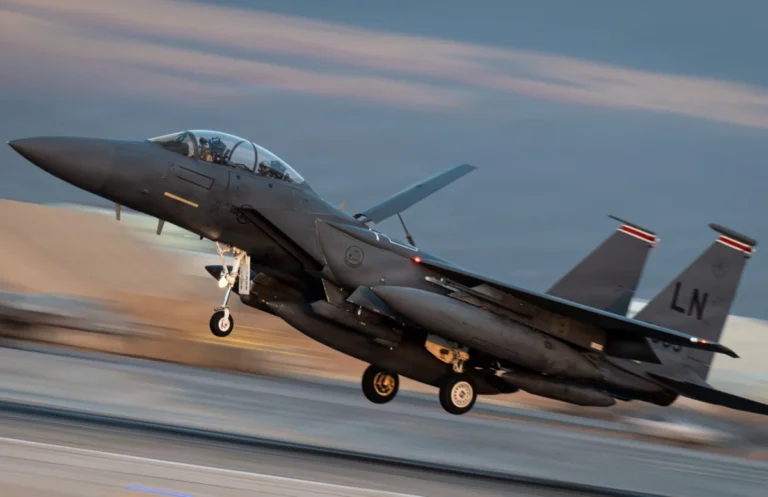
Geopolitical tensions across the Middle East have escalated sharply following a series of intense aerial engagements along the Saudi-Yemeni border and vital Red Sea maritime corridors. Houthi military spokesman Yahya Saree announced that the Iran-backed movement successfully shot down a Saudi F-15 fighter jet during recent operations. While Riyadh has not officially acknowledged the loss of the U.S.-manufactured warplane, unverified video footage broadcasted by international media outlets appears to show the wreckage of an F-15 surrounded by celebrating rebel fighters.
The purported aircraft downing coincides with a surge in drone and missile strikes targeting strategic infrastructure within Saudi Arabia. As regional security deteriorates, traditional diplomatic and military alliances are shifting. With Washington currently maintaining a cautious posture and restricting its direct intervention, Saudi Arabia is actively seeking alternative security partnerships, most notably turning to Cairo for strategic and military cooperation to safeguard critical trade routes.
Escalating Border Clashes and the F-15 Incident
The recent announcement by Houthi leadership marks a significant escalation in the ongoing conflict involving the Saudi-led coalition and the Yemeni rebel movement. According to military statements released by Houthi spokespersons, the F-15 fighter jet was targeted and neutralized during defensive and offensive maneuvers near the volatile border region. Although Saudi authorities have remained silent regarding the fate of the warplane, the release of visual evidence by external news agencies has intensified scrutiny over the air defense capabilities of the coalition forces.
Military analysts note that the F-15 is a formidable, dual-role tactical fighter capable of executing both air-to-air and air-to-ground missions across adverse weather conditions. Losing such an advanced platform—if officially confirmed—would represent a notable tactical blow to the Saudi Royal Air Force. Furthermore, the incident underscores the growing sophistication of the anti-aircraft measures and drone technology utilized by the Houthi movement, much of which intelligence agencies attribute to external backing by Iran.
Parallel to the reported jet downing, Houthi forces have intensified their launch of unmanned aerial vehicles (UAVs) and ballistic projectiles toward strategic Saudi installations. Saudi military spokesperson Maj. Gen. Turki al-Malki reported that coalition air defense systems successfully intercepted and destroyed an incoming Houthi drone operating near the holy city of Mecca. Emphasizing the gravity of the threat, al-Malki declared that the protection of the holy site remains a strict red line for the kingdom. Conversely, Houthi representatives have categorically denied directing any drone operations toward Mecca, reflecting the ongoing propaganda and informational warfare running parallel to the physical conflict.
Regional Ramifications and U.S. Security Posture
The resurgence of hostilities has sent immediate shockwaves through global energy markets and international shipping lanes. The Red Sea and the Bab el-Mandeb Strait serve as vital arteries for global trade, facilitating the transit of millions of barrels of oil and commercial goods daily. Continuous attacks and the looming threat of asymmetric warfare have driven up maritime insurance premiums and forced commercial vessels to reconsider their routing, threatening global supply chain stability.
In response to the deteriorating security environment, the United States Department of State has updated its travel advisories and security guidelines for diplomatic personnel stationed in Saudi Arabia. U.S. government employees have been formally prohibited from traveling within 20 miles of the Yemeni border due to the elevated risk of cross-border shelling, drone attacks, and potential retaliatory actions.
Washington’s broader military involvement in the region remains a subject of intense diplomatic discussion. Reports indicate that Saudi Arabia’s Crown Prince Mohammed bin Salman engaged in direct telephone communications with U.S. President Donald Trump, formally requesting enhanced military assistance. Thus far, however, U.S. support has been primarily restricted to intelligence sharing and logistical advisory rather than direct combat intervention.
This cautious approach by Washington follows a turbulent history of direct military engagement. Throughout early 2025, the United States conducted a two-month air campaign targeting Houthi military infrastructure. That offensive was eventually halted following an arrangement that President Trump described as a conditional ceasefire intended to permanently halt militant attacks on international commercial shipping. The breakdown of these understandings has left Riyadh searching for robust security guarantees closer to home.
Chronology of Recent Escalations
To understand the current crisis, it is essential to examine the sequence of events that have shaped the current operational theater:
- Early 2025: The United States executes a sustained, two-month aerial bombing campaign against Houthi military positions in Yemen in an effort to suppress maritime attacks.
- Mid-2025: Washington and regional stakeholders broker a temporary cessation of hostilities, leading to a temporary reduction in high-profile cross-border strikes.
- September 2026: Houthi forces launch coordinated drone and missile salvos targeting strategic Saudi locations, culminating in the reported downing of a Saudi F-15 fighter jet.
- Mid-September 2026: Saudi air defense systems intercept a Houthi drone near Mecca, prompting stern warnings from Riyadh regarding the defense of holy sites, while Houthi officials deny targeting the city.
- Late September 2026: The U.S. government updates diplomatic travel restrictions, banning personnel from traveling within 20 miles of the Yemeni frontier. Simultaneously, Saudi Crown Prince Mohammed bin Salman travels to Egypt to forge closer bilateral defense alignments.
Egypt Steps In: Africa’s Strongest Military Extends Support
Faced with the prospect of diminished direct military backing from Western allies, Saudi leadership has pivoted toward regional diplomacy to secure its southern and western flanks. Crown Prince Mohammed bin Salman traveled to Cairo to hold high-level consultations with Egyptian President Abdel-Fattah el-Sissi.
Egypt commands the most powerful military force on the African continent, boasting a highly trained standing army, advanced naval assets, and comprehensive air defense networks. Given Egypt’s geographic stake in the stability of the Suez Canal and the southern approaches to the Red Sea, Cairo shares a direct security interest with Riyadh in neutralizing maritime threats.
Following their bilateral summit, the two leaders issued a joint statement, published by major news agencies, affirming a shared commitment to guaranteeing the freedom, safety, and security of navigation across the Red Sea and the Bab el-Mandeb Strait. By consolidating military cooperation with Egypt, Saudi Arabia aims to establish a formidable regional deterrent against further Houthi aggression and Iranian-backed provocations.
Fact-Based Analysis of Broader Implications
The convergence of advanced asymmetric warfare, compromised maritime security, and shifting diplomatic alliances signals a complex new phase in Middle Eastern geopolitics.
First, the apparent vulnerability of advanced Western-supplied military hardware, such as the F-15 platform, highlights the changing nature of modern aerial warfare. The proliferation of low-cost, long-range drones and surface-to-air missile systems has enabled non-state actors to challenge conventional air superiority previously held by state militaries.
Second, the recalibration of U.S. involvement demonstrates a growing reluctance in Washington to become entangled in protracted regional conflicts, placing the onus of defense directly upon regional powers. This vacuum has catalyzed indigenous security frameworks, evidenced by the rapid tightening of military ties between Saudi Arabia and Egypt.
Finally, the ongoing threat to Red Sea shipping lanes ensures that the economic ramifications of the conflict will extend far beyond the immediate combat zone. Any sustained disruption to maritime trade through the Bab el-Mandeb Strait directly impacts European and Asian energy security, reinforcing the imperative for a coordinated international response to restore navigational safety. As regional actors align their military assets, the coming months will test the efficacy of these new defensive partnerships in deterring further escalation.