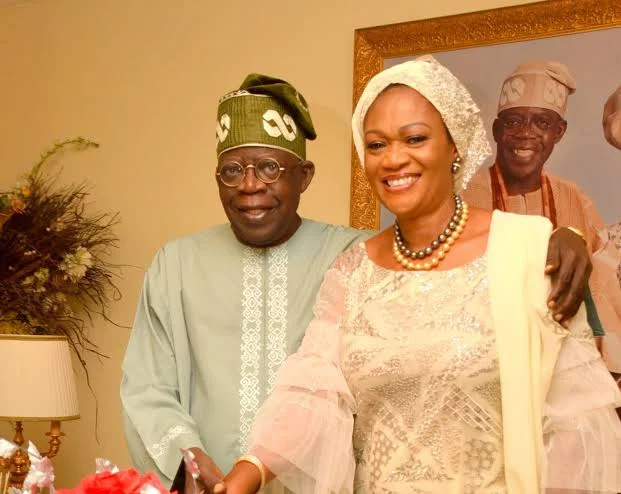
President Bola Ahmed Tinubu marked a deeply personal milestone on Wednesday, releasing a heartfelt and expansive public tribute to celebrate his wife, Senator Oluremi Tinubu, as she turned 66 years old. In a message that deftly bridged the gap between intimate domestic reflection and high-stakes political history, the Nigerian leader described the First Lady as his “truest friend and confidante,” thanking her for steadfastly weathering decades of tumultuous political seasons, personal sacrifices, and demanding public responsibilities by his side.
The presidential birthday tribute, issued from the State House in Abuja, offered rare insight into the inner workings of one of Nigeria’s most enduring political partnerships. Moving well beyond the standard diplomatic pleasantries typical of state communiques, President Tinubu painted a vivid portrait of a marriage forged in the crucible of Nigeria’s complex democratic transitions, mapping out a narrative of resilience, shared burdens, and mutual devotion that has endured for more than three decades.
A Lifetime of Partnership: Tracing the Tinubu Chronology
To fully understand the weight of President Tinubu’s 66th birthday message, observers must view it through the lens of a shared chronology that spans the entirety of modern Nigerian political history. The trajectories of Bola and Oluremi Tinubu have been inextricably linked since the early 1990s—a volatile era defined by military rule, intense pro-democracy agitations, and the eventual rebirth of the Fourth Republic in 1999.
During the military dictatorship of General Sani Abacha, when pro-democracy activists faced imprisonment, exile, and severe harassment, the Tinubu household experienced firsthand the heavy tolls of political opposition. As a prominent member of the National Democratic Coalition (NADECO), Bola Tinubu was forced into a perilous exile to escape arrest and potential assassination. Throughout these precarious years, Oluremi Tinubu maintained the family front, balancing domestic security with the psychological strain of political persecution.
When the couple returned to Nigeria to participate in the restoration of democratic governance, a new chapter unfolded. From 1999 to 2007, Bola Tinubu served as the Governor of Lagos State, laying the foundational framework for the state’s modern economic and infrastructural resurgence. During this seminal tenure, Oluremi Tinubu stepped into the public arena as the First Lady of Lagos State. It was during this foundational eight-year period that she established the New Era Foundation, a non-governmental organization dedicated to youth development, mentoring, and girl-child education—an initiative that would later serve as the operational blueprint for her future nationwide humanitarian projects.
Following the gubernatorial years, the Tinubu political machine expanded its footprint nationwide, eventually culminating in the historic 2015 merger that birthed the All Progressives Congress (APC) and brought an end to the sixteen-year rule of the Peoples Democratic Party (PDP) at the federal level. Through the grueling presidential campaign of 2023 and the subsequent assumption of the presidency, Oluremi Tinubu transitioned from her role as a three-term senator representing Lagos Central into her current national role as First Lady, bringing decades of legislative and philanthropic experience to the epicenter of Nigerian statecraft.
Intimate Reflections and the Architecture of Leadership
In his commemorative address, President Tinubu revealed how deeply his political decision-making processes have relied on his wife’s psychological equilibrium and unvarnished counsel. Quoting both traditional Yoruba philosophy and biblical text, the President underscored the cultural and spiritual dimensions of their union.
"Today, I celebrate the woman who has walked beside me with patience, grace and uncommon courage," the President stated, before invoking the Yoruba adage, “Òyàwó rere ni adé ákó rásò̟” (A good wife is her husband’s crown), alongside references to the virtuous woman of the Book of Proverbs. "You have given these words true meaning in my life. You have stood by my side through every season."
The President laid bare the psychological burdens of leadership, noting that the heavy decisions associated with state governance were frequently processed within the quiet confines of their home, aided by his wife’s intuition. He described moments of high political uncertainty where her calm demeanor served as an emotional anchor.
"In difficult times, when the future was uncertain, you stayed calm beside me and prayed with me," he reflected. "More often than not, you sense when I need counsel before I ask. There have been nights when your presence alone was counsel enough."
Significantly, President Tinubu highlighted a trait rare among political elites: an appreciation for constructive, unfiltered truth. He characterized the First Lady as a figure unafraid to challenge him, noting that she mastered the art of delivering difficult truths in private, far from the prying eyes and ears of political courtiers.
"I call you my truest friend and confidante because you speak the truth plainly, even on the days I would rather not hear it," he noted. "I have always cherished you for that honesty."
Moving beyond their immediate partnership, the President paid tribute to Oluremi Tinubu’s maternal impact on their children and grandchildren, asserting that the younger generations continue to embody her values of faith, resilience, and kindness regardless of where life takes them. Concluding his personal reflection with a romantic flourish, the President declared that if given the opportunity to live life over again, his choices would remain entirely unchanged: "If life returned me to the beginning, I would choose the same road that led me to you. Through every mile, my heart has always remained at home with you."
Philanthropy, Public Service, and the Renewed Hope Initiative
While the primary thrust of the President’s message was personal, it provided a necessary platform to review Senator Oluremi Tinubu’s extensive public service portfolio and humanitarian footprint. Since occupying the office of the First Lady, she has actively steered state resources and civil society partnerships toward the most vulnerable segments of the Nigerian population through her flagship program, the Renewed Hope Initiative (RHI).
The RHI operates across several critical sectors, including agriculture, education, health, social investment, and economic empowerment. Data released by the presidency and various humanitarian agencies indicate that the initiative has distributed billions of Naira in grants to women farmers, micro-entrepreneurs, and marginalized groups across the 36 states and the Federal Capital Territory. By targeting women farmers—who form the backbone of agricultural production in rural Nigeria—the program aims to boost local food security at a time when inflationary pressures and macroeconomic reforms have severely strained household budgets.
Furthermore, the First Lady’s interventions extend into public health advocacy. Over the past year, she has intensified campaigns against tuberculosis, HIV/AIDS, and maternal mortality, aligning her office with global health organizations to improve healthcare access for women and children. President Tinubu specifically lauded this cross-cutting approach to philanthropy, emphasizing that her humanitarian instincts transcend ethnic, regional, and religious divides.
"From the New Era Foundation during our years in the saddle in Lagos to the Renewed Hope Initiative today, your care has reached many young boys and girls, widows, elderly citizens and women farmers across the country," the President observed. "For you, compassion has never recognised the boundaries of tribe, region or religion."
Public Reactions and Broader Sociological Implications
The public release of the presidential birthday message generated widespread reactions across Nigeria’s political and social landscapes. Governors, federal legislators, civil society leaders, and ordinary citizens flooded media channels with congratulatory messages for the First Lady, highlighting her dual role as a stabilising force in the presidency and an active promoter of national unity.
Political analysts note that the public celebration of a First Lady’s birthday serves a dual purpose in African political communication. On one hand, it humanizes the country’s chief executive, projecting an image of domestic stability, traditional family values, and emotional intelligence amidst the punishing demands of governance. On the other hand, it institutionalizes the office of the First Lady—an office that, while lacking explicit constitutional backing, has historically functioned as a vital instrument for social welfare delivery and soft diplomacy in Nigeria.
By framing Senator Oluremi Tinubu not merely as a political spouse, but as an intellectual sounding board and strategic anchor, President Tinubu has reinforced her independent political capital. Observers point out that her prior decade and a half in the Nigerian Senate gave her a distinct legislative identity separate from her husband’s executive career, allowing her to command respect across partisan lines long before moving into the Aso Rock Villa.
As Senator Oluremi Tinubu enters her 66th year, the tributes pouring in from across the nation reflect a complex mosaic of public admiration and political loyalty. Whether viewed through the prism of political history, humanitarian impact, or personal devotion, the milestone serves as a definitive moment for the nation’s ruling family—a pause for reflection in the relentless march of state power, anchored by a partnership that has shaped Nigerian politics for over thirty years.