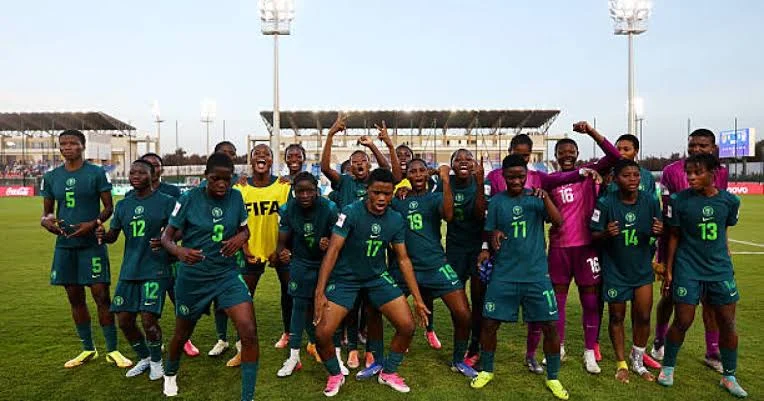
The Nigerian U-17 women’s national team, affectionately known as the Flamingos, secured a vital 2-1 victory over Mexico in a high-stakes encounter at the 2026 FIFA U-17 Women’s World Cup in Morocco, officially confirming their place in the tournament’s quarter-finals. The victory, which showcased both technical discipline and defensive fortitude, sets the stage for a mouth-watering clash against Venezuela in the next round. For head coach Akeem Busari, the result is a testament to the mental maturation of his squad, who have navigated the heightened intensity of the knockout stages with commendable poise.
A Tactical Breakdown of the Match
The match, held in the vibrant football atmosphere of Morocco, began with both sides displaying cautious intent, typical of knockout tournament football. Nigeria, however, gradually assumed control of the tempo, utilizing width and high-pressing tactics to disrupt Mexico’s buildup play. The breakthrough arrived in the 40th minute when Oluebube Umejiaku capitalized on a lapse in the Mexican defense. Umejiaku’s clinical strike was the culmination of persistent first-half pressure, providing the Flamingos with a deserved lead heading into the halftime break.
Following the interval, Mexico sought an equalizer, pushing forward with increased urgency. Nigeria responded with tactical maturity, maintaining a compact defensive shape while looking to strike on the counter-attack. The strategy paid off in the 72nd minute when Mary Akpan Dunstan doubled the lead. Her goal appeared to put the result beyond doubt, giving Nigeria a 2-0 cushion and forcing the Mexican side to commit even more bodies into the attacking third.
The final moments of the match proved to be a test of nerves. In the 10th minute of stoppage time—a duration that stretched the tension of the match to its limit—Emily Delgado managed to pull a goal back for Mexico. Despite the late surge and the mounting pressure of the dying seconds, the Nigerian defense remained resolute, clearing their lines and effectively neutralizing Mexico’s aerial threats to secure the 2-1 win.
Post-Match Reflections: The Psychology of the Knockout Stage
In the immediate aftermath of the match, coach Akeem Busari addressed the media, reflecting on the psychological demands of a global tournament. Busari emphasized that while tactical preparation is essential, the emotional management of young players is the defining factor in high-stakes environments.
"When you come into this kind of competition, and you get to the knockout stages, it is more tactical and there is a lot of intensity involved because they are young and anxiety comes," Busari noted in an interview with FIFA.com. He further underscored the team’s collective spirit, stating, "Today was a tough game, but we are no pushovers."
This acknowledgment highlights the shift in focus for the coaching staff. Beyond drills and formations, the Flamingos have spent significant time developing a "big-match temperament." The fact that the team successfully navigated a ten-minute stoppage period against a desperate opponent serves as empirical evidence that the squad is developing the resilience required to go deep into the tournament.
Contextualizing the 2026 FIFA U-17 Women’s World Cup
The 2026 tournament in Morocco represents a significant milestone in the growth of youth women’s football. FIFA has invested heavily in expanding the global footprint of the U-17 Women’s World Cup, and the performance of African nations, particularly Nigeria, has been a central narrative. The Flamingos have historically been a powerhouse on the continent, consistently qualifying for the global stage and refining their developmental pipeline.
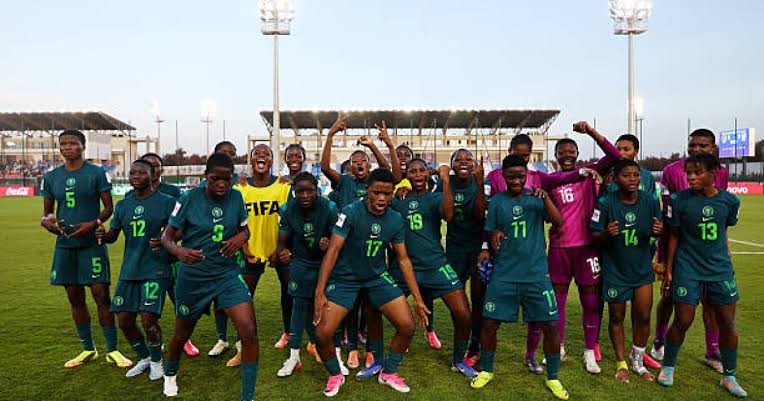
By reaching the quarter-finals, Nigeria continues to build on a legacy of excellence. The 2026 edition has proven to be particularly competitive, with traditional powers like Spain, the United States, and Japan facing stiff resistance from emerging footballing nations. Nigeria’s ability to remain in the tournament serves as a reminder of the depth of talent currently being harnessed within the Nigerian Football Federation’s youth programs.
Statistical Analysis and Performance Metrics
The performance of Oluebube Umejiaku, who was named Player of the Match, warrants closer inspection. Her goal in the 40th minute was not merely a clinical finish but a tactical success story. Statistics from the match indicate that Nigeria dominated possession in the final third during the first half, completing 78% of their passes in the attacking half—a high percentage for the U-17 level.
Defensively, the Flamingos maintained a high line for the majority of the second half, which allowed them to stifle Mexico’s midfield creativity. While the late goal conceded in stoppage time highlights a slight lapse in concentration, the overall defensive structure remained intact for 90+ minutes. The ability of the center-back pairing to handle physical duels and the goalkeeper’s command of the penalty area were pivotal in preserving the narrow lead.
Looking Ahead: The Quarter-Final Clash with Venezuela
The upcoming fixture against Venezuela presents a new set of challenges. Venezuela, known for their technical proficiency and fluid transition play, will likely test the structural integrity of Nigeria’s defense in a different manner than Mexico did.
The quarter-final stage is historically where the pressure peaks. For many of the Nigerian players, this will be the most significant match of their young careers. The coaching staff is expected to shift their training focus toward recovery and specific counter-measures against Venezuela’s high-scoring forward line. With the momentum from the win against Mexico, the Flamingos carry a psychological advantage into the next round, having proven they can manage both a lead and a late-game siege.
Broader Implications for Nigerian Football
The success of the Flamingos in Morocco has broader implications for the development of women’s football in Nigeria. Increased visibility on the international stage translates into greater investment, improved infrastructure, and higher participation rates at the grassroots level.
Furthermore, the consistency of the Flamingos demonstrates the effectiveness of the current scouting and training regime. By consistently producing teams capable of reaching the latter stages of FIFA tournaments, Nigeria is cementing its status as a global competitor in women’s sports. The players involved in this current squad are also auditioning for future roles in the Super Falcons, the senior national team, making this tournament a crucial stepping stone in their professional trajectories.
Conclusion
As the tournament progresses, the focus for the Flamingos remains fixed on the next objective. The victory over Mexico was more than just a win; it was a character-defining moment that illustrated the team’s ability to endure and adapt. As they prepare for the challenge of Venezuela, the squad remains grounded, cognizant that while they have earned their place in the quarter-finals, the journey toward the ultimate trophy remains a rigorous path.
The performance against Mexico has solidified the Flamingos as a team to watch. With a blend of individual brilliance, represented by players like Umejiaku and Dunstan, and a disciplined tactical approach instilled by coach Akeem Busari, Nigeria enters the final eight with a clear mandate: to continue their momentum and represent their nation on the world’s biggest stage. The quarter-final, set against the backdrop of an increasingly competitive tournament, will be the next litmus test for a squad that has proven, beyond any doubt, that they are not to be underestimated.