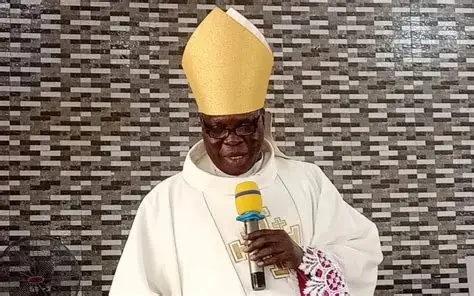
The President of the Catholic Bishops’ Conference of Nigeria (CBCN), Most Rev. Matthew Ndagoso, has issued a clarion call to the Nigerian electorate, urging them to resist the pervasive influence of vote-buying and financial inducements as the country prepares for the 2027 general elections. Archbishop Ndagoso, who serves as the Metropolitan Archbishop of the Kaduna Catholic Diocese, delivered this charge during the opening ceremony of the second plenary meeting of the CBCN, held in Osogbo, Osun State.
The plenary, a significant gathering of the nation’s Catholic hierarchy, serves as a platform for the Church to deliberate on the moral, social, and political trajectory of the country. By choosing to address the integrity of the electoral process, the CBCN has signaled that the moral climate of the 2027 polls will remain a primary focus for the religious body, which wields considerable influence among Nigeria’s millions of Catholic faithful.
Context and Historical Backdrop of Electoral Challenges
Nigeria’s journey through democratic transitions has been frequently marred by allegations of voter suppression, logistical failures, and the commodification of the ballot. Since the return to civil rule in 1999, the Independent National Electoral Commission (INEC) has faced recurring scrutiny over its capacity to deliver outcomes that reflect the popular will.
Vote-buying, often referred to in local parlance as "stomach infrastructure" or "see-and-buy," has evolved from clandestine operations into a brazen feature of the Nigerian electoral landscape. Economic instability and high poverty rates have left many voters vulnerable to financial manipulation by political actors who treat elections as an investment to be recouped through public office. Archbishop Ndagoso’s address, therefore, hits at the intersection of economic hardship and democratic decay, suggesting that the erosion of electoral integrity is a direct threat to the nation’s stability.
The Osun Election as a Catalyst for Hope
Archbishop Ndagoso specifically cited the recent off-cycle election in Osun State as a beacon of progress. By characterizing the poll as "free and fair," the CBCN leadership is attempting to shift the narrative from one of inevitable cynicism to one of cautious optimism.
The success of the Osun election, as noted by various election observation groups, was attributed to improved technological deployment by INEC—specifically the Bimodal Voter Accreditation System (BVAS) and the electronic transmission of results via the IReV portal. For the CBCN, the Osun model represents a template for the 2027 national exercise. Ndagoso’s encouragement to the "lay faithful" to "guard their votes" underscores the Church’s belief that active, vigilant participation by the citizenry is the only safeguard against systemic manipulation.
Strengthening the Electoral Process: A Call to INEC
The CBCN’s critique of the electoral process was not limited to the electorate; it extended to the institutional responsibilities of the Independent National Electoral Commission. Ndagoso emphasized that for the 2027 elections to attain international legitimacy, INEC must address the "growing disenchantment" among the populace.
According to the Archbishop, the fear that votes may not count is a primary driver of voter apathy. Statistical trends from recent cycles have shown a worrying decline in voter turnout, despite the high number of registered voters. For instance, the 2023 general election saw a turnout that, while significant in absolute numbers, represented a relatively low percentage of total registered voters compared to global democratic benchmarks. Ndagoso argued that the availability of Permanent Voter Cards (PVCs) and the removal of bureaucratic bottlenecks are essential to restoring public trust.
Political Accountability and the National Interest
Beyond the technicalities of the ballot, the CBCN President appealed to the political class to prioritize the national interest over "political cronyism." The call for a "well-formed conscience" among the laity suggests that the Church views the act of voting not just as a civic duty, but as a moral imperative.
Political analysts note that such interventions by the Catholic Church are historical constants. The CBCN has historically acted as a moral compass during periods of national volatility, providing a bridge between the governed and the government. By urging voters to resist the temptation of political cynicism, the Church is attempting to forestall a scenario where the electorate disengages entirely from the political process, leaving the field open for the status quo to persist.
Government Response: Acknowledging the Church’s Role
The Osun State government, represented by Deputy Governor Kola Adewusi on behalf of Governor Ademola Adeleke, offered a reciprocal gesture of respect toward the Church. The state’s acknowledgment of the Catholic Church’s role in health and education serves to reinforce the symbiotic relationship between the institution and the state.
"In the history of this federation, the Catholic Church has earned an impressive place as a driver of enlightenment through education and health facilitation," the Governor stated. This recognition highlights the Church’s status as a major provider of social services in areas where the state has historically struggled to provide adequate coverage. The request for the Church to "intensify prayers" and act as a pillar of peace during the 2027 cycle reflects the government’s reliance on religious institutions to temper the potential for civil unrest during heated electoral periods.
Implications for the 2027 General Elections
As the nation looks toward 2027, the rhetoric from the CBCN plenary suggests that the upcoming election will be heavily scrutinized not only by international observers but by domestic moral authorities. The implications of this stance are threefold:
- Increased Monitoring: The Church’s call to "guard the votes" suggests that the Catholic Church, through its Justice, Development, and Peace Commissions (JDPC), will likely deploy an extensive network of observers across the country to monitor the 2027 process.
- Moral Pressure on Candidates: By framing vote-buying as a moral failure, the Church is effectively raising the social cost of engaging in corrupt electoral practices. Candidates who rely on financial inducements may face increased pushback from religious communities.
- Institutional Accountability: The demand for INEC to ensure transparency puts the electoral body under the microscope. Any perceived failure in the 2027 cycle will likely be met with stronger condemnation from the pulpit, potentially mobilizing a larger segment of the population against the electoral commission.
Data and Trends in Nigerian Elections
To understand the gravity of the CBCN’s intervention, one must look at the data. In the last two election cycles, the cost of campaigning has skyrocketed, which many political economists correlate with the rise in vote-buying. When candidates spend record-breaking amounts to secure party tickets and win elections, the pressure to "recover" these costs becomes a justification for corruption in office.
Furthermore, the "glimmer of hope" mentioned by Ndagoso regarding the Osun election stands in contrast to the challenges faced in other regions, where security threats and local violence continue to depress voter turnout. The challenge for 2027 is to bridge the gap between the success seen in isolated off-cycle elections and the massive, complex logistical undertaking of a simultaneous national election.
Conclusion: The Road Ahead
The message from the CBCN is clear: the integrity of Nigeria’s democracy in 2027 depends on the vigilance of the voters and the neutrality of the electoral umpire. While prayers and moral appeals are part of the Church’s toolkit, the practical steps of ensuring voter access and resisting financial inducement remain in the hands of the citizens.
As the political atmosphere begins to heat up in the coming months, the role of the Catholic Bishops’ Conference will be critical in shaping the national discourse. Their focus on the "public square" signals a departure from purely spiritual guidance toward a more robust engagement with the mechanics of governance. Whether this call to action will result in a cleaner, more transparent electoral process in 2027 remains a subject of intense national interest, but for now, the Church has clearly articulated its position: the future of the nation rests on the incorruptibility of the individual vote.