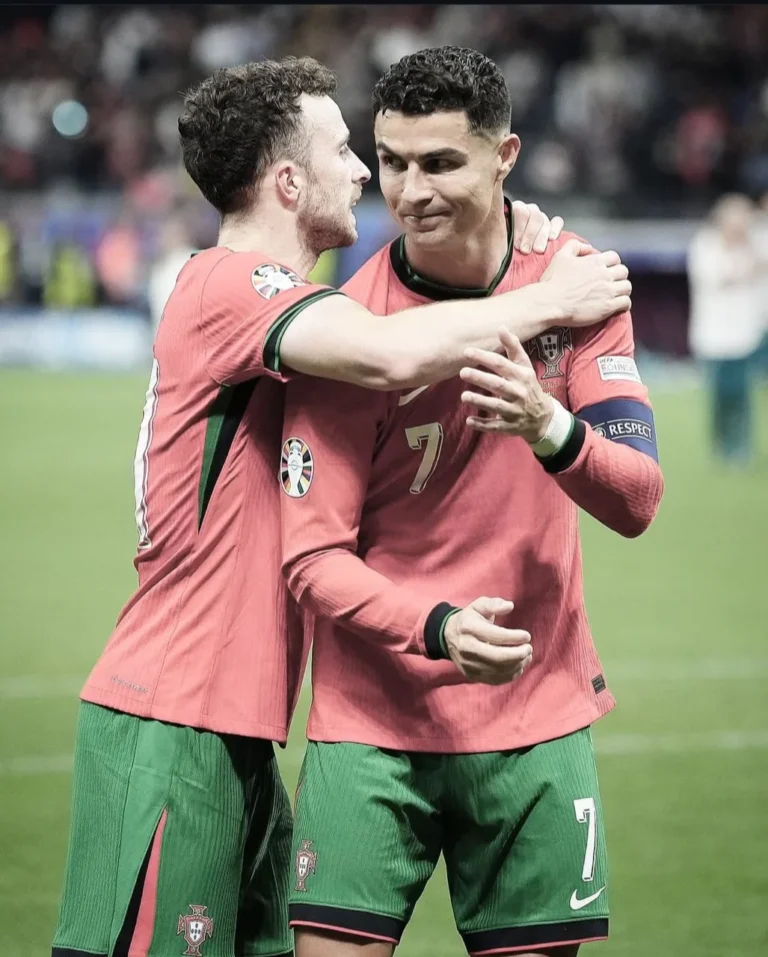
The global football community is currently grappling with a wave of indignation following a disturbing incident during a recent Saudi Pro League fixture. Cristiano Ronaldo, the captain of the Portugal national team and current Al-Nassr forward, has issued a forceful demand for the implementation of lifetime stadium bans for spectators who engaged in the targeted harassment of his international teammate, Ruben Neves. The incident, which occurred during Al-Hilal’s dominant 6-0 victory over Al-Taawoun, saw sections of the crowd repeatedly invoke the name of the late Diogo Jota in what has been widely interpreted as a cruel and insensitive taunt directed at Neves.
The gravity of the situation is amplified by the tragic context of Jota’s passing. Diogo Jota, the gifted former Liverpool and Portugal forward, lost his life in a devastating car accident in the Spanish province of Zamora in July of the previous year. He was just 28 years old. His death, which also claimed the life of his brother, Andre Silva, sent shockwaves through the sport, leaving a void for those who had played alongside him—most notably Neves, who shared a pitch with Jota both at Wolverhampton Wanderers and during their time representing Portugal on the international stage.
The Chronology of the Incident
The events unfolded on a Saturday evening during a high-stakes Saudi Pro League match. As the game progressed in favor of Al-Hilal, a contingent of supporters began a rhythmic chanting of Jota’s name whenever Ruben Neves touched the ball. For those familiar with the history between the two players, the intent of the chants was unmistakable. It was not a gesture of remembrance, but rather a calculated attempt to rattle Neves by weaponizing his grief.
Footage captured during the broadcast shows a visibly distressed Neves reacting to the provocation. In a moment of stoic defiance mixed with frustration, the midfielder was seen sarcastically applauding the section of the stadium from which the chants originated before pointing toward the sky—a poignant tribute to his fallen friend. Following the final whistle, Neves addressed the incident with a pointed remark that underscored the perceived hypocrisy of his tormentors, stating, "I just hope they don’t go to pray later after what they did."
Ronaldo’s Call for Institutional Accountability
By Sunday, the incident had escalated into a broader debate regarding fan conduct and the moral responsibilities of football governing bodies. Cristiano Ronaldo, utilizing his significant platform, condemned the behavior as a betrayal of the spirit of the game.
"The league must take action and punish this kind of fan behavior," Ronaldo stated in a widely circulated social media post. "This is no longer football, and there have to be limits. People who behave like this should never be allowed to enter a stadium again."
Ronaldo’s intervention carries significant weight. As a veteran of the sport and a player who shared the locker room with both Jota and Neves, his personal connection to the situation adds a layer of emotional authority. His call for "lifetime bans" signals a shift in how players are demanding the sport’s authorities handle toxic fan culture. It is an argument for zero-tolerance policies that move beyond financial fines, which many critics argue are insufficient deterrents for disruptive or abusive behavior.
Contextualizing the Tragedy
To understand the intensity of the reaction, one must acknowledge the stature of Diogo Jota within the footballing landscape. Upon joining Liverpool from Wolverhampton Wanderers in 2020, Jota quickly established himself as a clinical and versatile forward, accumulating 182 appearances for the Merseyside club and finding the back of the net on 65 occasions. His international career was equally distinguished, with 49 caps for Portugal and 14 goals to his name.

The bond between Jota and Neves was forged in the competitive crucible of the English Premier League. Their shared journey from the Molineux Stadium to the international stage created a brotherhood that transcended the typical professional association. Neves’s decision to adopt the No. 21 shirt for the Portuguese national team was a deliberate and public tribute to Jota, ensuring that his memory remains a part of the team’s identity. When supporters mocked this memory, they were not merely heckling an opposing player; they were attacking a deeply personal bereavement.
Data and Disciplinary Precedents
The Saudi Pro League, which has seen a massive influx of global talent and investment over the past few seasons, now finds itself at a crossroads regarding its disciplinary infrastructure. Historically, stadium bans have been implemented in European leagues, such as the Premier League and La Liga, to combat racism, hooliganism, and hate speech. However, the application of such measures in the Middle East has remained inconsistent.
Statistical analysis of fan conduct incidents in the Saudi Pro League shows an uptick in activity as the league’s global profile rises. While the league has introduced modernized VAR technology and increased professionalization in officiating, the regulation of fan behavior remains a work in progress. If the Saudi Football Federation chooses to act on Ronaldo’s recommendation, it would set a significant precedent, signaling that the league intends to mirror the stringent behavioral standards of elite European football.
The Broader Implications for Football Culture
The incident serves as a stark reminder of the "human element" in professional sports. In an era where players are increasingly viewed as commodities or avatars in fantasy leagues, the incident involving Neves underscores that these individuals are people processing grief while performing under immense pressure.
From a sociological perspective, the use of a deceased player’s name as a taunt represents a descent into a form of "grief-baiting." This phenomenon, while unfortunately present in various sporting cultures, is increasingly being challenged by players who are no longer willing to accept such abuse as "part of the game."
The potential implications of this event are twofold:
- Regulatory Reform: The Saudi Pro League may be forced to implement a centralized fan-identification system or a "blacklisting" database to enforce the lifetime bans suggested by Ronaldo. This would require cooperation between clubs, stadium security, and government authorities.
- Player Advocacy: The incident may empower players to demand greater protection from governing bodies. We are witnessing a shift where high-profile athletes are leveraging their influence to dictate the terms of their working environment, particularly regarding mental health and personal dignity.
Conclusion and Official Outlook
As of the time of writing, the Saudi football authorities have yet to issue a definitive ruling on the matter. However, the pressure is mounting. The intersection of a global icon like Ronaldo and a victim of harassment like Neves creates a powerful coalition that the authorities cannot easily ignore.
For the Saudi Pro League, the handling of this situation is not just about a single match or a specific group of fans; it is about the long-term reputation of the league. If the organization wishes to be regarded as a premier destination for world-class talent, it must ensure that the environment is secure, respectful, and free from the kind of vitriol that undermines the dignity of the sport.
The memory of Diogo Jota, a player who contributed so much to the game in a short span of time, deserves better than to be used as a tool for antagonism. As the football world waits for a response from the governing body, the conversation remains centered on a fundamental question: What are the limits of fan expression, and at what point does passionate support transform into unacceptable abuse? For Cristiano Ronaldo and his peers, the answer is clear: the limit has been reached.