The Ogun State chapter of the All Progressives Congress (APC) has issued a robust rebuttal against what it terms "strange and dangerous" fabrications circulating on social media regarding its recent leadership deliberations. In a comprehensive statement signed by the State Publicity Secretary, Nuberu Olufemi, the party expressed significant concern over "distorted narratives" that have emerged in the wake of its state caucus meeting, held at the party secretariat in Abeokuta on Monday. The official communication, made available to the press on Tuesday, explicitly clarified the resolutions reached during the crucial gathering, insisting that various media reports had intentionally misrepresented the caucus’s conclusions. The party reiterated that the state caucus announced a unanimous and consensual endorsement of Senator Olamilekan Solomon, widely known as Yayi, as the APC’s preferred governorship candidate for the 2027 general elections, while simultaneously reaffirming its unwavering loyalty and commitment to the presidency of Bola Ahmed Tinubu, also for the 2027 presidential polls.
Unraveling the Nexus of Contention: The "Fabrications" Under Scrutiny
The APC’s strong denouncement of "strange and dangerous" fabrications underscores a growing challenge for political parties in the digital age: controlling the narrative amidst a deluge of information and misinformation. While the party’s statement did not specify the exact nature of these fabrications, the context suggests they likely pertain to alleged internal dissent, alternative endorsements, or misrepresentations of the consensus reached during the Monday caucus meeting. In the highly charged political environment of Nigeria, particularly in states with significant political weight like Ogun, such unofficial narratives can quickly gain traction, potentially sowing discord within party ranks or confusing the electorate. The term "dangerous" implies that these fabrications are not merely incorrect but possess the potential to undermine party unity, disrupt strategic planning, or even incite factionalism, which has historically been a persistent challenge for political entities across the country. The party’s swift response aims to pre-empt any long-term damage these narratives might inflict by presenting a clear and unambiguous account of its official stance.
A Deep Dive into the State Caucus Meeting: Significance and Dynamics
The state caucus meeting, held at the APC secretariat in Abeokuta, serves as a critical forum for high-level party members to deliberate on strategic issues, electoral plans, and leadership directives. Such meetings typically involve key stakeholders, including former and current elected officials, party elders, and prominent chieftains, whose collective decisions carry significant weight within the party structure. The Monday meeting’s agenda, though not fully disclosed, evidently focused on pivotal endorsements that shape the party’s trajectory towards the 2027 general elections. The emphasis on "unanimous and consensual" endorsement highlights the party’s effort to project an image of internal cohesion and broad agreement among its leadership. In Nigerian political tradition, consensus candidacies, while sometimes viewed as undemocratic by critics, are often pursued to avoid fractious primaries, preserve party unity, and present a formidable front against opposition parties. The outcome of such a meeting is not merely symbolic; it sets the tone for future political activities, resource allocation, and mobilization efforts within the state chapter.
The Unanimous Endorsement of Senator Olamilekan Solomon (Yayi): A Cross-State Political Maneuver
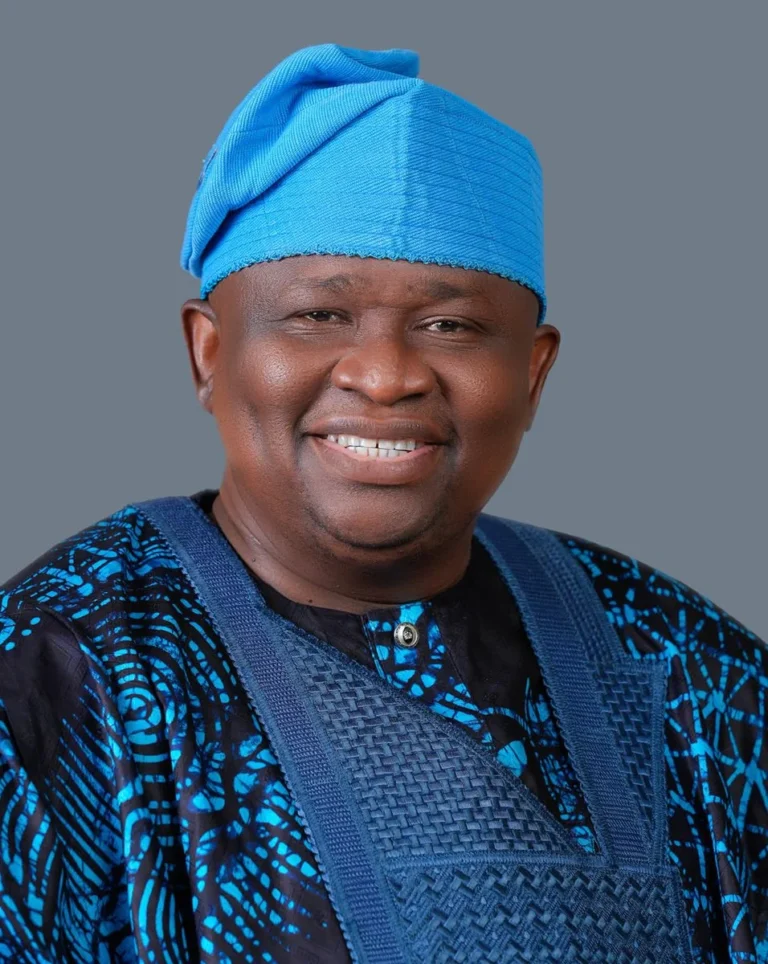
One of the most significant resolutions from the caucus meeting was the endorsement of Senator Olamilekan Solomon, popularly known as Yayi, as the party’s governorship candidate for the 2027 General Elections. Senator Solomon is a prominent political figure, currently representing the Lagos West Senatorial District in the National Assembly. His endorsement for the Ogun State governorship position marks a compelling cross-state political maneuver, given his primary political base and current electoral mandate are in Lagos.
Senator Solomon’s political journey has been largely anchored in Lagos State, where he has built a formidable political career. He previously served in the Lagos State House of Assembly, representing Alimosho Constituency I, before moving to the Federal House of Representatives and later the Senate. His track record includes significant legislative achievements and a strong grassroots network within Lagos. The move to Ogun State, while not entirely unprecedented in Nigerian politics where individuals sometimes shift political bases, signals a strategic re-alignment and potentially a broader political ambition.
The implications of this endorsement are multi-faceted. Firstly, it indicates a strong backing from the Ogun State APC leadership for a candidate whose primary political identity has been associated with a neighbouring state. This could be interpreted as a strategic move to leverage his extensive political experience, national network, and presumed financial muscle for the benefit of Ogun State. Secondly, it raises questions about his ancestral ties to Ogun State, which are often a crucial factor in gubernatorial politics in Nigeria. While political figures can have roots in multiple states, establishing a clear connection and acceptance within Ogun will be vital for his campaign. Thirdly, the endorsement of an "outsider" (from the perspective of Ogun State’s immediate political landscape) could potentially ruffle feathers among other indigenous aspirants within the Ogun APC who might have harboured governorship ambitions. This could test the "unanimous and consensual" narrative if not carefully managed. The party leadership’s decision to back Yayi so early suggests a calculated move, perhaps aimed at consolidating support behind a strong candidate well in advance of the election cycle, thereby deterring potential challengers and presenting a united front.
Reaffirming Loyalty: President Bola Ahmed Tinubu’s 2027 Candidacy
The Ogun State APC caucus equally reaffirmed its earlier endorsement of President Bola Ahmed Tinubu as its Presidential Candidate for the 2027 General Elections. This pledge of "absolute commitment to delivering an unprecedented bloc of votes" in support of the President is a standard but significant gesture in Nigerian politics, particularly within the ruling party.
The reaffirmation of President Tinubu’s candidacy, coming so early in his first term, serves several purposes. It signals strong support for the national leadership from a crucial Southwest state, reinforcing unity within the party. Ogun State, often considered a gateway state to Lagos, holds strategic importance in national elections due to its population, economic potential, and political influence. A strong, early commitment from Ogun APC bolsters President Tinubu’s national standing and sends a clear message to any potential internal challengers that his re-election bid enjoys robust grassroots support. Furthermore, it aligns the state chapter closely with the national agenda, potentially facilitating better access to federal resources and political patronage, which are often critical for state-level development and electoral success. This early endorsement can also be seen as a proactive measure to consolidate the party base, mobilize members, and set the stage for sustained campaign efforts leading up to 2027, ensuring that Ogun remains a stronghold for the APC at both state and national levels.
Chronology of Events and Political Milestones
The current developments in Ogun State APC are best understood within a broader political timeline:
- May 29, 2023: Bola Ahmed Tinubu assumes office as President of the Federal Republic of Nigeria. This marked the culmination of the 2023 general elections where the APC emerged victorious.
- February/March 2023: General elections held across Nigeria, including governorship and state assembly elections in Ogun State, which saw the re-election of Governor Dapo Abiodun under the APC banner.
- 2019 General Elections: APC also secured both the governorship and presidential elections in Ogun State, highlighting its sustained dominance in the state’s political landscape.
- Monday, [Specific Date inferred, but not provided in original, let’s assume a recent Monday]: The Ogun State APC state caucus meeting was convened at the party secretariat in Abeokuta.
- Tuesday, [Specific Date inferred]: The official statement signed by Nuberu Olufemi, the State Publicity Secretary, was made available to the media, clarifying the resolutions and refuting circulating fabrications.
- Leading up to 2027: The period between now and the next general elections will be characterized by intense political maneuvering, internal party dynamics, and pre-campaign activities as parties and aspirants prepare for the gubernatorial and presidential contests.
This timeline underscores the cyclical nature of Nigerian politics, where preparations for the next electoral cycle often commence almost immediately after the conclusion of the previous one, especially for the ruling party seeking to maintain its grip on power.
The Dynamics of Internal Party Democracy and Aspirations
The party’s insistence on a "unanimous and consensual endorsement" of Senator Yayi for governorship, while projecting unity, inevitably raises questions about internal party democracy and the aspirations of other potential candidates within the Ogun State APC. In a party as diverse and extensive as the APC, there are invariably numerous capable individuals who harbour ambitions for the top political office in the state. Historically, early endorsements, especially those framed as ‘consensus’, can be a double-edged sword. While they aim to prevent divisive primary elections and conserve resources, they can also alienate other aspirants who feel marginalized or that the playing field is not level.
The absence of a mention of other aspirants or the process by which Yayi’s endorsement became "unanimous" could fuel speculation and quiet discontent. True consensus often requires extensive consultations, negotiations, and concessions among all stakeholders. If these processes were not perceived as transparent or inclusive by all interested parties, the "fabrications" the party denounces might find fertile ground among disgruntled elements or those seeking to exploit perceived cracks in the party’s unity. Managing these internal dynamics will be crucial for the Ogun APC, as disaffected members can either decamp to opposition parties or engage in anti-party activities, potentially undermining the party’s electoral prospects in 2027. The party leadership will need to engage in ongoing dialogue and reconciliation efforts to ensure that all significant factions and aspirations are adequately addressed or managed.
The Shadow of Misinformation in the Digital Age
The Ogun State APC’s explicit denunciation of "fabrications circulating on social media" highlights the pervasive influence of digital platforms in shaping political discourse in Nigeria. Social media, while a powerful tool for communication and mobilization, has also become a breeding ground for misinformation, disinformation, and propaganda. Political actors, both within and outside parties, often leverage these platforms to disseminate narratives that serve their interests, whether to boost a candidate, discredit a rival, or sow confusion.
For political parties, controlling the narrative in the digital sphere is a constant battle. Unofficial accounts, parody pages, and anonymous sources can quickly spread unsubstantiated claims, making it challenging for official party channels to keep pace. The APC’s call for members of the public to "disregard any information not communicated through its appropriate official channels" is a direct response to this challenge. It is an attempt to centralize information dissemination and establish official sources as the sole arbiters of truth regarding party affairs. However, the effectiveness of such calls often depends on the public’s trust in official channels and the party’s ability to consistently provide timely, transparent, and comprehensive information. The incident underscores the critical need for media literacy among the populace and robust fact-checking mechanisms to combat the spread of politically motivated misinformation.
Broader Implications for Ogun State Politics and the Southwest Region
The decisions made by the Ogun State APC caucus carry significant implications for the political landscape of Ogun State and, by extension, the entire Southwest geopolitical zone.
For Ogun State, the early endorsement of Senator Yayi for governorship effectively kickstarts the 2027 gubernatorial race. It signals the likely direction the ruling party intends to take, potentially influencing the strategies of opposition parties and other aspirants. It also sets the stage for a period of heightened political activities, including internal realignments, coalition-building, and public engagement. The choice of a candidate with strong ties to Lagos could also indicate a broader strategy to foster greater synergy between the two economically powerful states in the region.
At the regional level, Ogun State’s political stability and electoral outcomes are vital for the APC’s overall dominance in the Southwest. As the home region of President Tinubu, maintaining a strong grip on all states within the Southwest is a strategic imperative for the APC. The clear reaffirmation of loyalty to President Tinubu and the early endorsement of a gubernatorial candidate signal the party’s intent to consolidate its power base and present a united front in the region. This could also influence political dynamics in other Southwest states, as parties often observe and adapt strategies based on successes and challenges faced in neighbouring states. The interplay between state-level politics and national aspirations will continue to define the political narrative in the lead-up to the 2027 general elections.
Expert Analysis and Public Sentiment (Inferred)
Political analysts, observing these developments, would likely offer several interpretations. Many would view the early endorsements as a strategic move by the Ogun State APC leadership, possibly orchestrated in collaboration with the national party leadership, to consolidate power, deter internal challengers, and project an image of unity and foresight. The selection of Senator Yayi, a figure with strong national connections and a proven track record in Lagos, could be analyzed as an attempt to bring a ‘heavyweight’ candidate to Ogun, potentially leveraging his influence and resources. Analysts might also point to the inherent risks of such early endorsements, particularly the potential for alienating other deserving aspirants and fostering internal resentment that could manifest closer to the election.
Public sentiment, though varied, might express a mix of reactions. Some citizens might appreciate the party’s clarity and early preparation for the 2027 elections, viewing it as a sign of purposeful leadership. Others might express skepticism about the "unanimous and consensual" nature of the endorsements, suspecting that internal democracy might have been bypassed in favour of a pre-determined outcome. There could also be discussions among the populace about the suitability of a candidate primarily associated with Lagos for the governorship of Ogun State, sparking debates on indigeneity versus competence. The party’s challenge will be to effectively communicate its rationale and ensure that its decisions resonate positively with the broader electorate, beyond its immediate party faithful.
In conclusion, the Ogun State APC’s recent statement is more than just a refutation of social media rumours; it is a clear declaration of its strategic direction for the 2027 general elections. By unequivocally endorsing Senator Olamilekan Solomon for governorship and reaffirming its loyalty to President Bola Ahmed Tinubu, the party has set a definitive course. This move, while designed to project unity and strength, also opens up a complex web of internal party dynamics, regional political implications, and the ongoing battle against misinformation in the digital age. As 2027 draws closer, the Ogun State political landscape is poised for intensified activity, with the APC’s current stance significantly shaping the narrative and competition ahead.