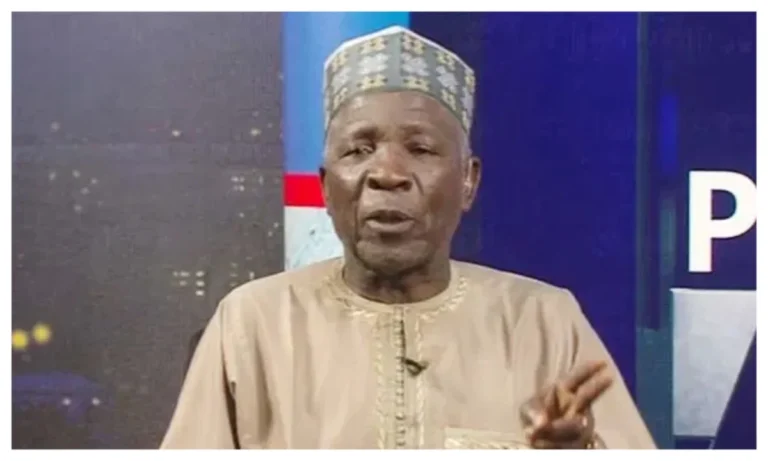
Abuja, Nigeria – In a scathing critique that has ignited early political discourse regarding the 2027 general elections, Buba Galadima, a prominent chieftain of the African Democratic Congress (ADC) and a former frontline member of both the All Progressives Congress (APC) and the New Nigerian Peoples Party (NNPP), has declared that the incumbent All Progressives Congress (APC) and President Bola Tinubu face an insurmountable challenge in the next presidential poll. Addressing members during the ADC National Congress in Abuja on Tuesday, Galadima asserted that the Tinubu administration has “failed woefully” and possesses “absolutely nothing to campaign with” in the forthcoming election, going so far as to claim that even a deceased individual could emerge victorious against President Tinubu. This provocative statement underscores a growing sentiment of disillusionment within certain political circles and sets an early, contentious tone for the country’s political landscape.
A Voice of Dissent: Buba Galadima’s Political Trajectory
Buba Galadima is no stranger to Nigeria’s political scene, having carved a reputation as a fiery orator and a consistent voice of dissent, particularly when he perceives a deviation from good governance or democratic principles. His political journey is characterized by significant shifts and periods of intense activism. He was a foundational figure in the formation of the All Progressives Congress (APC) in 2013, playing a crucial role in the coalition that brought together various opposition parties to challenge the then-ruling Peoples Democratic Party (PDP). His involvement was instrumental in the APC’s historic victory in 2015, which saw President Muhammadu Buhari ascend to power.
However, Galadima’s relationship with the APC soured over time, particularly during President Buhari’s second term. He became an increasingly vocal critic of the administration he helped bring to power, often expressing disappointment with its performance and perceived abandonment of its founding principles. This disillusionment led him to distance himself from the APC, eventually aligning with the New Nigerian Peoples Party (NNPP) in the lead-up to the 2023 general elections, where he continued his role as a staunch critic of the establishment. His latest move to the African Democratic Congress (ADC) signifies a continued search for a political platform that he believes genuinely represents the aspirations of Nigerians and can offer a credible alternative to the dominant parties. His long and varied political career provides crucial context to his recent pronouncements, indicating that his criticisms stem from a deep, albeit often shifting, engagement with Nigeria’s political evolution.
The ADC National Congress: A Platform for Opposition Consolidation
The ADC National Congress, held in Abuja, served as a significant gathering for the party, providing a platform to strategize, reaffirm its objectives, and mobilize its members ahead of the next electoral cycle. Such congresses are vital for political parties, offering opportunities to elect new leadership, review party manifestos, and formulate plans for increasing their reach and influence. For the ADC, a party that aims to position itself as a credible alternative to the two dominant political forces—the APC and the PDP—the congress was an occasion to project strength and unity. Galadima’s address, delivered during this pivotal internal event, was clearly intended to energize party members and rally broader opposition sentiment.
The atmosphere at such gatherings is typically charged with political fervor, reflecting the aspirations and frustrations of the party faithful. Galadima’s fiery speech was likely met with enthusiastic applause from ADC members, who share his concerns about the current state of governance and the perceived challenges facing the nation. The congress, therefore, was not merely an internal party affair but also a strategic public declaration of intent, signaling the ADC’s readiness to engage robustly in the political arena and to challenge the status quo. It underscores the ongoing efforts by various opposition parties to consolidate their positions and present a united front, or at least a compelling alternative, to the ruling party as the nation gradually inches towards the next electoral contest.
Dissecting the ‘Woeful Failure’ Claim: An Economic and Social Review
Galadima’s assertion that the Tinubu administration has "failed woefully" is a direct challenge to the government’s narrative of implementing necessary reforms for long-term stability and growth. To understand the context of this claim, it is essential to examine the socio-economic indicators and public sentiment that have characterized President Tinubu’s tenure since May 2023.
Upon assuming office, President Tinubu embarked on a series of bold, albeit painful, economic reforms, most notably the removal of the petrol subsidy and the unification of the multiple exchange rate windows. While these policies were lauded by international financial institutions and some economic experts as crucial steps towards fiscal sustainability and attracting foreign investment, their immediate impact on the lives of ordinary Nigerians has been severe.
- Economic Hardship: The removal of the fuel subsidy led to an immediate surge in petrol prices, triggering a ripple effect across all sectors of the economy. Transportation costs skyrocketed, pushing up prices of food, goods, and services. This exacerbated the already high cost of living, with inflation reaching multi-year highs. The National Bureau of Statistics (NBS) has consistently reported double-digit inflation figures, with food inflation often outpacing general inflation, severely eroding the purchasing power of average households.
- Currency Depreciation: The unification of the exchange rate, intended to attract foreign direct investment and stabilize the Naira, initially led to a significant depreciation of the national currency against major international currencies. This made imports more expensive, further fueling inflation and increasing the operational costs for businesses reliant on imported raw materials. While there have been recent efforts to stabilize the Naira, the initial shock waves were profound, leading to a considerable loss of wealth for many and making it harder for businesses to plan and expand.
- Poverty and Unemployment: The combined effects of inflation and currency depreciation have pushed more Nigerians into poverty. Small and medium-sized enterprises (SMEs), the backbone of the Nigerian economy, have struggled with rising operational costs, reduced consumer demand, and limited access to affordable credit, leading to job losses and business closures. The government’s social intervention programs, while in planning or early implementation stages, have yet to fully mitigate the widespread economic distress.
- Security Concerns: Beyond the economic sphere, Nigeria continues to grapple with persistent security challenges across various regions. While the Tinubu administration has made efforts to re-strategize and re-equip the security forces, incidents of banditry, kidnapping, communal clashes, and remnants of insurgency in the North-East remain a significant concern, impacting agricultural productivity, trade, and overall public confidence.
These challenges, coupled with what many perceive as a slow pace in delivering tangible improvements in governance and public services, form the basis for Galadima’s critique. The public sentiment, especially among the lower and middle classes, often reflects a sense of disillusionment and frustration over the perceived deterioration of living standards, making the ground fertile for opposition narratives focusing on governmental shortcomings.
The ‘Corpse’ Metaphor: A Symbol of Deep Disillusionment
Galadima’s provocative statement, "even if there is no living human being in Nigeria, and we bring a corpse, a corpse in a coffin, and put him against President Tinubu, I assure you that that corpse will win the elections in 2027," is a powerful rhetorical device aimed at capturing the depth of public anger and disillusionment. While hyperbolical, it serves several crucial analytical purposes:
- Expressing Extreme Discontent: The metaphor suggests that public dissatisfaction with the current administration is so profound that any alternative, no matter how symbolic or inanimate, would be preferred. It implies a widespread yearning for change, irrespective of the quality or viability of the alternative, simply to express a rejection of the status quo.
- Underscoring Perceived Vulnerability: By suggesting that a "corpse" could win, Galadima aims to paint President Tinubu as politically vulnerable and detached from the realities faced by the populace. It seeks to demystify the power of incumbency and project an image of an administration that has lost the moral mandate or public trust.
- Mobilizing Opposition: Such a strong statement is designed to galvanize opposition forces and inspire confidence that the ruling party can be defeated. It aims to instill a sense of hope and urgency among those who feel marginalized or disenfranchised, encouraging them to believe in the possibility of a political upset.
- Highlighting the Anti-Incumbency Factor: Nigerian political history, particularly the 2015 election that saw an incumbent president defeated, demonstrates a strong anti-incumbency sentiment when public expectations are not met. Galadima’s metaphor taps into this historical precedent, suggesting that the current conditions are ripe for a similar outcome.
- A Call for Resilience: Following the metaphor, Galadima urged opposition members to "stand and say, No," emphasizing that "only our No, and it is only our resilience, our boldness and our courage that will deliver us from this mafioso people in government." This reveals the underlying purpose of the provocative statement: to serve as a rallying cry against perceived intimidation and frustration tactics from the government, advocating for steadfastness and courage in the face of political adversity.
The "corpse" metaphor, therefore, is not a literal political prediction but a potent symbol of deep-seated political alienation and a dramatic call for political change, reflecting the high stakes and fervent emotions already building towards the 2027 elections.
Allegations of Stifling Opposition: A Broader Context
Galadima also accused the APC government of attempting to "destroy every opposition in the country," specifically mentioning the PDP, SDP, NNPP, Labour Party, and indeed the ADC. This accusation is a recurring theme in Nigerian politics, where ruling parties are often perceived to employ various strategies to weaken their rivals. While direct evidence of a coordinated "destruction" campaign is often difficult to ascertain publicly, several political dynamics contribute to this perception:
- Defections: A common strategy involves enticing prominent members of opposition parties to defect to the ruling party, often through promises of appointments, political favors, or perceived better chances of electoral success. Such defections can weaken opposition parties by stripping them of influential figures and financial resources.
- Resource Disparity: The ruling party inherently enjoys significant advantages in terms of state resources, media access, and control over state apparatuses, which can be leveraged to its benefit during elections. Opposition parties often struggle with funding and media visibility, making it harder for them to effectively campaign and counter the ruling party’s narrative.
- Legal and Judicial Processes: The use of legal challenges and judicial processes can sometimes be perceived as a tool to distract, frustrate, or disqualify opposition candidates and parties. While the judiciary is meant to be independent, political actors sometimes attempt to influence or exploit these processes for partisan gain.
- Intimidation and Harassment: Opposition figures sometimes report instances of intimidation, harassment, or undue pressure from state agencies, which can create a chilling effect and discourage political activism.
- Political Patronage and Co-optation: The ruling party may also engage in strategies of political patronage, offering positions or contracts to influential figures from other parties, effectively co-opting them and weakening their opposition.
These methods, whether real or perceived, contribute to the narrative that the ruling party seeks to create a one-party dominant system, thereby diminishing the vibrant multi-party democracy that Nigeria aspires to maintain. Galadima’s statement reflects this concern, urging opposition parties to resist such perceived pressures and assert their collective strength.
The Road to 2027: Political Calculus and Dynamics
The 2027 elections, though still years away, are already shaping up to be a fiercely contested battle. Galadima’s early pronouncements are indicative of the heightened political activity and strategic positioning already underway.
- APC’s Strategy: The ruling APC will likely focus on showcasing the long-term benefits of its current reforms, arguing that the short-term pains are necessary for future prosperity. They will emphasize infrastructure projects, security gains (where applicable), and efforts to stabilize the economy. Mobilization of party structures, strategic alliances, and potentially wooing influential figures from other parties will be key. The party’s ability to manage internal dissent and present a united front will also be crucial.
- Opposition Unity and Fragmentation: A major challenge for the opposition parties in Nigeria has historically been their inability to forge a formidable, united front. The 2023 elections saw multiple strong opposition candidates (Peter Obi of Labour Party, Atiku Abubakar of PDP, Rabiu Kwankwaso of NNPP), which arguably fragmented the opposition vote. For 2027, the prospect of a successful coalition or a consensus candidate among the opposition parties—PDP, NNPP, Labour Party, SDP, ADC, and others—will be a critical determinant of their ability to mount a serious challenge to the APC. Galadima’s call for resilience and unity among the opposition underscores this fundamental need.
- Role of Key Stakeholders: The youth vote, increasingly active and vocal on social media, will play a significant role. Civil society organizations will continue to advocate for electoral reforms, transparency, and accountability. Regional considerations, ethnic balancing, and religious sentiments, though often downplayed, remain powerful undercurrents in Nigerian electoral politics.
- Public Sentiment as a Decisive Factor: Ultimately, the prevailing public sentiment regarding the economy, security, and governance will be the most decisive factor. If the economic hardship persists or worsens, and security challenges remain unaddressed, the anti-incumbency factor could indeed become very strong, potentially validating Galadima’s dire predictions. Conversely, significant improvements in these areas could bolster the APC’s chances.
Inferred Reactions and Counter-Arguments
While specific official reactions to Galadima’s statements were not immediately provided, one can logically infer the likely responses from various political actors:
- From the APC: The ruling party would almost certainly dismiss Galadima’s remarks as politically motivated rhetoric, characteristic of an opposition figure seeking relevance. They would likely emphasize the "difficult but necessary" nature of their reforms, arguing that the government is laying a solid foundation for Nigeria’s future economic prosperity. They might point to ongoing infrastructure projects, efforts to attract foreign investment, and the gradual stabilization of certain economic indicators as signs of progress. They would also likely reiterate their commitment to democratic principles and reject any accusations of attempting to stifle opposition.
- From Other Opposition Parties: Leaders from the PDP, Labour Party, and NNPP would likely echo Galadima’s sentiments regarding the performance of the Tinubu administration, albeit perhaps in less provocative language. They would seize the opportunity to highlight the economic hardship faced by Nigerians and call for greater accountability. There might also be renewed calls for opposition unity, recognizing the strategic importance of a consolidated front against the incumbent.
- From Political Analysts: Independent political analysts might offer a more nuanced perspective. While acknowledging the widespread economic hardship and public discontent, they might also point to the complexities of governance in a diverse nation like Nigeria, the global economic headwinds, and the inherent challenges of implementing structural reforms. They might also analyze the rhetorical power of Galadima’s statements, placing them within the broader context of pre-election political maneuvering and the historical patterns of opposition politics in Nigeria.
Broader Impact and Implications
Buba Galadima’s outspoken critique serves as an early warning shot for the ruling APC and President Tinubu, signaling that the political battle for 2027 has effectively begun. His statements, delivered at a significant party event, are not merely personal opinions but reflect a calculated political strategy to mobilize opposition forces and shape public discourse. They underscore the deep fissures within the Nigerian political landscape, driven by economic challenges, security concerns, and perceptions of governance.
The intensity of Galadima’s language, particularly the "corpse will win" metaphor, highlights the extreme level of frustration and disillusionment that exists in certain segments of the population and political class. It challenges the incumbent to not only accelerate the delivery of tangible results but also to actively engage with and address the grievances of a populace feeling the pinch of economic reforms.
As Nigeria moves closer to 2027, the political narrative will increasingly be shaped by such pronouncements. The ability of the APC to demonstrate impactful governance and effectively communicate its vision, versus the capacity of the fragmented opposition to unite behind a credible and compelling alternative, will determine the trajectory of the nation’s democratic future. Galadima’s voice, therefore, represents a crucial element in the unfolding drama of Nigeria’s complex and ever-evolving political landscape, serving as a powerful reminder of the high stakes involved in the ongoing quest for effective leadership and responsive governance.