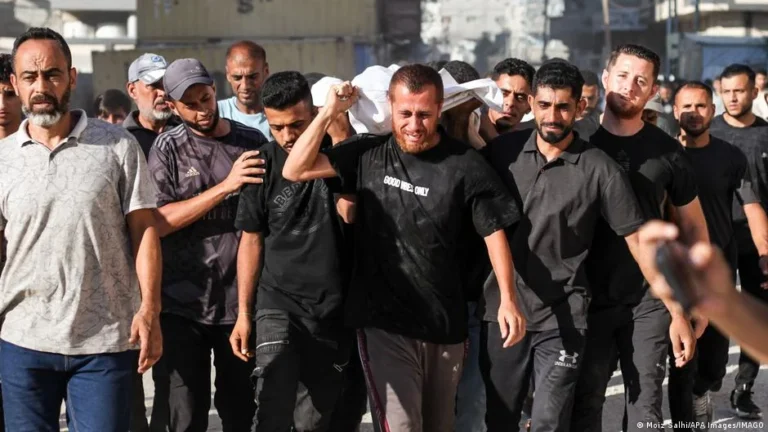
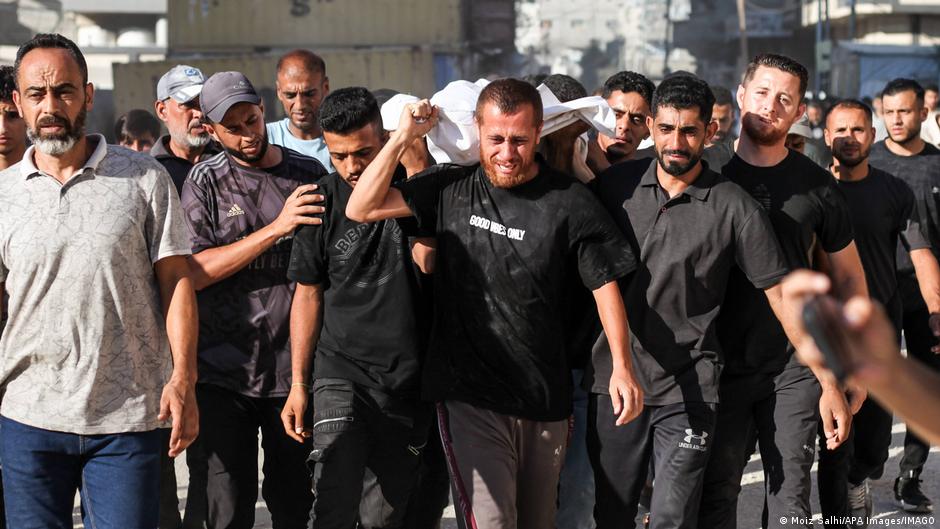
An Israeli military strike in the densely populated Nuseirat refugee camp in central Gaza on Friday resulted in the deaths of at least eight people and wounded another twenty-two, according to local officials operating under Hamas authority. The incident, which Gaza’s civil defense agency reported as targeting a gathering of civilians in the Al-Balata market area, has intensified concerns about civilian safety and the ongoing fragility of any de-escalation efforts in the region. The Al-Awda hospital, located within the Nuseirat camp, confirmed receiving the eight deceased and twenty-two injured individuals from the strike, highlighting the immediate and tragic human cost.
Details of the Incident and Conflicting Accounts
The strike occurred on a Friday, a day typically marked by increased civilian presence in markets and public spaces. Gaza’s civil defense agency, which functions as a primary rescue service within the Hamas-governed territory, was swift in reporting the casualties, describing the target as a "gathering of civilians." This narrative was further supported by an AFP news agency report, which cited civil defense spokesman Mahmoud Bassal stating that the strike took place during a funeral procession. Funerals in Gaza, especially for victims of the ongoing conflict, often draw large crowds, making such gatherings particularly vulnerable.
In stark contrast, the Israel Defense Forces (IDF) issued a statement asserting that its strike had targeted a "terrorist cell" belonging to the Palestinian Islamic Jihad (PIJ) militant group. The IDF acknowledged the possibility of civilian harm, stating, "The IDF is aware of the claims that several uninvolved individuals were harmed as a result of the strike. The results of the strike are under review." This conflicting information underscores the persistent challenge of verifying facts independently in a conflict zone, where immediate access and impartial investigation are often hampered by hostilities and political sensitivities. The Israeli military consistently maintains that its operations are aimed at dismantling militant infrastructure and operatives, while Palestinian authorities accuse Israel of indiscriminate attacks that disproportionately affect civilians.
The Nuseirat Refugee Camp: A Vulnerable Enclave
The Nuseirat refugee camp, established in the Gaza Strip after the 1948 Arab-Israeli War, is one of eight such camps in Gaza and is overseen by the United Nations Relief and Works Agency for Palestine Refugees in the Near East (UNRWA). It is one of the most densely populated areas in the world, with tens of thousands of registered refugees living in a relatively small geographical area. Prior to the latest escalation, Nuseirat was already grappling with severe overcrowding, high unemployment rates, and inadequate infrastructure, including limited access to clean water, sanitation, and electricity. The ongoing conflict has exacerbated these conditions, turning an already vulnerable population into one facing an acute humanitarian crisis.
The camp’s proximity to strategic areas and its dense urban fabric make it a frequent site of military operations and a challenging environment for civilians to navigate safely. Residents often have no alternative shelters or safe zones, making them particularly susceptible to the dangers of hostilities. The presence of both civilian residences and, according to Israel, militant infrastructure within these crowded camps further complicates the dynamics of engagement, leading to frequent accusations of civilian shielding by militant groups and disproportionate force by the Israeli military.
Broader Context of the Israeli-Palestinian Conflict
The strike in Nuseirat occurs within the grim backdrop of a protracted and devastating conflict that escalated dramatically following the October 7, 2023, attacks. On that day, Hamas-led militants launched a wide-scale assault on southern Israel, resulting in the deaths of approximately 1,200 people, mostly civilians, and the abduction of around 250 individuals. Israel responded with a comprehensive military operation in Gaza aimed at dismantling Hamas’s military capabilities and securing the release of hostages.
Since then, the conflict has resulted in an unprecedented humanitarian catastrophe in Gaza. According to the Gaza Health Ministry, operating under Hamas authority, over 37,000 Palestinians have been killed, and more than 85,000 injured. A significant majority of these casualties are reported to be women and children. The Israeli military, meanwhile, reports that over 600 of its soldiers have been killed since October 7, including more than 300 during the ground operation in Gaza. The scale of destruction in Gaza is immense, with vast areas reduced to rubble, and over 80% of the population displaced, facing severe shortages of food, water, medicine, and shelter. International organizations have repeatedly warned of impending famine and a collapsing healthcare system.
The Fragile Ceasefire and Persistent Violations
The article mentions a "ceasefire deal in October aimed at halting a two-year-long war sparked by the October 7, 2023, Hamas-led attacks on Israel." This statement contains a slight factual inaccuracy as the October 7 attacks initiated the current phase of intense conflict, not a two-year-long war that was halted. The "ceasefire deal in October" likely refers to the temporary humanitarian pause that took place in late November 2023, which facilitated the exchange of some Israeli hostages for Palestinian prisoners and allowed for increased aid delivery. This pause, however, was brief, lasting only seven days, and was not a comprehensive ceasefire aimed at ending the broader conflict. Subsequent efforts to broker a more lasting ceasefire and hostage deal have repeatedly faltered, with both sides attributing blame for the stalemates.
The continued hostilities, including the strike in Nuseirat, underscore the profound difficulties in achieving and sustaining any form of truce. According to Gaza’s Health Ministry, at least 1,127 Palestinians have been killed since the truce (referring to the November pause or a more general period of supposed de-escalation) took effect, though this figure needs to be contextualized with the overall death toll which has continued to rise dramatically since October 7. The IDF, for its part, states that at least five soldiers have been killed in Gaza over a corresponding period, indicating that hostilities have been ongoing for both sides despite any temporary agreements or international calls for cessation. These figures highlight the continuous violence and the devastating impact on both combatants and civilians, perpetuating a cycle of retaliation and suffering.
The Role of Palestinian Islamic Jihad (PIJ)
The Israeli military’s claim that its strike targeted a "terrorist cell" from the Palestinian Islamic Jihad (PIJ) militant group adds another layer of complexity to the incident. PIJ is one of several armed factions operating in Gaza, considered a terrorist organization by Israel, the United States, and the European Union. It is ideologically aligned with Hamas but operates independently, often engaging in rocket fire into Israel and other armed activities. PIJ’s stated goal is the destruction of Israel and the establishment of an Islamic Palestinian state.
Historically, PIJ has maintained a significant presence in Gaza’s refugee camps, utilizing the dense urban environment for its operations and sometimes embedding its fighters and infrastructure within civilian areas. This strategy, often criticized by human rights organizations, makes it challenging for Israel to target militant operatives without risking civilian casualties. The IDF regularly asserts that it takes precautions to avoid civilian harm, including issuing warnings, but maintains that the presence of militant infrastructure in civilian zones necessitates operations that can inadvertently lead to tragic outcomes for non-combatants. The incident in Nuseirat, therefore, aligns with a recurring pattern where Israel targets militant groups, and civilian casualties are subsequently reported, leading to intense international scrutiny and condemnation.
International Reactions and Calls for Accountability
The international community, including the United Nations and various human rights organizations, has consistently expressed alarm over the high number of civilian casualties in Gaza and the deteriorating humanitarian situation. While specific reactions to this particular strike may still be unfolding, the pattern of responses typically involves calls for immediate investigations into incidents involving civilian deaths, adherence to international humanitarian law, and protection of non-combatants.
The UN Secretary-General and other senior UN officials have repeatedly urged all parties to the conflict to respect their obligations under international law, which includes distinguishing between combatants and civilians and ensuring proportionality in attacks. Human rights groups such as Amnesty International and Human Rights Watch have documented numerous instances of alleged war crimes by both Israeli forces and Palestinian militant groups, advocating for independent inquiries and accountability for violations. The European Union and the United States, while often reaffirming Israel’s right to self-defense, have also increasingly voiced concerns over civilian protection and the humanitarian crisis, calling for greater restraint and adherence to international norms. Such statements often underscore the urgent need for a diplomatic resolution to the conflict, as military actions continue to exact a heavy toll on civilian lives and stability in the region.
Humanitarian Impact and Civilian Protection Concerns
The strike in Nuseirat is a stark reminder of the immense humanitarian cost of the ongoing conflict. The wounded individuals, now adding to the overwhelmed healthcare system in Gaza, will face severe challenges in receiving adequate medical care due to widespread destruction of hospitals, shortages of medical supplies, and lack of personnel. Al-Awda Hospital, like many others in Gaza, has been operating under immense strain, often with insufficient resources to cope with the continuous influx of casualties.
The incident also highlights the critical issue of civilian protection in armed conflict. International humanitarian law (IHL) mandates that parties to a conflict must take all feasible precautions to avoid, and in any event minimize, incidental loss of civilian life, injury to civilians, and damage to civilian objects. It also prohibits indiscriminate attacks and attacks that are expected to cause incidental loss of civilian life, injury to civilians, or damage to civilian objects that would be excessive in relation to the concrete and direct military advantage anticipated. The conflicting accounts surrounding the Nuseirat strike — a "gathering of civilians" versus a "terrorist cell" — underscore the difficulty in assessing adherence to these principles and the urgent need for independent verification mechanisms. For the residents of Nuseirat, who have already endured months of war, displacement, and deprivation, each new strike brings renewed fear, trauma, and loss.
Implications for Regional Stability and Future Prospects
The strike in Nuseirat, like many before it, has significant implications for regional stability and the elusive prospects for peace. Each incident involving civilian casualties fuels resentment, strengthens extremist narratives, and undermines efforts by international mediators to de-escalate tensions. It complicates hostage negotiations, as militant groups may harden their positions, and public pressure within Israel for continued military action remains high.
The absence of a durable ceasefire and a clear political horizon for Gaza perpetuates a cycle of violence that shows no signs of abating. The destruction of infrastructure, the displacement of populations, and the deepening humanitarian crisis create fertile ground for future instability. For any lasting peace to be achieved, there must be not only a cessation of hostilities but also a comprehensive plan for Gaza’s reconstruction, economic revival, and a credible political process that addresses the root causes of the conflict. Until then, incidents like the Nuseirat strike will continue to punctuate the grim reality for millions in the region, serving as tragic reminders of the urgent need for a resolution.