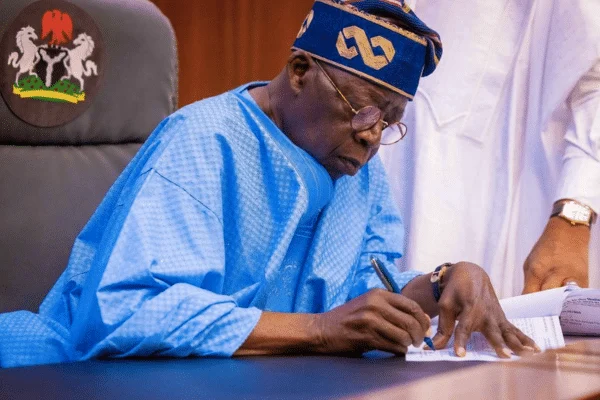
In a decisive move to stabilize and modernize the nation’s rapidly evolving financial landscape, President Bola Ahmed Tinubu has signed the Presidential Executive Order on Virtual Assets Coordination, 2026. This landmark directive establishes a comprehensive framework designed to harmonize the regulation of cryptocurrencies, blockchain technology, and other digital financial services across Nigeria. The order represents a significant pivot from previous fragmented regulatory attempts, aiming to consolidate the oversight of an industry that has historically operated within a complex web of overlapping jurisdictions and regulatory gray areas. By centralizing coordination under a newly formed Virtual Asset Council, the Nigerian government seeks to foster responsible innovation while mitigating systemic risks associated with money laundering, terrorism financing, and consumer fraud.
The signing of this executive order comes at a critical juncture for Nigeria, which remains one of the world’s most active markets for digital asset adoption. For years, the country’s tech ecosystem has navigated a pendulum of regulatory stances, ranging from outright bans to cautious embrace. The 2026 Executive Order signifies a maturation of policy, acknowledging that virtual assets are no longer fringe financial instruments but are integral components of the modern global economy. According to the Presidency, the order takes immediate effect, mandating all relevant government agencies to align their protocols with the new centralized strategy.
A Strategic Shift Toward Regulatory Harmonization
The primary objective of the Executive Order is to eliminate the "silo effect" that has plagued Nigeria’s digital asset oversight. Historically, the Central Bank of Nigeria (CBN), the Securities and Exchange Commission (SEC), the Nigerian Financial Intelligence Unit (NFIU), and the Federal Inland Revenue Service (FIRS) have often issued conflicting guidelines or left significant gaps in enforcement. This fragmentation created an environment where fraudulent operators could exploit jurisdictional loopholes, often leading to substantial financial losses for Nigerian citizens.
Under the new mandate, the Virtual Asset Council will serve as the supreme coordinating body. Chaired by the Governor of the Central Bank of Nigeria, with its secretariat housed within the apex bank, the council will include high-ranking representatives from the SEC, the Ministry of Finance, and various security and revenue agencies. This structure is intended to ensure that policy decisions regarding virtual assets are made with a holistic view of the economy—balancing the need for financial stability with the requirements of national security and the goals of domestic revenue mobilization.
Bayo Onanuga, Special Adviser to the President on Information and Strategy, emphasized that the order does not seek to introduce burdensome new layers of bureaucracy. Instead, it is designed to optimize the efficiency of existing institutions. By providing a unified platform for communication and enforcement, the government hopes to create a "regulatory sandbox" environment that is both safe for consumers and attractive to legitimate international investors.
Chronology of Nigeria’s Digital Asset Evolution
The path to the 2026 Executive Order has been marked by several significant milestones that reflect the global struggle to define and regulate digital currencies.
- February 2021: The Banking Ban. The Central Bank of Nigeria, under previous leadership, issued a directive prohibiting all commercial banks and financial institutions from facilitating transactions for cryptocurrency exchanges. This led to a surge in Peer-to-Peer (P2P) trading as Nigerians sought alternative ways to access digital assets.
- May 2022: SEC Digital Asset Rules. Despite the CBN ban, the Securities and Exchange Commission released a set of rules on "Digital Assets as Securities," signaling a different regulatory philosophy that viewed crypto as an investment product rather than just a currency.
- May 2023: National Blockchain Policy. The Federal Executive Council approved a national policy to create a blockchain-powered economy, signaling a top-down interest in the underlying technology of cryptocurrencies.
- December 2023: Lifting of the CBN Ban. Recognizing the futility of a total ban and the need for oversight, the CBN issued a circular lifting restrictions on banks servicing Virtual Asset Service Providers (VASPs), provided they met stringent KYC (Know Your Customer) and AML (Anti-Money Laundering) requirements.
- Early 2024: Market Volatility and Enforcement. Nigeria faced significant currency devaluation, leading the government to scrutinize the role of crypto exchanges in speculative trading. This period saw high-profile enforcement actions against global platforms like Binance to protect the valuation of the Naira.
- 2025: Expansion of the ARIP Program. The SEC launched and expanded the Accelerated Regulatory Incubation Programme (ARIP), allowing select VASPs to operate under close supervision while formalizing their licensing processes.
- July 2026: The Executive Order. President Tinubu signs the Virtual Assets Coordination Order to unify all previous efforts into a single, cohesive national strategy.
Supporting Data: The Scale of Nigeria’s Crypto Economy
The necessity for this executive order is underscored by the sheer volume of digital asset activity within the country. According to data from Chainalysis and other blockchain analytics firms, Nigeria has consistently ranked in the top three globally for P2P transaction volume. In the 2023-2024 period, crypto transactions in Nigeria were estimated to have reached a value exceeding $56 billion annually.

Furthermore, a significant portion of the Nigerian population—estimated at over 30% of adults—has used or currently owns some form of cryptocurrency. This high adoption rate is driven by several factors, including the need for a hedge against inflation, the high cost of traditional cross-border remittances, and a burgeoning tech-savvy youth population.
However, this growth has come with risks. The NFIU reported a 25% increase in suspicious transaction reports linked to digital wallets between 2024 and 2025. Additionally, the FIRS has noted that billions of Naira in potential tax revenue from capital gains and corporate taxes in the crypto sector remain uncollected due to the lack of a formal reporting framework. The 2026 Order specifically targets these revenue losses by mandating the Virtual Asset Council to develop a standardized tax reporting protocol for all licensed operators.
Official Responses and Stakeholder Reactions
The announcement has elicited a range of responses from various sectors of the economy. While the government maintains that the order is a protective measure, industry leaders are cautiously optimistic about the promise of clarity.
The Central Bank of Nigeria: A spokesperson for the CBN stated, "This Executive Order provides the legal teeth we need to ensure that the digital asset space does not become a conduit for illicit financial flows. By chairing the council, the CBN will ensure that virtual assets are integrated into the national payment system in a way that preserves monetary policy transmission."
The Securities and Exchange Commission (SEC): Officials at the SEC welcomed the move, noting that it validates their long-held stance that digital assets should be treated as regulated securities. "Our goal is to protect the investor. With a coordinated council, we can ensure that every VASP operating in Nigeria adheres to the highest standards of transparency and capital adequacy," the SEC stated.
Fintech and Crypto Founders: Adedeji Owonibi, a leading blockchain forensic expert and industry stakeholder, remarked that while coordination is welcome, the "devil is in the details" of implementation. "For years, we have asked for a single point of contact within the government. If the Virtual Asset Council can truly streamline the licensing process and stop the ‘multi-agency harassment’ that some startups face, it will be a major win for the ecosystem."
Legal and Economic Analysts: Legal experts suggest that the Executive Order may act as a precursor to more robust legislative changes in the National Assembly. "This is a stop-gap measure that uses executive power to bring order to chaos," says Dr. Amara Okechukwu, a financial law consultant. "It provides a clear signal to the international community that Nigeria is serious about the Financial Action Task Force (FATF) standards on virtual assets."
Broader Impact and Implications for the Future
The implications of the Presidential Executive Order on Virtual Assets Coordination, 2026, extend far beyond the immediate regulatory landscape.

1. Strengthening the National Currency
By bringing P2P trading and exchange-based transactions under a coordinated watch, the government aims to reduce the "black market" influence on the Naira’s exchange rate. Clearer oversight allows the CBN to monitor large-scale outflows of capital that may occur through stablecoins, potentially stabilizing the foreign exchange market.
2. Attracting Foreign Direct Investment (FDI)
Global crypto exchanges and blockchain infrastructure providers have often been hesitant to commit large-scale capital to Nigeria due to "regulatory whiplash." A harmonized framework provides the predictability required for long-term investment. This could lead to the establishment of regional headquarters for global tech firms in Lagos or Abuja, creating jobs and fostering local talent.
3. Enhancing National Security
The integration of the NFIU and security agencies into the Virtual Asset Council ensures that Nigeria can better track the financing of insurgency and organized crime. With blockchain’s inherent traceability, a coordinated government approach can turn what was once a "dark" financial corner into a tool for forensic investigation.
4. Consumer Protection and Financial Literacy
One of the most significant aspects of the order is the mandate for consumer protection. The council is expected to launch nationwide financial literacy campaigns to educate the public on the risks of fraudulent "get-rich-quick" schemes involving cryptocurrencies. By licensing legitimate operators, the government provides a "white list" for citizens, reducing the prevalence of scams.
5. Revenue Generation
For the Federal Inland Revenue Service (FIRS), the order is a gateway to a new tax base. By defining the tax obligations of VASPs and individual traders, the government can tap into a multi-billion dollar industry to fund public infrastructure and social programs, moving the nation closer to its goals of non-oil revenue growth.
In conclusion, the Presidential Executive Order on Virtual Assets Coordination, 2026, marks a transformative moment in Nigeria’s economic history. It represents an admission that the digital asset industry is too large and too important to be ignored or suppressed. Through coordination, the Nigerian government is attempting to build a bridge between the traditional financial world and the decentralized future, ensuring that the country remains a leader in the global digital economy while safeguarding its national interests. The success of this initiative will ultimately depend on the Council’s ability to remain agile in the face of rapid technological change and its commitment to transparency in its dealings with both the public and private sectors.