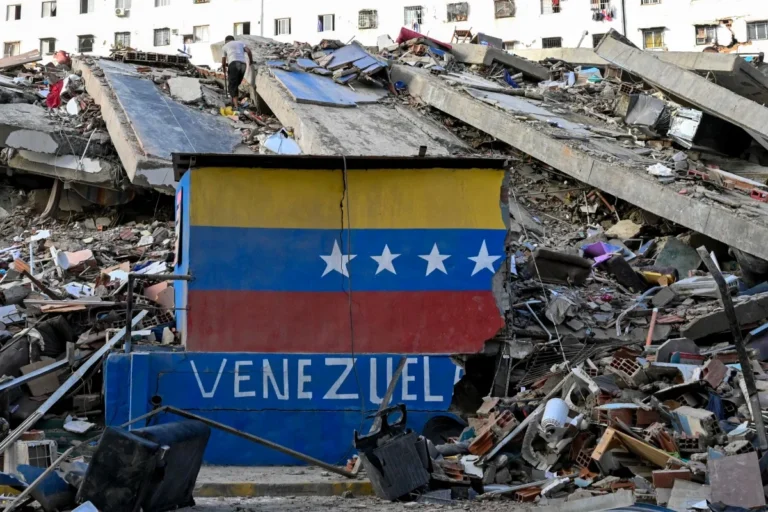
The devastating twin earthquakes that rocked Venezuela last month have claimed the lives of over 5,000 people, with the final death toll now exceeding 5,069, according to an announcement made on Friday by Jorge Rodriguez, the President of the National Assembly. The pronouncement, delivered via the Telegram messaging platform, offers a grim update on the catastrophic seismic event that has left the nation grappling with widespread destruction and profound loss.
The seismic sequence, characterized by two powerful tremors registering magnitudes of 7.2 and 7.5, struck within moments of each other on June 24, 2026. The epicenters of these violent shakes were situated off the northern coast, unleashing their fury upon the densely populated coastal state of La Guaira, a region directly north of the capital city, Caracas. The impact was immediate and catastrophic, reducing infrastructure to rubble and plunging communities into chaos. The majority of the reported fatalities are concentrated in this heavily affected coastal zone, a testament to the seismic waves’ direct and destructive force.
A Nation in Mourning: The Human Cost of the Quake
The official figures released by Rodriguez paint a stark picture of the human toll. The death toll of 5,069 represents a significant increase from earlier estimates, underscoring the scale of the disaster. The number of individuals injured in the earthquakes remains at 16,740. Rodriguez indicated that while the number of injured has not changed, a substantial portion of those who sustained injuries have already been discharged from medical facilities, suggesting that emergency services have been working tirelessly to provide care. However, the sheer volume of casualties has undoubtedly strained Venezuela’s already challenged healthcare system.
Beyond the immediate fatalities and injuries, the earthquakes have rendered approximately 20,000 people homeless. These survivors are now residing in overcrowded makeshift camps, a grim reality that exacerbates their vulnerability. Reports from the affected areas highlight critical deficiencies within these temporary shelters, with many lacking adequate access to clean water and essential sanitation systems. This situation poses significant public health risks, including the potential for waterborne diseases to spread, further compounding the crisis in the aftermath of the tremors. The long-term implications for these displaced populations are substantial, raising concerns about shelter, food security, and psychological well-being.
Chronology of a Catastrophe
The events of June 24, 2026, unfolded with terrifying speed and intensity.
June 24, 2026:

- Early Morning Hours: The first powerful earthquake, measuring 7.2 magnitude, strikes Venezuela’s northern coast. The tremor jolts residents from their sleep, causing widespread panic.
- Moments Later: A second, even more powerful earthquake, registering 7.5 magnitude, hits the same region. The proximity of these two massive seismic events amplifies their destructive potential, leading to widespread structural collapses.
- Immediate Aftermath: Reports of significant damage to buildings, infrastructure, and transportation networks begin to emerge from La Guaira and surrounding areas. Communication lines are disrupted, hindering initial rescue and assessment efforts. Emergency services are overwhelmed by the scale of the disaster.
- Daytime: The full extent of the devastation becomes clearer as daylight reveals collapsed buildings, impassable roads, and widespread destruction. Search and rescue operations commence amidst challenging conditions, with unstable structures posing a constant threat to rescuers.
Late June 2026:
- Ongoing Rescue and Recovery: Search and rescue teams, bolstered by national and potentially international aid, continue their efforts to locate survivors and recover the deceased. The sheer volume of debris makes this process arduous and dangerous.
- Assessment of Damage: Government agencies and humanitarian organizations begin to assess the extent of the damage to critical infrastructure, including hospitals, schools, and utilities.
- Displacement and Shelter: Efforts are made to provide temporary shelter and aid to the thousands of people who have lost their homes. The establishment of makeshift camps becomes a necessity, highlighting the immediate humanitarian challenge.
July 2026:
- Official Death Toll Updates: Throughout the month, the official death toll is gradually revised upwards as more bodies are recovered and identified, and as information from remote areas is consolidated.
- Focus on Humanitarian Aid: The government and various aid organizations work to deliver essential supplies, including food, water, and medical assistance, to the affected populations. Challenges persist in reaching all areas due to damaged infrastructure.
- Long-Term Recovery Planning: Discussions begin regarding the long-term reconstruction efforts and the provision of support for those displaced and affected by the disaster.
August 2026:
- Final Official Announcement: Jorge Rodriguez, President of the National Assembly, releases the latest official death toll, stating that it has surpassed 5,000, with the precise figure at 5,069. This announcement marks a significant point in the acknowledgment of the disaster’s full impact.
Supporting Data and Context: Venezuela’s Seismic Vulnerability
Venezuela is situated in a seismically active region, nestled between the Caribbean and South American tectonic plates. The country has a history of experiencing earthquakes, though the magnitude and impact of the June 2026 events are particularly noteworthy.
- Tectonic Setting: The region is characterized by complex fault systems, including the Boconó Fault, the El Pilar Fault, and the San Sebastián Fault, which are known sources of significant seismic activity. The recent earthquakes are believed to be linked to these major fault lines.
- Previous Significant Earthquakes: Historically, Venezuela has experienced devastating earthquakes. For instance, the 1812 Caracas earthquake, a magnitude 7.0 event, caused an estimated 10,000 to 20,000 deaths, highlighting the country’s long-standing vulnerability to seismic hazards. More recently, a 1967 earthquake near Caracas killed over 200 people.
- Building Codes and Infrastructure: The severity of damage in urban areas is often exacerbated by the age and construction quality of buildings. While modern building codes exist, their implementation and enforcement can be inconsistent, particularly in older or less developed areas. The high death toll in La Guaira suggests that many structures in the affected region may not have been adequately built to withstand such powerful tremors.
- Economic and Social Factors: Venezuela has been facing significant economic challenges in recent years, which can impact the country’s capacity for disaster preparedness, response, and long-term recovery. Resource constraints may affect the speed and effectiveness of rebuilding efforts and the provision of sustained support to affected populations.
Official Responses and International Reactions
The Venezuelan government, led by President Nicolas Maduro, has been engaged in disaster response efforts since the earthquakes struck. The National Assembly, through its President Jorge Rodriguez, has played a key role in disseminating information and overseeing the assessment of the disaster’s impact.
- Government Mobilization: Immediately following the earthquakes, the government declared a state of emergency in the affected regions and mobilized national resources for rescue and relief operations. This included deploying military personnel and civil protection agencies.
- International Aid: Venezuela has historically faced international sanctions, which can complicate the procurement of foreign aid. However, in the face of such a significant humanitarian crisis, the government has likely been seeking and receiving assistance from friendly nations and international organizations. The nature and extent of this aid would be crucial for the recovery process. Specific details regarding international offers of assistance and their acceptance would provide further context.
- Statements from Officials: Beyond Rodriguez’s grim update, other government officials have likely made statements expressing condolences to the victims’ families, assuring the public of ongoing relief efforts, and appealing for national unity in the face of the tragedy. The tone of these statements would reflect the government’s approach to crisis management.
- Criticism and Scrutiny: Given Venezuela’s political climate and economic situation, the government’s handling of the disaster, including the speed and effectiveness of relief efforts and the transparency of information dissemination, may face scrutiny both domestically and internationally.
Broader Impact and Implications
The repercussions of the June 2026 earthquakes extend far beyond the immediate casualty figures and the physical destruction. The disaster poses significant challenges to Venezuela’s social fabric, economy, and long-term development.
- Economic Impact: The destruction of infrastructure, including homes, businesses, and potentially key industrial facilities, will have a substantial negative impact on Venezuela’s already struggling economy. The cost of rebuilding will be immense, requiring significant financial resources and sustained investment. This could further strain public finances and potentially lead to increased national debt.
- Humanitarian Crisis: The displacement of thousands of people and the ongoing need for shelter, food, and medical assistance represent a major humanitarian challenge. The long-term recovery will require sustained international support and effective management of resources to prevent a prolonged humanitarian crisis.
- Social and Psychological Impact: The loss of life and the widespread destruction will have profound and lasting psychological effects on the survivors. Communities will need extensive support for trauma counseling and psychosocial recovery. The rebuilding of social structures and community resilience will be a critical aspect of the recovery process.
- Political Ramifications: The government’s response to the disaster could have significant political implications. Effective management of the crisis and successful reconstruction efforts could bolster the government’s standing, while perceived failures could exacerbate existing political tensions. The transparency and inclusivity of the recovery process will be closely watched.
- Environmental Considerations: While not the primary focus, the earthquakes may have also caused localized environmental impacts, such as landslides or changes in groundwater levels, which would require further assessment.
The full extent of the damage and the long-term consequences of these devastating earthquakes will continue to unfold in the months and years to come. The resilience of the Venezuelan people, coupled with effective and equitable disaster management strategies, will be paramount in navigating this profound national tragedy.