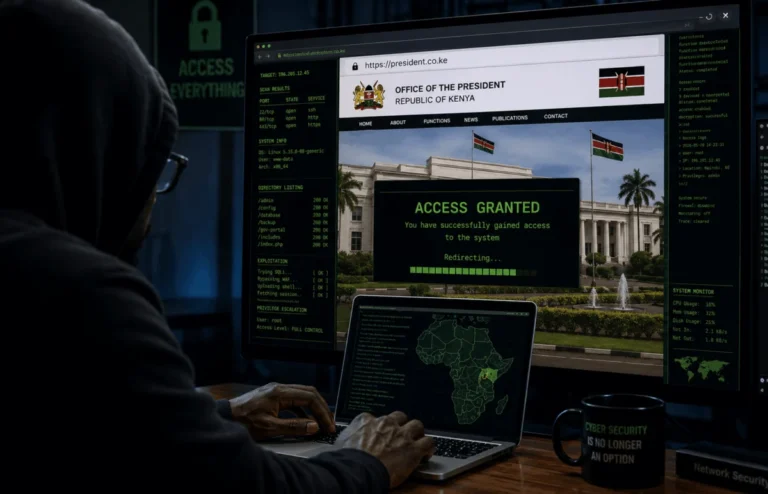
On Saturday, July 18, the digital sovereignty of the Republic of Kenya faced a significant challenge as hackers successfully infiltrated and took control of the official website of President William Ruto. The breach, which targeted the primary communication portal for the Head of State (president.co.ke), resulted in the public defacement of the platform with demeaning messages and a direct extortion attempt against the Kenyan government. The unknown group responsible for the cyberattack issued a chilling ultimatum, threatening to leak "uncomfortable" and potentially sensitive information unless a ransom of 5 Bitcoins—valued at approximately $317,215 at current market rates—was paid into a specified digital wallet.
The intrusion represents a bold escalation in regional cybercrime, targeting the very pinnacle of national leadership. The defaced homepage displayed a message directed at the President, stating, “This message is the third time for you; before we leak everything about you. Do a payment of 5 bitcoins to the Bitcoin wallet… If you want peace before 6 o’clock this evening.” This direct threat highlights not only the financial motives of the attackers but also a perceived lack of security within the state’s digital architecture. As the 6:00 PM deadline loomed, the Kenyan government moved swiftly to mitigate the damage, though the incident has sparked a national conversation regarding the adequacy of the country’s cybersecurity protocols.
The Government’s Response and Containment Efforts
In the wake of the breach, the Kenyan government, through the Ministry of Information, Communication, and the Digital Economy, issued a formal statement to address public concern. Information and Communication Technology (ICT) Cabinet Secretary William Kabogo confirmed the security incident but sought to downplay the severity of any potential data loss. According to Kabogo, the government’s cybersecurity teams were able to initiate emergency protocols shortly after the breach was detected to prevent further unauthorized access.
“At this time, there is no evidence of unauthorized access to sensitive data, data exfiltration, or loss of information,” Kabogo stated during a press briefing. He emphasized that while the public-facing side of the website was compromised and defaced, the core government systems and essential digital services remained secure and operational. As a precautionary measure, the ICT ministry temporarily restricted access to the presidential website to allow for a thorough forensic analysis and restoration efforts. This containment strategy was designed to isolate the affected server and ensure that the malware or unauthorized scripts used by the hackers did not migrate to other state networks.
Despite these assurances, the incident has raised questions about the timeline of the attack and why the government’s monitoring systems failed to prevent the initial defacement. Forensic experts are currently working to trace the origin of the attack, though the use of Bitcoin for ransom demands suggests an international or highly sophisticated local group utilizing anonymizing tools to mask their identity.
A Pattern of Vulnerability: A Chronology of Kenyan Cyberattacks
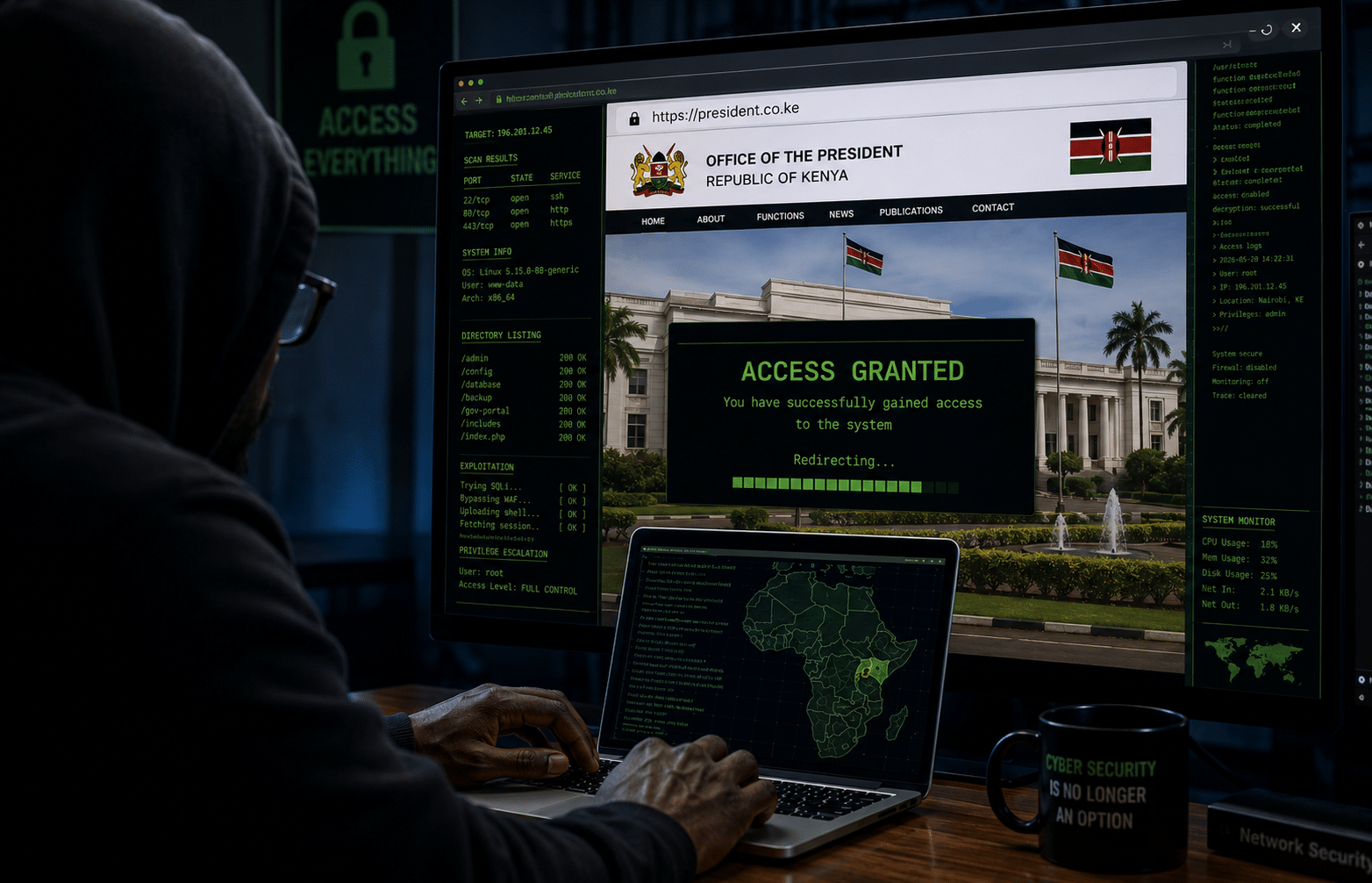
The July 18 breach is not an isolated event but rather part of a troubling trend of cyber insecurity affecting Kenyan state organs. In November 2025, a massive cyber breach shook the nation when hackers managed to take over not only the President’s website but also the digital portals of four major ministries: Education, Health, Interior, and Information and Communication Technology. During that period, other critical platforms, including the Immigration Department, the Directorate of Public-Private Partnerships, the Directorate of Criminal Investigations (DCI), and the State House website, reported various levels of unauthorized access and service disruption.
The recurring nature of these attacks suggests a systemic weakness in how government digital assets are managed. Cybersecurity analysts note that Kenya, often referred to as Africa’s "Silicon Savannah" due to its thriving tech ecosystem and high internet penetration, remains a prime target for both state-sponsored actors and independent cybercriminals. The frequency of these incidents—two major breaches within a single calendar year—indicates that previous remediation efforts may have been superficial or that the threat actors are evolving faster than the state’s defensive capabilities.
Expert Analysis: Why Government Portals are "Soft Targets"
The motives behind targeting a head of state’s website often transcend simple financial gain. Nick Thiong’o, a Nairobi-based practitioner specializing in Artificial Intelligence and cybersecurity, argues that these attacks are frequently performed for "clout" or political messaging. “I don’t think whoever is targeting the president has only financial motives in mind; it’s also for show,” Thiong’o noted. He explained that by targeting the highest office in the land, hackers guarantee themselves international media coverage and public attention, which serves to embarrass the administration and project an image of state incompetence.
Victoria Robinson, a Cybersecurity Research Analyst at Ethnos Cyber Limited, provides a more technical perspective on why government domains like ".go.ke" are attractive to attackers. Robinson points out that government websites offer a "high visibility payoff" for a relatively "low cost-to-attack." A state domain provides instant credibility; any message posted on a defaced presidential site is immediately viewed as a significant news event, leading to public panic and giving the attackers immense leverage for extortion.
Robinson further explained that the vulnerability often stems from a lack of "operational hygiene." Many government websites are built by third-party contractors who win public tenders. Once the project is delivered and the site goes live, there is often a lack of in-house ownership. “Government websites are soft targets because they are usually built by whichever contractor won a tender, then left to run with minimal in-house ownership,” Robinson said. This leads to a situation where sites run on outdated Content Management Systems (CMS) such as Drupal, WordPress, or Joomla, which have known vulnerabilities that are easily exploited if not patched regularly. Furthermore, many of these platforms lack Multi-Factor Authentication (MFA) or IP allow-listing, leaving admin panels exposed to the open internet.
The AI Factor: Lowering the Barrier for Cybercrime
One of the most concerning aspects of modern cybersecurity is the role of Artificial Intelligence in facilitating attacks. Thiong’o warns that the advent of Large Language Models (LLMs) has significantly lowered the barrier to entry for aspiring hackers. Tools that were once the province of elite coders are now accessible to anyone capable of "jailbreaking" an AI model to bypass its safety filters.
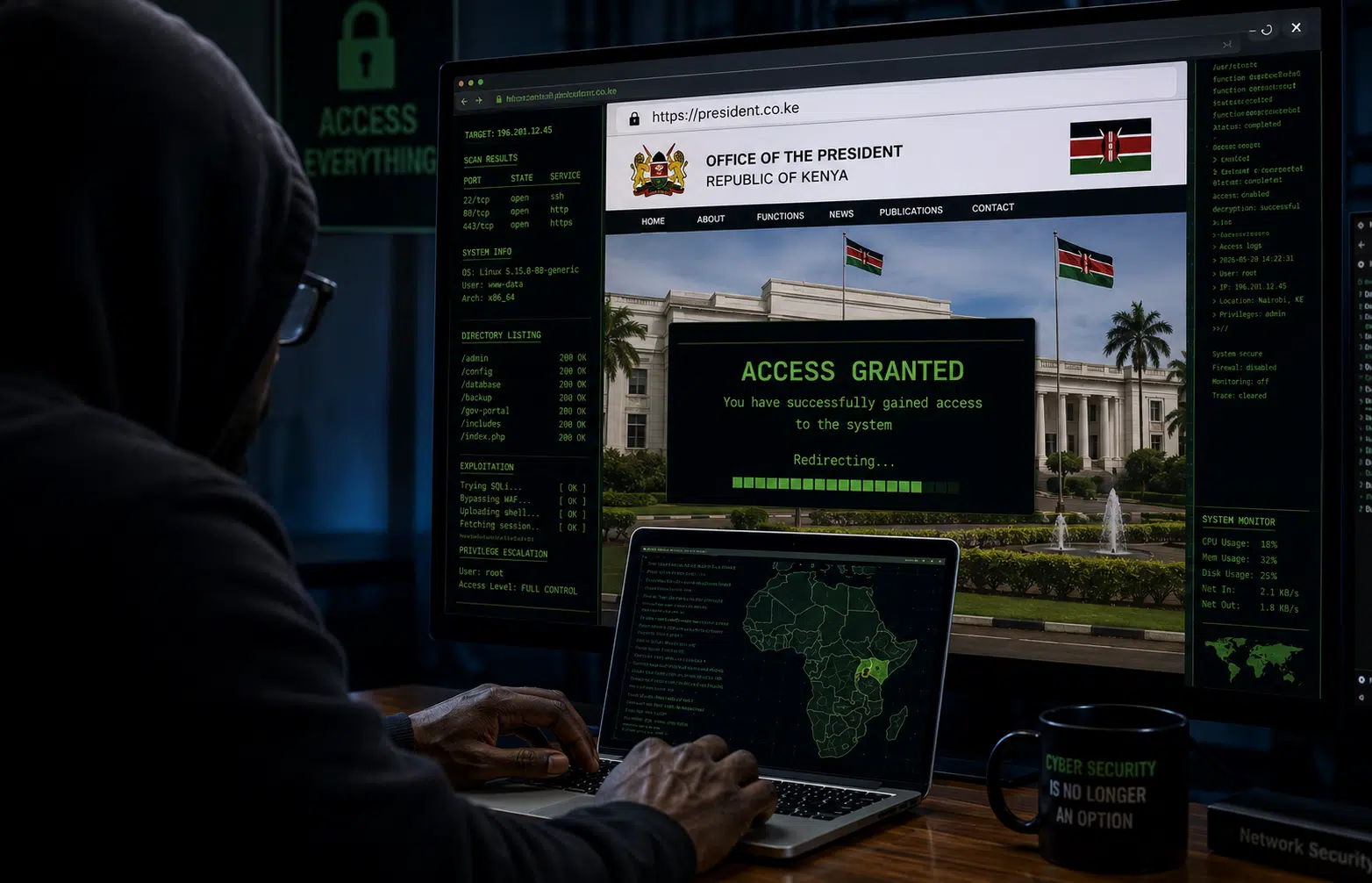
Hackers no longer need to be fluent in complex programming languages to create sophisticated malware or phishing scripts. By using specific prompts, they can leverage AI to generate code that identifies vulnerabilities in websites or automates the process of "brute-forcing" passwords. “We’re on the cusp of something that would be recurring because we don’t know where the attackers would focus on next; the tools to create malware and prompt injections are easily available,” Thiong’o warned. This democratization of cyber-offensive tools means that government infrastructure is under constant, automated siege.
Strategic Recommendations for African Governments
To combat this rising tide of cyber threats, experts suggest that African governments must shift their perspective on digital infrastructure. Rather than viewing a website as a static marketing tool or a one-off project, it must be treated as "Critical National Infrastructure," similar to power grids or water systems.
Victoria Robinson advocates for several practical measures to improve security:
- Centralized Security Ownership: Governments should empower a National Computer Emergency Response Team (CERT) with actual authority to mandate security standards across all ministries, rather than just acting in an advisory capacity.
- Mandatory Security Certifications: No government website should be allowed to go live without passing rigorous security audits and obtaining baseline certifications.
- Continuous Patch Cycles: Security is not a "set and forget" task. There must be dedicated budgets for ongoing monitoring, patching, and administrative credential rotation.
- Rehearsed Incident Response: The difference between a minor disruption and a national crisis often depends on whether the government has a practiced "runbook" for responding to breaches.
Furthermore, Nick Thiong’o suggests that African nations should invest in developing local AI models and security tools. By building indigenous tech expertise, governments can better understand the specific vulnerabilities of their systems and reduce reliance on foreign-built models that may have hidden backdoors or safety flaws. Collaboration with international partners is also essential to share intelligence on emerging global threats.
Conclusion: The Path Forward
The breach of President William Ruto’s website serves as a stark reminder of the vulnerabilities inherent in the digital age. While the immediate threat may have been contained, the underlying structural issues remain. If the Kenyan government—and by extension, other African nations—continues to treat digital security as an afterthought of the procurement process, the cycle of defacement, ransom demands, and public embarrassment is destined to repeat.
As Kenya continues its journey toward becoming a fully digital economy, the protection of its virtual borders must become a top priority. The cost of a breach is measured not just in Bitcoins, but in the erosion of public trust and the potential compromise of national security. Moving forward, the focus must be on building a resilient, proactive defense system that can withstand the evolving tactics of hackers in an AI-driven world. Without a fundamental shift in how digital assets are governed and secured, the "Silicon Savannah" remains at risk of being overshadowed by the growing shadows of the cyber underground.