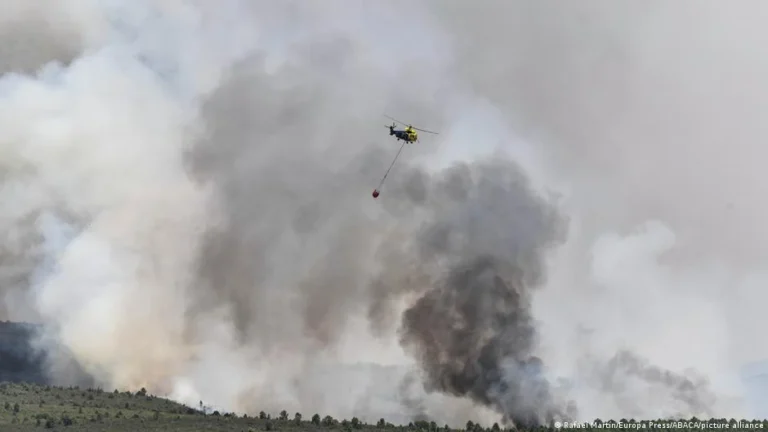
Firefighters are locked in a relentless battle to contain a rapidly spreading wildfire north of Spain’s capital, Madrid, which by Sunday had already devastated more than 13,000 hectares. This latest inferno, originating in central Spain’s Guadalajara province, near the ecologically sensitive Sierra Norte Natural Park, exacerbates an already dire situation as the nation grapples with one of its most challenging wildfire seasons in modern history. The country remains profoundly shaken by a recent, deadly blaze in southern Almeria province that claimed 13 lives and destroyed 7,000 hectares earlier this month, underscoring the escalating severity and human cost of these environmental catastrophes.
The Guadalajara Blaze: A Rapidly Evolving Threat
The wildfire in Guadalajara province, which ignited on Thursday, has quickly become the focal point of Spain’s emergency response efforts. Its proximity to Madrid, approximately 80 kilometers (50 miles) to the north, has raised concerns about air quality and the potential for further evacuations. The affected region is characterized by dense forest cover and mountainous terrain, serving as a critical habitat for a diverse array of wildlife, including several endangered species such as the majestic Iberian imperial eagle and various species of wolves. The destruction of such a vital ecosystem represents a significant ecological loss, impacting biodiversity and natural heritage for decades to come.
By Sunday, the sheer scale of the fire’s advance was alarming. El País newspaper reported that over 13,000 hectares had already been scorched, a figure that continued to rise rapidly. Public broadcaster RTVE further highlighted the intensity of the blaze, noting that flames had advanced an additional 14 kilometers (9 miles) overnight, pushing deeper into the natural landscape and threatening more communities. The sheer speed and erratic behavior of the fire, fueled by dry conditions and strong winds, have presented immense challenges for containment teams.
In response to the escalating crisis, an formidable force of over 500 firefighters and emergency personnel has been deployed. These ground crews are working tirelessly, often in arduous conditions, to establish fire breaks, protect residential areas, and suppress active flame fronts. Their efforts are critically augmented by aerial support, with 25 firefighting aircraft, including planes and helicopters, conducting continuous water drops. This coordinated air-ground strategy is essential for tackling fires of this magnitude, particularly in rugged, inaccessible terrain.
The human toll, while thankfully not yet including casualties in Guadalajara, has been significant in terms of displacement. Several hundred residents from villages within the fire’s path were ordered to evacuate, leaving their homes with little notice. These precautionary measures, while disruptive, are vital for ensuring public safety in the face of such unpredictable natural disasters. The head of the Castilla-La Mancha regional government, Emiliano Garcia-Page, publicly acknowledged the heroic efforts of emergency workers in a post on X, stating that they had "managed to save many lives," a testament to their dedication in protecting communities from the advancing inferno.
In a development that points to the potential human origins of this devastating event, police confirmed the arrest of a man on Thursday, suspected of starting the fire. The arrest followed a tip-off from neighbors, and an investigation is currently underway to determine the exact circumstances and motive behind the blaze. If confirmed as arson, this incident would add another layer of tragedy to an already devastating situation, highlighting the need for vigilance and accountability in preventing such destructive acts.
A Nation on Edge: Echoes of Almeria’s Tragedy
The Guadalajara fire unfolds against a backdrop of national mourning and heightened alert following a catastrophic wildfire earlier this month in Almeria province, located in the southern Andalucia region. That blaze, one of the deadliest in Spain’s modern history, claimed the lives of 13 people, including several foreign nationals, and devastated 7,000 hectares of land. The tragic circumstances surrounding the deaths, with several victims found in burnt-out vehicles, having been trapped while attempting to flee the flames, sent shockwaves across the country. This profound loss of life has intensified public and political pressure for improved early warning systems, evacuation protocols, and comprehensive wildfire prevention strategies.
The Almeria incident sparked a national debate on preparedness and the effectiveness of emergency responses. Investigations into the causes of death and the fire’s rapid spread are ongoing, aiming to identify lessons learned and prevent future tragedies. The memory of those lost in Almeria serves as a stark reminder of the immense danger posed by these fires and the critical importance of swift and decisive action.
Battling on Multiple Fronts: The Zaragoza Wildfire
Compounding the crisis, another significant wildfire has been raging in the northeastern Zaragoza province since Wednesday, further stretching Spain’s emergency resources. This blaze forced the evacuation of over a thousand residents from affected communities. While the regional government initially warned on Friday evening that the fire was "far from under control," there was a glimmer of hope by Saturday. Jorge Azcon, head of the Aragon regional government, expressed a cautious sigh of relief, indicating that it was the "first day we can breathe a sigh of relief" as the fire had been mostly contained. The containment of the Zaragoza fire, even partially, offers a vital reprieve for firefighters and allows for resources to be potentially reallocated if needed, though vigilance remains paramount.
The Broader Crisis: Spain’s Annual Ordeal
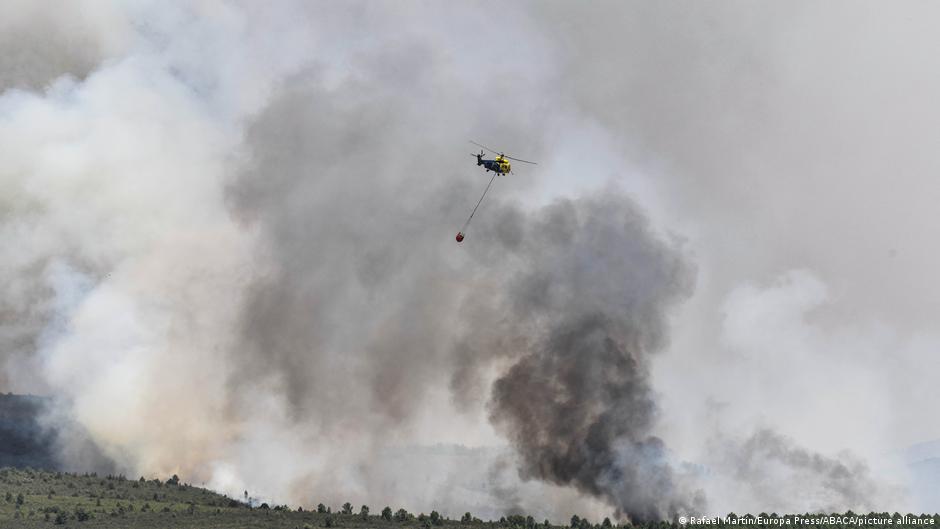
The current onslaught of wildfires is not an isolated phenomenon but rather a stark manifestation of a broader, escalating crisis in Spain. Since the beginning of the year, wildfires have destroyed more than 80,000 hectares across the country. This figure, according to the European Forest Fire Information System (EFFIS), represents nearly double the area burned during the same period last year, signaling a significant intensification of the problem. Spain’s Mediterranean climate naturally predisposes it to wildfires, particularly during the hot, dry summer months. However, the scale and intensity observed this year are pushing the country to its limits, reflecting a disturbing trend of increasingly destructive fire seasons.
Historically, Spain has experienced severe wildfire seasons, notably in years like 2005 and 2012, which saw massive tracts of land incinerated. However, the frequency of such extreme events appears to be accelerating, with the current year shaping up to be one of the most devastating on record. The sustained high temperatures, prolonged drought, and low humidity levels across much of the country create a tinderbox environment, where even a single spark can quickly escalate into an uncontrollable inferno.
Underlying Factors: Climate Change, Drought, and Land Management
The scientific consensus is clear: human-caused climate change is playing a pivotal role in exacerbating wildfire risks globally, and Spain is on the front lines of this impact. Scientists point to climate change making heatwaves longer, hotter, and more frequent, thereby drying out landscapes and fueling more destructive wildfires. Spain, particularly vulnerable due to its geographical location, is experiencing an alarming increase in aridification, with significant rainfall deficits becoming more common. Reservoir levels in many regions are critically low, reflecting years of insufficient precipitation and increased demand.
Beyond climate change, land management practices also contribute significantly to the problem. Decades of rural depopulation have led to the abandonment of traditional agricultural and forestry practices that once helped manage vegetation. Unmanaged forests, with dense undergrowth and accumulated biomass, provide abundant fuel for fires. The lack of controlled burns, coupled with urban expansion into wildland-urban interfaces, further complicates firefighting efforts and increases the risk to human settlements. Experts advocate for a more proactive approach to forest management, including selective thinning and creation of fire breaks, to reduce fuel loads and create more resilient landscapes.
Human Cost and Environmental Devastation
The impact of these wildfires extends far beyond the immediate destruction of land. The human cost is immeasurable, ranging from the tragic loss of life to the profound trauma experienced by evacuees who lose their homes, livelihoods, and sense of security. The economic ramifications are also severe, affecting local economies heavily reliant on tourism and agriculture. Reconstruction efforts are costly and time-consuming, diverting resources that could otherwise be used for development.
Environmentally, the devastation is profound. The burning of forests releases massive amounts of carbon dioxide into the atmosphere, contributing to further climate change in a vicious cycle. Soil erosion becomes a major problem after fires, especially on steep slopes, leading to landslides and degradation of water quality in rivers and reservoirs. The loss of biodiversity, particularly in protected areas like the Sierra Norte Natural Park, is irreversible for many species. Recovery of ecosystems can take decades, if not centuries, with some unique habitats potentially lost forever. The disruption to wildlife, including the displacement or death of endangered species, represents a significant setback for conservation efforts.
Emergency Response and Policy Challenges
The tireless efforts of Spain’s emergency services, including firefighters, civil protection units, and military personnel, are commendable. Their bravery and dedication in confronting these increasingly powerful fires are critical to minimizing loss. However, the sheer scale and concurrent nature of these blazes put immense strain on resources, highlighting the need for robust national and international cooperation.
Government officials, from regional leaders to national ministers, have consistently underscored the gravity of the situation, reiterating commitments to supporting affected communities and bolstering firefighting capabilities. Environmental groups, meanwhile, have intensified their calls for more aggressive climate action and comprehensive long-term strategies for wildfire prevention, emphasizing the need for a paradigm shift from reactive suppression to proactive management.
Looking Ahead: Preparedness and Prevention
As Spain endures its peak tourism season, the ongoing wildfire crisis serves as a stark reminder of the country’s vulnerability. The combination of severe drought, escalating temperatures, and changing land use patterns creates a persistent threat that demands sustained attention and investment. The focus must shift towards enhancing early detection systems, improving rapid response capabilities, and, crucially, investing in prevention measures. This includes educating the public on fire safety, enforcing stricter regulations on outdoor activities during high-risk periods, and implementing ecological forestry practices that reduce fuel loads and create more fire-resilient landscapes.
The current situation in Spain is a microcosm of a global challenge, illustrating the profound and immediate consequences of a changing climate. As the country navigates this complex crisis, the lessons learned from these devastating fires will be instrumental in shaping future strategies for disaster preparedness, environmental protection, and climate adaptation, not just for Spain, but for all regions facing similar escalating threats.