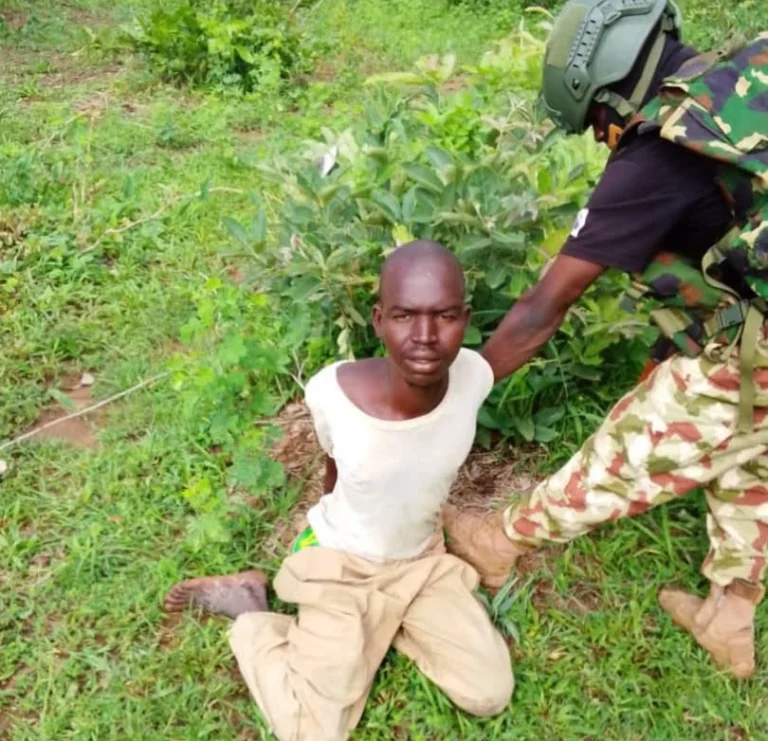
In a significant development underscoring the persistent security challenges in Nigeria’s North-East, troops of Operation Hadin Kai have successfully apprehended two foreign nationals in the Askira/Uba Local Government Area of Borno State. The arrests, which took place on July 19, 2026, involved a 32-year-old Sudanese man identified as Musa Fashir, suspected of being a foreign terrorist fighter and collaborator, and a 36-year-old Ghanaian woman named Mary Florence, believed to be an illegal immigrant. This operation highlights the ongoing intelligence-driven efforts by the Nigerian military to dismantle terrorist networks and enhance border security within a region long plagued by insurgency.
Details of the Operation and Arrests
The arrests were carried out by troops from the 115 Task Force Battalion, operating under Sector 4 of Operation Hadin Kai (OPHK). According to a statement released on Monday, July 20, 2026, by Captain Muhammed Goni, the Acting Military Information Officer for Operation Hadin Kai, the individuals were intercepted at approximately 11:48 a.m. in the Lassa, Dille General Area of Askira/Uba Local Government Area. This specific location in southern Borno is strategically important, often serving as a transit route due to its proximity to the Mandara Mountains and the Cameroonian border, making it a hotspot for insurgent activities and cross-border movements.
Musa Fashir, the Sudanese national, is currently undergoing intensive preliminary profiling and interrogation. The Army’s initial assessment suggests he has established links with terrorist elements operating within the North-East theatre. His presence, as articulated by Capt. Goni, "further highlighting attempts by foreign actors to support insurgent activities in the region." This arrest is particularly crucial as it reinforces long-held suspicions within the Nigerian security apparatus regarding external support and recruitment for groups like Boko Haram and the Islamic State’s West Africa Province (ISWAP), which have continued to destabilize the region for over a decade.
Concurrently, Mary Florence, the Ghanaian woman, was apprehended under suspicion of being an illegal immigrant. Her claims regarding her status and the circumstances surrounding her presence in a conflict-affected zone are currently under thorough investigation. While her role is yet to be fully determined, her arrest in conjunction with a suspected foreign terrorist fighter raises pertinent questions about potential human trafficking, logistical support for insurgent groups, or simply the perilous journeys undertaken by individuals seeking opportunities, often unwittingly straying into dangerous territories. Both suspects remain in military custody as investigations continue to ascertain their identities, the full extent of their activities, and any possible connections to terrorist or transnational criminal networks.
Background Context: The North-East Insurgency and Operation Hadin Kai
The North-East of Nigeria, particularly Borno State, has been the epicenter of a protracted and brutal insurgency since 2009, primarily led by Boko Haram and its splinter faction, ISWAP. This conflict has resulted in the deaths of tens of thousands, displaced millions, and created one of the world’s most severe humanitarian crises. The insurgents aim to establish an Islamic caliphate, often employing extreme violence, kidnappings, and destruction of infrastructure.
Operation Hadin Kai (formerly Operation Lafiya Dole) is the code name for the Nigerian military’s counter-insurgency effort in the North-East. Launched with renewed vigor, its mandate is to "neutralise terrorists and dismantle their logistics, financing and support networks." The operation employs a multi-pronged approach involving ground offensives, aerial bombardments, intelligence gathering, and civil-military cooperation. The current phase of the operation emphasizes intelligence-driven strategies, which proved instrumental in the recent arrests in Askira/Uba. This shift towards more precise, intelligence-led operations aims to disrupt the insurgents’ operational capabilities and sever their supply lines, including foreign recruitment and logistical support.
The involvement of foreign nationals in the insurgency is not a new phenomenon. Reports and intelligence briefings over the years have indicated the presence of fighters from neighboring countries and even further afield, drawn by extremist ideologies or mercenary incentives. These foreign fighters often bring specialized skills, enhance the fighting capacity of local groups, and help in establishing international links for funding and arms procurement. The porous borders within the Lake Chad Basin region (Nigeria, Chad, Niger, and Cameroon) facilitate such movements, making regional cooperation crucial for effective counter-terrorism efforts.
Chronology of Recent Events and Operational Context

The arrest on July 19, 2026, fits into a broader timeline of intensified military operations across the North-East. In the preceding months, Operation Hadin Kai has reported several successes, including the neutralization of high-profile insurgent commanders, the rescue of kidnapped victims, and the destruction of terrorist enclaves. These operations are often conducted in response to actionable intelligence gathered through various means, including local informants, technological surveillance, and interrogations of captured insurgents.
- Early 2026: Continued efforts by OPHK troops to consolidate gains in areas previously cleared of insurgents, focusing on preventing resurgence and disrupting supply lines.
- Mid-2026: Renewed emphasis on intelligence gathering and targeted operations, particularly in border areas and known transit routes like Askira/Uba, following reports of increased cross-border movements by suspected terrorists and their collaborators.
- July 19, 2026, 11:48 a.m.: Troops of the 115 Task Force Battalion, Sector 4 OPHK, acting on specific intelligence, apprehended Musa Fashir and Mary Florence in Lassa, Dille General Area of Askira/Uba LGA.
- July 20, 2026 (Monday): Capt. Muhammed Goni releases an official statement detailing the arrests, emphasizing the intelligence-driven nature of the operation and the continued vigilance of the troops.
- Ongoing: Both suspects are undergoing extensive interrogation and profiling to uncover further details about their affiliations, intentions, and any broader networks. This phase is critical for generating additional intelligence to pre-empt future attacks and identify other collaborators.
This chronology underscores the dynamic nature of the conflict and the continuous adaptation of military strategies to counter evolving threats. The focus on disrupting support networks and preventing the infiltration of foreign fighters is a testament to the comprehensive approach adopted by the Nigerian Army.
Official Responses and Broader Implications
Captain Goni’s statement not only confirmed the arrests but also served as a broader message about the effectiveness of Operation Hadin Kai. He highlighted that "the successful arrests further demonstrate the effectiveness of Operation Hadin Kai’s intelligence-driven operations and the vigilance of troops in denying terrorists and their collaborators freedom of action." This official stance aims to reassure the public of the military’s commitment and capability, while also sending a clear signal to insurgent groups and their sympathizers that their activities are being monitored and countered.
The arrest of a Sudanese national suspected of terrorist ties carries significant diplomatic and regional implications. It necessitates closer intelligence sharing and cooperation with Sudan and other nations in the Sahel and Lake Chad Basin. Such collaborations are vital for tracking the movement of foreign fighters, disrupting their recruitment pipelines, and addressing the root causes that draw individuals into extremist groups across national borders. The Lake Chad Basin Commission (LCBC) and the Multinational Joint Task Force (MNJTF), comprising military contingents from Nigeria, Chad, Niger, and Cameroon, play crucial roles in this regional security architecture, and such arrests reinforce the need for enhanced cross-border intelligence fusion.
Similarly, the apprehension of a Ghanaian national as an alleged illegal immigrant, even if unrelated to terrorism, underscores the challenges of border management in West Africa. The Economic Community of West African States (ECOWAS) protocol on free movement of persons allows citizens of member states to travel without visas, but this privilege is often exploited by individuals with malicious intent or those engaging in illicit activities. The incident could prompt discussions between Nigeria and Ghana regarding immigration controls, data sharing, and security protocols, especially concerning movements into conflict-affected zones.
Analysis of Implications: Regional Security and Counter-Terrorism
The presence of foreign terrorist fighters is a critical concern for regional stability. These individuals often possess combat experience from other conflict zones, potentially bringing new tactics, training, and a broader network of contacts to local insurgent groups. Their involvement can prolong conflicts, increase their lethality, and complicate peace efforts. The arrest of Musa Fashir therefore represents a significant intelligence gain, potentially unlocking information about international linkages, funding sources, and recruitment strategies of terrorist organizations operating in Nigeria.
The implications extend to:
- Enhanced Intelligence Gathering: The interrogation of Fashir could yield vital intelligence on the operational structure, leadership, and future plans of insurgent groups, as well as their external support networks. This information is invaluable for pre-emptive strikes and disrupting terrorist plots.
- Strengthened Border Security: The incident highlights the need for continuous vigilance and investment in border surveillance technologies and personnel. Nigeria’s vast and porous borders, particularly in the North-East, remain a significant vulnerability.
- Regional and International Cooperation: The arrests underscore the transnational nature of terrorism and illegal migration. Effective counter-terrorism requires robust intelligence sharing, joint operations, and diplomatic engagement with neighboring countries and international partners to address shared security threats.
- Countering Radicalization: Understanding the pathways that lead foreign nationals to join insurgent groups can inform strategies to counter radicalization and violent extremism, both domestically and internationally.
- Humanitarian Concerns: The presence of illegal immigrants in conflict zones also raises humanitarian concerns, including vulnerability to exploitation, trafficking, and the dangers posed by active hostilities. Investigations into Mary Florence’s situation will likely touch upon these aspects.
Captain Goni’s concluding remarks reiterated the unwavering commitment of Operation Hadin Kai to its mandate and called for sustained public support. He emphasized, "Members of the public are encouraged to sustain their support by providing timely and credible information to security agencies, as collective vigilance remains critical to the restoration of lasting peace, security and stability in the North-East." This call for community engagement is a cornerstone of modern counter-insurgency doctrine, recognizing that local populations are crucial partners in intelligence gathering and overall security efforts. The arrests in Askira/Uba are a stark reminder of the multifaceted challenges Nigeria faces but also demonstrate the persistent efforts by its security forces to restore normalcy and safeguard its citizens from both internal and external threats.