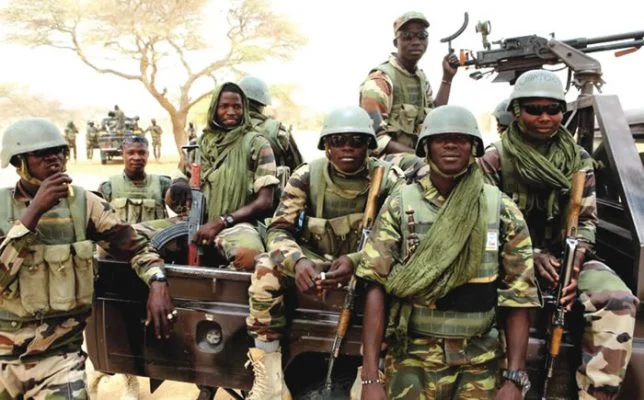
Troops of Operation Hadin Kai have arrested six suspected terrorist logistics suppliers conveying a large consignment of materials in five vehicles destined for insurgents in the North East. The Army, in a statement on Monday, said they were arrested following an intelligence-led operation, conducted at about 4:00 p.m on 19 July 2026, during a stop-and-search operation along a suspected terrorist logistics route. The acting Military Information Officer, Northeast Joint Task Force Operation Hadin Kai, Captain Muhammed Goni, who disclosed this, noted that the success has significantly disrupted terrorists’ activities in the region. The statement read, “Troops of Sector 1 Operation HADIN KAI (OPHK), acting on credible intelligence, have intercepted a suspected terrorist logistics network and arrested 6 suspects during a well coordinated covert operation aimed at disrupting terrorist supply chains in the North East Theatre. The operation culminated in the arrest of 6 suspected terrorist logistics suppliers travelling in 5 vehicles while conveying a large consignment of materials destined for terrorist elements.” He said items recovered during the operation include 202 cartons of herbicides, one jerrycan containing suspected acid, 1 Starlink wireless internet communication system, 6 bags of NPK fertilizer, 10 bags of rice, 50 hoes, and 20 packs of knapsack sprayer pumps. He further stressed that preliminary assessment indicates that the recovered consignment comprises materials with potential dual-use applications capable of supporting terrorist logistics, sustainment, mobility, and communications. “Some of the recovered items, particularly the NPK fertilizers and suspected acid, will undergo further technical and forensic examination to determine their intended use, including any possible application in the fabrication of Improvised Explosive Devices (IEDs),” he added. He said the seizure represents a significant disruption of suspected terrorist logistics networks and further degrades their ability to sustain operational activities. “The six suspects and all recovered items have been handed over to the appropriate Military Intelligence Regiment for comprehensive investigation to establish the intended recipients, identify the wider logistics network, and facilitate the apprehension of other collaborators and sponsors,” he stated. He further stated that preliminary debriefings of rescued hostages and surrendered terrorist families indicate that the sustained disruption of terrorist logistics and supply chains by Operation HADIN KAI has significantly degraded the operational capability of terrorist groups. “According to the debriefings, persistent shortages of food, medical supplies, communications equipment, and other essential logistics have compelled many terrorists to abandon their hostages, families and enclaves while fleeing sustained military pressure,” he maintained. He, however assured that Operation HADIN KAI remains resolute in dismantling terrorist logistics and support networks through sustained intelligence-driven operations. “The Theatre will continue to target terrorists, their financiers, logistics suppliers, informants, and collaborators to deny them the resources, freedom of movement, and operational capability required to sustain their campaign of terrorism,” he added. He called on the general public to continue supporting security agencies by providing timely and credible information on suspicious persons, movements, and activities within their communities. “Such cooperation remains vital to the success of ongoing counter-terrorism operations and the restoration of lasting peace and security in the North East,” he said.
Strategic Disruption of Insurgent Supply Lines
The recent successful operation by troops of Operation Hadin Kai, which led to the apprehension of six suspected logistics suppliers and the seizure of a substantial cache of materials, marks a significant victory in the ongoing counter-terrorism efforts in Nigeria’s Northeast. This interdiction, carried out on July 19, 2026, at approximately 4:00 p.m. along a known terrorist transit route, highlights the efficacy of intelligence-driven operations in disrupting the critical support networks that sustain insurgent groups like Boko Haram and its Islamic State West Africa Province (ISWAP) offshoots. The materials intercepted, ranging from agricultural chemicals to communication equipment and basic provisions, underscore the multifaceted nature of terrorist logistics and the adaptability of these groups in sourcing essential supplies.
The statement released by Captain Muhammed Goni, the acting Military Information Officer for the Northeast Joint Task Force Operation Hadin Kai, emphasized the dual-use nature of many of the seized items. Herbicides, for instance, can be repurposed for the creation of toxic agents, while NPK fertilizers and suspected acid are known precursors for Improvised Explosive Devices (IEDs). The presence of a Starlink wireless internet communication system further points to the insurgents’ continued efforts to maintain command and control capabilities, crucial for coordinating attacks and disseminating propaganda. The seizure of food items like rice and essential tools such as hoes and sprayer pumps suggests a broader effort to sustain fighters in the field, facilitate agricultural activities for self-sufficiency, and potentially support rudimentary manufacturing processes.
Background and Context
The Northeast region of Nigeria has been grappling with a protracted insurgency for over a decade. The conflict, which began in 2009 with the emergence of Boko Haram, has since evolved, with splinter factions and the rise of ISWAP creating a complex and persistent security challenge. These groups have historically relied on a combination of external funding, local support networks, and illicit activities to procure weapons, ammunition, food, medicine, and communication devices. Their ability to sustain operations is directly linked to the effectiveness of their logistics and supply chains, making the disruption of these networks a key strategic objective for the Nigerian military and its partners.
Operation Hadin Kai, a multi-national joint task force, was established to consolidate and enhance the counter-insurgency efforts in the Lake Chad Basin. Its mandate includes conducting coordinated military operations, intelligence gathering, and fostering regional cooperation to degrade and ultimately defeat the terrorist threat. The continuous efforts to intercept supplies have been a cornerstone of this strategy, aiming to starve the insurgents of resources and thereby weaken their capacity to launch attacks.
Chronology of the Operation
The operation leading to the arrests and seizures was meticulously planned and executed based on credible intelligence. While the precise timeline of intelligence gathering is not detailed, the operation itself unfolded on the afternoon of July 19, 2026.
- Pre-Operation: Intelligence indicated the movement of a significant consignment of materials along a suspected terrorist logistics route.
- July 19, 2026, Approximately 4:00 p.m.: Troops from Sector 1 of Operation Hadin Kai, acting on this intelligence, established a stop-and-search point.
- Interception and Arrest: During the coordinated covert operation, five vehicles were intercepted. Six individuals, identified as suspected logistics suppliers, were apprehended.
- Seizure of Materials: A large quantity of items, including 202 cartons of herbicides, one jerrycan of suspected acid, one Starlink wireless internet communication system, six bags of NPK fertilizer, ten bags of rice, fifty hoes, and twenty packs of knapsack sprayer pumps, were recovered.
- Post-Operation: The arrested suspects and all recovered items were handed over to the Military Intelligence Regiment for further investigation.
Recovered Materials and Their Implications
The nature of the seized items provides a stark illustration of the adaptive and often sophisticated methods employed by terrorist organizations to maintain their operational capabilities.
- Herbicides (202 cartons): Beyond their agricultural use, certain herbicides can be chemically altered or combined with other substances to create incapacitating or toxic agents. Their large quantity suggests a deliberate procurement for a purpose beyond typical farming.
- Suspected Acid (1 jerrycan): Acids are vital components in the synthesis of various explosives. Forensic analysis will be crucial to determine the type of acid and its potential application in IED fabrication.
- Starlink Wireless Internet Communication System (1 unit): The acquisition of satellite-based internet systems signifies a significant upgrade in the insurgents’ communication capabilities. This allows for more secure and widespread communication, enabling better coordination of attacks, access to propaganda materials, and potentially remote operation of drones or other sophisticated equipment. This is a particularly concerning development, as it points to their ability to access advanced technology.
- NPK Fertilizer (6 bags): Ammonium nitrate, a primary component of NPK fertilizers, is a well-documented and widely used ingredient in homemade explosives. This has been a consistent target for security forces globally.
- Rice (10 bags): Basic food supplies are essential for sustaining fighters, particularly those operating in remote or sustained operational areas. This indicates efforts to provide for the basic needs of the insurgency.
- Hoes (50) and Knapsack Sprayer Pumps (20 packs): While seemingly innocuous, these items have multiple uses. Hoes can be used for digging defensive positions, cultivating food, or even as rudimentary weapons. Sprayer pumps can be used for applying pesticides or herbicides, but also potentially for disseminating chemical agents or as components in improvised devices.
The preliminary assessment by military intelligence that these materials possess "potential dual-use applications capable of supporting terrorist logistics, sustainment, mobility, and communications" is a critical observation. It underscores the challenge faced by security forces in distinguishing between legitimate civilian use and illicit procurement for terrorist purposes.
Broader Impact and Analysis
The success of this operation has several significant implications for the counter-insurgency campaign:
- Degradation of Operational Capability: By intercepting these supplies, Operation Hadin Kai directly impedes the terrorists’ ability to conduct operations. Lack of essential materials can lead to reduced attack frequency, smaller-scale attacks, and diminished effectiveness.
- Disruption of Supply Chains: This seizure is not an isolated event but part of a sustained effort to dismantle the intricate logistics networks that have allowed the insurgency to persist. Each successful interdiction weakens the overall resilience of these groups.
- Psychological Impact: Such successes serve as a morale booster for the security forces and the civilian population, demonstrating that the fight against terrorism is making tangible progress. Conversely, it can demoralize the insurgents, highlighting their vulnerability and the effectiveness of military pressure.
- Intelligence Gathering and Network Exposure: The arrest of the six suppliers is a crucial step in uncovering broader networks. The subsequent investigation by the Military Intelligence Regiment is expected to yield further intelligence on financiers, collaborators, and the intended recipients of the seized materials. This can lead to a domino effect, exposing and neutralizing more elements of the terrorist infrastructure.
- Evidence of Evolving Tactics: The inclusion of a Starlink system suggests that terrorist groups are actively seeking to acquire and utilize advanced communication technologies to overcome existing military surveillance and interdiction efforts. This necessitates a continuous adaptation of counter-terrorism strategies.
The statement from Captain Goni regarding preliminary debriefings of rescued hostages and surrendered terrorist families is particularly telling. It suggests that the sustained pressure on logistics and supply chains is having a direct impact on the ground, forcing terrorists to abandon their positions and their hostages due to shortages of essential resources. This offers a glimmer of hope that the strategy of attrition through supply disruption is proving effective in weakening the insurgents’ resolve and capacity.
Official Response and Public Cooperation
The Nigerian Army, through its spokesperson, has consistently emphasized its commitment to eradicating terrorism in the Northeast. The successful operation is a testament to the dedication and professionalism of the troops on the ground. The call for continued public cooperation is vital. Citizens often possess invaluable information about suspicious movements and activities that can prevent such illicit procurements from reaching their intended destinations. The emphasis on "timely and credible information" underscores the importance of citizen vigilance in national security.
The military’s assurance that Operation Hadin Kai remains "resolute in dismantling terrorist logistics and support networks" signals a long-term commitment to this strategy. The focus on targeting not only fighters but also financiers, suppliers, informants, and collaborators indicates a comprehensive approach to tackling the root causes and enablers of terrorism.
Future Outlook
The ongoing efforts by Operation Hadin Kai, bolstered by intelligence and sustained operational tempo, are critical for achieving lasting peace in the Northeast. The seizure of advanced communication equipment highlights the need for continuous technological adaptation by security agencies. Furthermore, the focus on forensic examination of seized materials, particularly those with potential IED applications, will enhance the military’s ability to understand and counter evolving threats. The successful prosecution of the arrested individuals and the dismantling of their wider networks will be crucial in demonstrating the effectiveness of the justice system in addressing terrorism-related offenses and in deterring future involvement. The fight against terrorism is a complex and multi-faceted challenge, and operations like this, which strike at the very heart of the insurgents’ ability to operate, are indispensable for achieving a decisive victory.