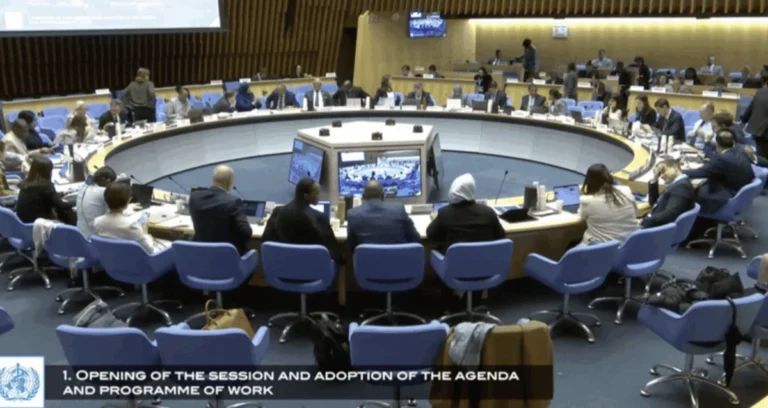
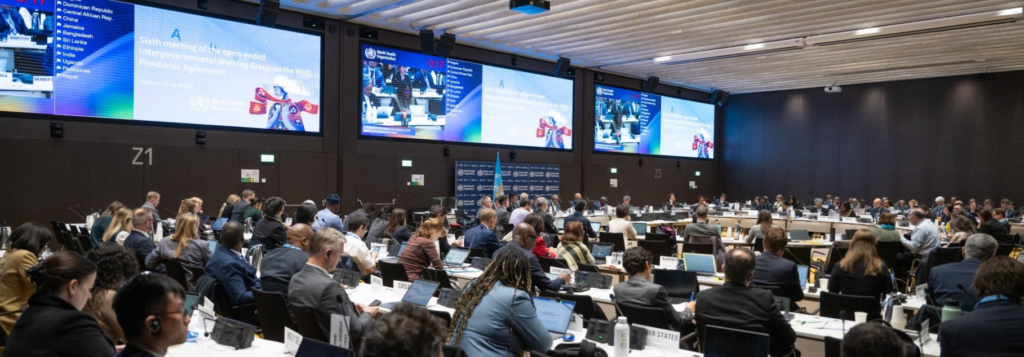
The diplomatic corridors of Geneva have become the primary battleground for the future of global health security as negotiators grapple with the most contentious element of the World Health Organization’s (WHO) proposed Pandemic Agreement: the Pathogen Access and Benefit-Sharing (PABS) system. In recent sessions of the Intergovernmental Working Group (IGWG), two fundamentally opposing visions were presented by the Africa Group and the European Union, representing a deep-seated divide between the Global South’s demand for equity and the Global North’s emphasis on scientific speed and platform flexibility. These proposals, the Federated Model and the Hybrid Model, aim to codify how dangerous pathogens are shared across borders and, crucially, how the resulting medical benefits—such as vaccines, therapeutics, and diagnostics—are distributed among the international community.
The PABS system is currently structured as a critical annex to the broader Pandemic Agreement, a treaty born from the catastrophic failures of the COVID-19 pandemic. While much of the treaty’s text has seen incremental progress, Article 12, which governs the PABS mechanism, remains the final "stumbling block" that could either cement a new era of global cooperation or leave the world vulnerable to the same "vaccine apartheid" that characterized the early 2020s. With the next round of intensive negotiations scheduled for September 14-18, the details of these two models are being scrutinized by member states, pharmaceutical industry representatives, and public health advocates alike.
The Genesis of the PABS Dispute: Context and Chronology
To understand the current impasse, one must look back at the timeline of the Pandemic Agreement’s development. In December 2021, during a rare Special Session of the World Health Assembly, WHO member states agreed to draft and negotiate a convention, agreement, or other international instrument to strengthen pandemic prevention, preparedness, and response. The initial goal was to adopt the treaty by the 77th World Health Assembly in May 2024. However, as the deadline approached, it became clear that the technicalities of pathogen sharing were too complex to resolve in the allotted time.
The core of the dispute lies in the concept of "Digital Sequence Information" (DSI) and physical pathogen materials. During the COVID-19 pandemic, countries that shared viral data early often found themselves at the back of the queue for the vaccines developed using that very data. This perceived injustice led to the demand for a legally binding "quid pro quo" system. The Africa Group, supported by many low- and middle-income countries (LMICs), insists that access to pathogen data must be inextricably linked to guaranteed benefits. Conversely, high-income countries, home to major pharmaceutical hubs, argue that overly restrictive access could delay the scientific research necessary to stop a fast-moving virus.

The Africa Group’s Federated Model: Sovereignty and Guaranteed Equity
The Federated Model, championed by the Africa Group, is built on the bedrock of national sovereignty. Under this proposal, pathogen materials and their genetic data never leave the ultimate control of the originating country. Instead of a centralized global database where data is uploaded and potentially "lost" to the original provider, the Federated Model utilizes a "catalogue" system.
In this framework, every user—whether a sovereign state, a private manufacturer, or a research institution—must register with a central WHO-managed catalogue to receive a single identifying credential. When a researcher seeks data on a specific pathogen, the catalogue routes the request to a "holding node," which is either a national or regional data center. The data stays at the sovereign node; the analysis is performed in situ, and only the results are exported to the user. This "analysis in place" approach ensures that custody of the genetic resource is never surrendered.
Crucially, the Federated Model includes a mandatory "benefit-sharing" trigger. To gain access to the information, manufacturers must sign a Data Access Agreement (DAA) with the country node and a legally binding benefit-sharing contract with the WHO. The African proposal is specific about the numbers: it requires manufacturers to set aside 20% of their pandemic-related production for global use—10% as a free donation to the WHO and 10% at non-profit, "at-cost" prices. This model places the governance of the PABS system under the Conference of the Parties (COP), ensuring that WHO member states, rather than individual entities or the WHO Secretariat alone, set the rules.
Responding to criticisms from the European Union that such a centralized and sovereign-heavy system would be slow, proponents of the Federated Model point to the European Genomic Data Infrastructure (GDI) project. This existing system operates across 22 countries using a similar federated architecture and can reportedly process complex queries in 5 to 30 minutes.
The European Union’s Hybrid Model: Flexibility and Non-Exclusivity
In stark contrast, the European Union’s Hybrid Model starts from a premise of "non-exclusivity." The EU argues that the global scientific community already relies on a diverse ecosystem of platforms for sharing sequence information, such as GenBank (which offers unrestricted access), GISAID (a semi-closed platform), and newer models like Pathoplexus. The Hybrid Model seeks to integrate these existing platforms into the PABS system rather than replacing them with a new, sovereign-controlled infrastructure.
Under the EU’s proposal, while physical pathogen materials would be shared via the WHO-Coordinated Laboratory Network (WCLN), genetic sequence data could continue to flow through various established channels. The model envisages "legally binding obligations," but these would be tiered based on the category of the user and the severity of the health threat (distinguishing between standard research, a Public Health Emergency of International Concern, and a full-scale pandemic).
Proponents of this model, such as Alexandra Finch of the Panel for a Global Public Health Convention, argue that a hybrid approach reflects the reality of how scientists work during outbreaks. Citing recent Ebola and hantavirus outbreaks, Finch noted that researchers often use multiple platforms simultaneously. The Hybrid Model aims to draw in a wider pool of benefits by being less restrictive, though critics argue this lack of restriction makes it nearly impossible to track how data is used and, consequently, impossible to enforce benefit-sharing.
Critical Perspectives: The Third World Network and KEI
The divide between these models has drawn sharp critiques from civil society and policy experts. Sangeeta Shashikant, a coordinator for the Third World Network, has been vocal in her opposition to the Hybrid Model. According to Shashikant, the EU’s approach "diverges from the mandate" of Article 12 by allowing pathways for sharing pathogen information without strict benefit-sharing conditions. She argues that the Hybrid Model promotes anonymous access, which violates the principle of "equal footing" between those providing the data and those profiting from it. In her view, the Federated Model is the only one that addresses the capacity gaps in developing countries by requiring user registration and explicit acceptance of terms.
On the other hand, Knowledge Ecology International (KEI) has proposed a third path: "delinking" access from equity. KEI argues that linking the two creates a "hostage" situation where pathogens might not be shared because of disputes over benefits, or benefits might not be shared because manufacturers find ways to bypass the PABS data.
KEI suggests that instead of making access conditional on a contract, governments should mandate that any manufacturer seeking to register or sell a pandemic-related product must provide evidence of a separate, legally binding agreement with the WHO. This would move the point of leverage from the "data access" stage to the "market entry" stage. This approach aims to ensure that information flows freely for the sake of science while still securing the 20% product set-aside for the WHO.

Implications for Global Health Security
The stakes of these negotiations extend far beyond legal semantics. The outcome will determine the speed at which the world can identify the next "Pathogen X" and the fairness with which it can respond. If the Federated Model is adopted, it could empower the Global South and create a more transparent, albeit more regulated, system of exchange. However, if the technical hurdles of maintaining sovereign nodes prove too high, it could inadvertently slow down early-warning systems.
If the Hybrid Model prevails, scientific speed may be preserved through existing channels, but the risk of "business as usual"—where wealthy nations monopolize medical countermeasures—remains high. The lack of "persistent identifiers" in some open-access databases makes it difficult to trace a vaccine back to a specific sequence provided by a specific country, potentially rendering benefit-sharing clauses toothless.
WHO Director-General Dr. Tedros Adhanom Ghebreyesus has remained a cautious optimist, emphasizing that the differences between the two models are bridgeable. In a recent statement, he reminded member states that "the next pandemic will not wait." The WHO’s goal is to finalize the PABS annex to allow for the full ratification of the Pandemic Agreement, which would provide a unified legal framework for future emergencies.
As the September talks approach, the international community faces a choice between two different philosophies of global governance. One prioritizes the protection of national resources and guaranteed returns, while the other prioritizes the fluidity of scientific data and the utilization of existing market structures. Finding a "landing zone" between the Federated and Hybrid models will require a level of diplomatic compromise rarely seen in international law, but as the memory of COVID-19 fades, the urgency to codify these rules has never been greater.