The presidential candidate of the Labour Party in the 2023 general elections and former Governor of Anambra State, Peter Obi, has marked his 65th birthday with a significant philanthropic gesture, donating N10 million to St. Raphael’s Hospital in Umueri, Anambra East Local Government Area. Eschewing the traditional fanfare and lavish celebrations often associated with high-profile political figures in Nigeria, Obi utilized the milestone to reiterate his long-standing advocacy for systemic investment in health and education. In a detailed statement released on Sunday, the statesman emphasized that the "twin pillars" of healthcare and education are the only sustainable pathways to lifting Nigeria out of its current socio-economic malaise and securing a prosperous future for the next generation.
A Milestone Defined by Reflection and Philanthropy
For Peter Obi, the attainment of 65 years served as a somber moment for introspection rather than an occasion for merriment. In his commemorative address, he challenged the prevailing culture of grandiosity among Nigeria’s elite, suggesting that the nation’s dire economic circumstances demand a shift in focus toward communal welfare. He noted that at this stage of life, the primary objective of any leader should be to evaluate how their remaining years can be leveraged to serve God and humanity more effectively.
"At sixty-five, birthdays should naturally become moments of deep reflection—moments to look back with gratitude to Almighty God for His abundant graces, examine the journey so far, and ask how the remaining years can be devoted more meaningfully to the service of God and humanity," Obi stated. This sentiment aligns with his consistent public persona, which prioritizes frugality and resource optimization—a philosophy that characterized his eight-year tenure as governor and his recent presidential campaign.
The day’s activities commenced with a Mass of Thanksgiving at a cathedral in Onitsha, where Obi was joined by close family members and a few associates. During the service, he expressed gratitude for divine protection throughout his career in the private sector and his subsequent transition into the volatile arena of Nigerian politics. Following the religious service, Obi proceeded to the rural community of Umueri to visit St. Raphael’s Hospital, a facility that provides critical medical services to underserved populations in the Anambra East region.
Strengthening Rural Healthcare: The N10 Million Intervention
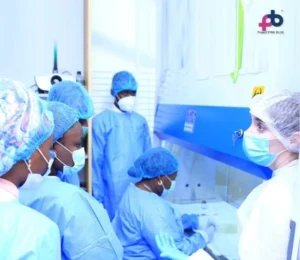
The highlight of the birthday activities was the presentation of a N10 million cheque to the management of St. Raphael’s Hospital. Obi explained that the donation was intended to bolster the facility’s capacity to handle emergency cases, upgrade medical equipment, and offset the costs for indigent patients who struggle to access basic care.
During his tour of the hospital wards, Obi interacted with patients and medical personnel, listening to the challenges faced by healthcare providers in rural settings. He remarked that his visit was a reinforcement of his conviction that leadership must be demonstrated through compassion and tangible support for institutions that serve the grassroots.
"The greatest celebration of life is not what we receive from others, but the lives we can touch positively," Obi stated during the presentation. He further described healthcare and education as the bedrock of any serious nation-building effort, noting that while hospitals are responsible for saving lives today, schools are responsible for preparing the leaders of tomorrow. He argued that supporting these sectors is not merely an act of charity but a strategic "investment in humanity" that yields the highest dividends for the nation.
Contextualizing the "Twin Pillars" of Development
Obi’s emphasis on health and education is not a new rhetorical stance; it is the cornerstone of his political ideology. During his administration as Governor of Anambra State (2006–2014), he gained national recognition for the Anambra Integrated Development Strategy (ANIDS). This framework allowed the state to simultaneously develop multiple sectors, with a heavy emphasis on returning schools to missions and providing direct funding to hospitals.
To understand the urgency behind Obi’s 65th-birthday message, one must look at the current state of Nigeria’s human capital indices. According to recent data from the World Bank and UNESCO:
- Education: Nigeria currently faces an education crisis, with approximately 20 million children out of school, one of the highest figures globally. The literacy rate remains stagnant in several northern states, and the tertiary education sector is frequently disrupted by industrial actions and underfunding.
- Healthcare: The Nigerian healthcare system is grappling with a severe "brain drain" (locally known as the Japa syndrome), where thousands of doctors and nurses emigrate annually to Europe, North America, and the Middle East in search of better pay and working conditions. The doctor-to-patient ratio in Nigeria stands at approximately 1:5,000, far below the World Health Organization (WHO) recommendation of 1:600.
- Poverty: With over 133 million Nigerians living in multidimensional poverty (as per the National Bureau of Statistics), Obi argues that without a healthy and educated workforce, the country cannot achieve the industrial productivity required to reverse its economic decline.
By choosing to fund a hospital instead of hosting a banquet, Obi sought to provide a practical template for how Nigerian leaders can respond to these staggering statistics.

Chronology of Service and the Call for Resource Reallocation
Throughout his career—from his time as the Chairman of Fidelity Bank to his role as a public servant—Obi has consistently urged his associates to redirect gifts intended for him toward social causes. This birthday was no exception. He revealed that he had specifically requested friends and corporate organizations wishing to celebrate him to channel their resources into projects that deliver lasting benefits to society.
This approach has led to a documented timeline of interventions over the years:
- Educational Support: Construction of hostel blocks and science laboratories in various secondary schools across the six geopolitical zones of Nigeria.
- Health Interventions: Periodic donations to missionary hospitals and nursing schools, which Obi views as more efficient managers of resources than many state-run institutions.
- Poverty Alleviation: Direct financial support to small-scale entrepreneurs and artisans through various foundations.
In his Sunday statement, he lamented that despite Nigeria’s vast human and natural resources, millions of citizens continue to grapple with unemployment and limited opportunities. He attributed this paradox to a failure of leadership and a misplacement of priorities, where "elaborate festivities" often take precedence over solving fundamental societal problems.
Reactions and Broader Implications
The news of the donation and Obi’s somber birthday message triggered a wave of reactions across the Nigerian political landscape. On social media, supporters of the "Obidient" movement lauded the move as a masterclass in "leading by example." Many contrasted his actions with the perceived opulence of the current political class, arguing that such gestures are necessary to rebuild public trust in leadership.
Political analysts suggest that Obi’s consistent focus on health and education is a deliberate strategy to maintain his brand as a "disruptor" of the status quo. By highlighting the deficiencies in these sectors, he keeps the conversation focused on governance performance rather than ethnic or religious politics.
Medical professionals at St. Raphael’s Hospital expressed profound gratitude for the donation. A senior administrator at the facility noted that the funds would be immediately deployed to upgrade the maternal health wing, which serves hundreds of pregnant women from Umueri and surrounding agrarian communities. "This is not just money; it is a lifeline for the women and children of this local government," the official stated.
Analysis: The Path Forward for Nigeria
Peter Obi’s 65th birthday message serves as a critique of the "rent-seeking" culture that has historically dominated Nigerian politics. His assertion that healthcare and education are the "twin pillars" of development is supported by global economic trends. Countries like South Korea, Vietnam, and Rwanda, which have seen significant growth in recent decades, did so by prioritizing human capital over raw material exports.
As Nigeria navigates a period of record-high inflation (exceeding 30% in 2024) and a devaluing currency, the call for leaders to demonstrate "compassion and introspection" becomes increasingly relevant. Obi’s argument is that the government cannot expect citizens to make sacrifices while the leadership continues to indulge in "lavish celebrations" and non-essential expenditures.
The N10 million donation to St. Raphael’s Hospital, while significant, is a drop in the ocean compared to the trillions of Naira needed to fix the national healthcare grid. However, its value lies in its symbolic power—a reminder that individual and corporate philanthropy, when directed toward institutional building, can provide immediate relief to the vulnerable while the nation awaits broader structural reforms.
In conclusion, Peter Obi’s 65th birthday was less about the passage of time and more about the urgency of the Nigerian crisis. By choosing the hospital ward over the ballroom, he has reaffirmed his commitment to a vision of Nigeria where the dignity of the human person is the ultimate measure of national success. As he enters his mid-sixties, his message remains clear: Nigeria’s future depends not on the wealth of its soil, but on the health and knowledge of its people.