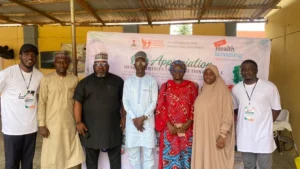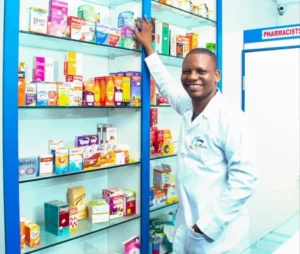
The ancient city of Ibadan, historically a center of academic and medical excellence in Nigeria, played host to a landmark gathering of healthcare professionals, traditional leaders, and industrial giants for the commissioning of the Asiwaju Adebowale Omotosho Pharmacy House. The event, organized by the Pharmaceutical Society of Nigeria (PSN), Oyo State Branch, served as more than just a celebration of architectural achievement; it became a high-powered forum for critical discourse on the future of Nigeria’s pharmaceutical industry. Led by the Olubadan of Ibadanland, Oba Rashidi Adewolu Ladoja, and former PSN President, Pharm. Olumide Akintayo, the stakeholders issued a clarion call for urgent and deliberate policy reforms aimed at bolstering local drug manufacturing and ensuring national medicine security.
The unveiling of the five-storey secretariat, named after the renowned industrialist and founder of Bond Chemical Industries Limited, Pharm. (Asiwaju) Adebowale Omotosho, marks a significant milestone for the PSN in Oyo State. However, the backdrop of the celebration was colored by the harsh realities facing the Nigerian pharmaceutical sector, including a heavy reliance on imports, fluctuating foreign exchange rates, and a challenging infrastructure deficit that continues to stifle the growth of local manufacturers.
A Royal Call for Integration: Traditional Medicine and Scientific Research
In his keynote remarks, the Olubadan of Ibadanland, Oba Rashidi Adewolu Ladoja, challenged the pharmaceutical community to look inward and explore the untapped potential of Nigeria’s indigenous flora. The monarch, a seasoned statesman and former governor, noted that while orthodox medicine has made monumental strides, the roots of healing in Africa lie in traditional remedies that have sustained populations for centuries.
Oba Ladoja urged pharmacists to bridge the gap between traditional medicine practitioners and the scientific community. He argued that many local herbs and roots possess potent medicinal properties that, if subjected to rigorous scientific validation, standardization, and clinical trials, could provide affordable and effective alternatives to expensive imported drugs.
“If you know that everything you have here is not enough, please have an open mind to embrace traditional medicine,” the Olubadan stated. He emphasized that the goal is not to replace scientific medicine but to enrich it. By documenting indigenous knowledge and protecting intellectual property rights through proper legal frameworks, Nigeria could create a unique pharmaceutical niche that leverages its biodiversity. This collaboration, he suggested, is a necessary step toward achieving true self-sufficiency in healthcare delivery.
The Crisis of Import Dependency and Medicine Security
The call for policy reform was further amplified by the Chairman of PSN Oyo State, Pharm. (Col.) Victor Segun Ajanaku (Rtd). In his address, Ajanaku highlighted the precarious nature of Nigeria’s medicine security. Currently, Nigeria imports approximately 70 percent of its pharmaceutical needs, a figure that leaves the country vulnerable to global supply chain disruptions, as seen during the COVID-19 pandemic.
Ajanaku lamented that despite various government pronouncements regarding waivers and incentives for the pharmaceutical sector, the "implementation gap" remains a formidable barrier. He pointed out that the operating environment for both manufacturers and importers has become increasingly hostile. The volatility of the Naira against major foreign currencies has made the importation of Active Pharmaceutical Ingredients (APIs) and machinery prohibitively expensive.
“Government may announce waivers and incentives, but implementation remains the issue,” Ajanaku noted. He explained that many pharmaceutical operators are struggling to survive because they cannot access foreign exchange at sustainable rates. He reiterated the PSN’s readiness to partner with academic researchers and government agencies to validate indigenous medicinal products, provided the government creates an enabling environment that rewards such innovation.
Infrastructure and Energy: The Economic Bottlenecks
Contributing to the discourse, Pharm. Olumide Akintayo, a former National President of the PSN and a vocal advocate for professional standards, provided a sobering analysis of the industrial landscape. Akintayo argued that Nigeria’s dream of becoming a pharmaceutical hub would remain elusive as long as the cost of production remains uncompetitive.
He identified the high cost of energy as a primary deterrent to local manufacturing. In an environment where the national grid is unreliable, manufacturers are forced to rely on diesel-powered generators, which exponentially increases the cost per unit of locally produced medicine. "You cannot manufacture with diesel and remain competitive globally," Akintayo asserted.
Beyond energy, he pointed to the lack of affordable financing and the absence of specialized industrial parks for pharmaceutical production. He noted that in countries like India and China, the government provides massive subsidies for infrastructure, research and development, and export incentives. For Nigeria to replicate this success, Akintayo suggested that the government must move beyond rhetoric and establish concrete policies that address high interest rates and the high cost of doing business. He warned that without these reforms, the country would continue to experience "medicine poverty," where essential drugs are available but completely unaffordable for the average citizen.

The Donor’s Perspective: Patience in Industrial Pharmacy
The man of the hour, Pharm. (Asiwaju) Adebowale Omotosho, whose name the new secretariat bears, shared insights from his decades-long journey from community pharmacy to industrial manufacturing. As the founder of Bond Chemical Industries, Omotosho is a living testament to the potential of local production, yet he was quick to remind the audience that manufacturing is not for those seeking quick financial returns.
Omotosho emphasized that industrial pharmacy requires immense patience, long-term capital investment, and a "thick skin" to navigate the regulatory and economic hurdles in Nigeria. He noted that it often takes years for a locally manufactured product to gain market trust and acceptance, especially when competing against established multinational brands.
“Whatever I have achieved financially came from pharmacy,” Omotosho said, explaining his motivation for donating the building. “Supporting the profession is a responsibility I gladly embrace.” He urged the younger generation of pharmacists to consider manufacturing not just as a business, but as a national service. However, he echoed the sentiments of other speakers, stating that the government must protect local investors through favorable tariffs and by prioritizing local products in public procurement processes.
A Monument of Progress: The New PSN House
The Asiwaju Adebowale Omotosho Pharmacy House is more than just an office space; it is a five-storey edifice designed to serve as a hub for professional development, research coordination, and administrative excellence. The commissioning of the building was attended by a galaxy of dignitaries, including the President of the Pharmaceutical Society of Nigeria, Pharm. Ayuba Tanko Ibrahim, and representatives from various state branches including Lagos, Osun, and Kwara.
Stakeholders at the event described the project as a symbol of the "new era" of pharmacy in Oyo State. The facility is expected to house a library, conference rooms, and offices that will facilitate better collaboration between community pharmacists, hospital pharmacists, and those in academia. The completion of the project, which was funded through the generosity of Asiwaju Omotosho and the contributions of members, is seen as a sign of the internal strength and unity of the profession in the region.
Analysis: The Path to 70 Percent Local Production
The discussions at the commissioning reflect a long-standing goal of the Nigerian National Drug Policy, which aims to achieve 70 percent local production of essential medicines. Despite this policy being in place for years, the target remains a distant reality.
A fact-based analysis of the sector reveals several critical areas requiring intervention:
- Petrochemical Industry Integration: Nigeria’s lack of a functional petrochemical industry means that nearly all raw materials for drug production (APIs and excipients) must be imported. Linking pharmaceutical growth to the development of the petrochemical sector is essential for long-term sustainability.
- Regulatory Strengthening: While the National Agency for Food and Drug Administration and Control (NAFDAC) has made strides in achieving WHO Maturity Level 3, further support is needed to help local manufacturers attain World Health Organization (WHO) Pre-qualification, which would allow them to compete in international tenders.
- Special Intervention Funds: The Central Bank of Nigeria (CBN) had previously introduced a N100 billion healthcare intervention fund during the pandemic. Stakeholders are calling for more permanent, low-interest revolving funds specifically for pharmaceutical infrastructure.
- Traditional Medicine Framework: As suggested by the Olubadan, a formal legal and scientific framework for the commercialization of herbal medicine could reduce the import bill for certain therapeutic classes.
Implications for Healthcare in Nigeria
The successful implementation of the reforms called for at the Ibadan event would have far-reaching implications for the Nigerian populace. Increased local production would lead to more affordable prices for life-saving medications, particularly for chronic conditions like hypertension and diabetes. It would also create thousands of jobs for pharmacy graduates, chemists, and engineers, contributing to the nation’s GDP.
Furthermore, a robust local manufacturing sector is a matter of national security. In the event of another global health crisis, a country that cannot produce its own basic medicines is at the mercy of international politics and supply hoarding.
As the ceremony concluded, the consensus was clear: the commissioning of the Asiwaju Adebowale Omotosho Pharmacy House is a proud moment for Oyo State pharmacists, but it also serves as a reminder of the work that remains. The "Pharmacy House" stands as a beacon of what is possible when professional dedication meets philanthropic support, but the broader dream of a self-sufficient Nigerian pharmaceutical industry will require a corresponding commitment from the nation’s policymakers.
The event ended with a tour of the new facility, led by Pharm. Babatunde Olayiwola, Chairman of the Commissioning Committee, as guests expressed hope that the calls for reform made within its walls would resonate in the corridors of power in Abuja.