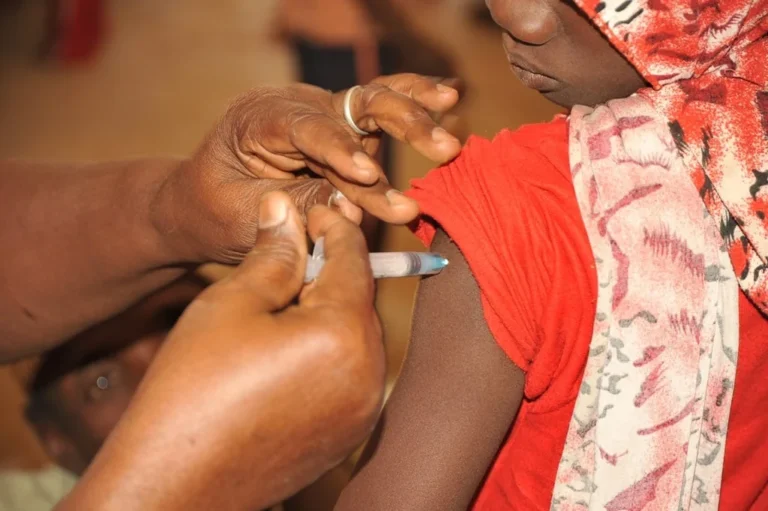
The World Health Organization (WHO) has issued a high-level call to action for African governments to drastically strengthen their national hepatitis programs by expanding access to vaccination, diagnostic testing, and life-saving treatments. This urgent appeal comes ahead of World Hepatitis Day, observed annually on July 28, as the global health body warns that millions of individuals across the African continent continue to be excluded from essential medical services despite the existence of highly effective and affordable interventions. In a comprehensive statement, the WHO Regional Director for Africa, Mohamed Janabi, underscored that while significant strides have been made in reducing the rate of new infections, viral hepatitis remains a formidable public health challenge that requires renewed political will and financial investment.
According to the WHO, the African region has seen a notable 25 percent decline in new hepatitis B infections between 2015 and 2024, a statistic that reflects the gradual success of childhood immunization programs. However, this progress is overshadowed by the reality that many people already living with the virus remain undiagnosed until the disease has progressed to advanced stages. Mr. Janabi emphasized that no individual should succumb to a disease that is inherently preventable and, in many instances, treatable or curable. The current gaps in the healthcare chain—from initial awareness to final treatment—result in thousands of preventable deaths each year across the 47 member states of the WHO African Region.
The Global and Regional Burden of Viral Hepatitis
Viral hepatitis is an inflammation of the liver caused by one of five main hepatitis viruses: A, B, C, D, and E. While all cause liver disease, they vary in terms of transmission, severity, and geographical distribution. In Africa, hepatitis B and C are the most significant threats, often leading to chronic infection and, eventually, liver cirrhosis or hepatocellular carcinoma (liver cancer). Globally, an estimated 354 million people live with chronic hepatitis B or C. The African region bears a disproportionate share of this burden, with over 90 million people currently living with the virus, accounting for approximately 26 percent of the global total.
The disparity in healthcare access is particularly stark in sub-Saharan Africa. While high-income nations have successfully integrated hepatitis screening into routine check-ups, many African nations still grapple with "silent" epidemics. Because chronic hepatitis often presents no symptoms for decades, it is frequently referred to as a silent killer. By the time symptoms like jaundice, extreme fatigue, or abdominal swelling appear, the liver is often extensively damaged. The WHO’s latest data suggests that the lack of early detection is the primary driver of the high mortality rates associated with the disease in the region.
Barriers to Effective Treatment and Prevention
The challenge facing the continent is no longer a matter of scientific discovery but one of logistics, equity, and resource allocation. The hepatitis B vaccine, which was introduced in the early 1990s, is considered one of the most effective vaccines in medical history, offering up to 95 percent protection against infection. Furthermore, modern medicine has made hepatitis C entirely curable through short courses of oral antiviral medications. For those with chronic hepatitis B, lifelong treatment can effectively suppress the virus and prevent the onset of liver failure.

Despite these tools, several barriers prevent their widespread adoption. Mr. Janabi pointed to the high cost of diagnostic tools, such as viral load testing, which remains prohibitively expensive for many patients in underserved communities. Additionally, there is a persistent lack of public awareness regarding the modes of transmission and the necessity of testing. Social stigma also plays a detrimental role; many individuals fear being ostracized if their status is known, leading them to avoid healthcare facilities altogether.
Systemic issues within healthcare infrastructure also contribute to the crisis. In many African countries, hepatitis services are centralized in urban tertiary hospitals, making them inaccessible to the rural poor. The WHO advocates for the decentralization of these services, urging governments to integrate hepatitis prevention and testing into primary healthcare centers. This move would not only make services more affordable but would also alleviate the pressure on major hospitals by managing the disease at the community level.
Nigeria’s Critical Standing in the Hepatitis Crisis
Nigeria represents one of the most significant battlegrounds in the fight against viral hepatitis. According to WHO estimates, the country is home to more than 20 million people living with hepatitis B, C, or both. This makes Nigeria one of the most affected nations globally. Data derived from the 2018 Nigeria HIV/AIDS Indicator and Impact Survey (NAIIS) revealed a hepatitis B prevalence of 8.1 percent and a hepatitis C prevalence of 1.1 percent among adults aged 15 to 64.
Perhaps more alarming is the fact that over 80 percent of Nigerians living with the virus are unaware of their status. This "awareness gap" means that millions of people are unknowingly transmitting the virus and are not seeking the medical intervention necessary to prevent liver failure. The Nigerian government has made efforts to address this through the National Viral Hepatitis Control Programme, but experts argue that the pace of implementation has been hindered by inadequate funding and a lack of domestic manufacturing for essential drugs and diagnostic kits.
In recent years, health advocates in Nigeria have called for the inclusion of hepatitis treatment in the National Health Insurance Authority (NHIA) schemes. Currently, most patients pay out-of-pocket for their medications, which can cost hundreds of thousands of Naira annually—a sum far beyond the reach of the average citizen. Without social health insurance coverage, the goal of eliminating hepatitis by 2030 remains an uphill task for Africa’s most populous nation.
A Chronology of Global and Regional Milestones
The fight against hepatitis has evolved over several decades, marked by scientific breakthroughs and global policy shifts. Understanding this timeline provides context for the current urgency expressed by the WHO:

- 1965: Dr. Baruch Blumberg discovers the Hepatitis B virus (HBV), later winning the Nobel Prize for his work.
- 1981: The first hepatitis B vaccine is approved, followed by a more advanced recombinant version in 1986.
- 1989: The Hepatitis C virus (HCV) is officially identified, allowing for the development of screening tests for the blood supply.
- 1992: The WHO recommends that all children receive the hepatitis B vaccine as part of their routine immunization schedules.
- 2010: The World Health Assembly designates July 28 as World Hepatitis Day to honor Dr. Blumberg’s birthday and raise global awareness.
- 2016: The World Health Assembly adopts the first Global Health Sector Strategy on Viral Hepatitis, aiming for elimination as a public health threat by 2030.
- 2021: The WHO releases the first-ever global guidance for the triple elimination of mother-to-child transmission of HIV, syphilis, and hepatitis B.
- 2024: Regional data shows a 25 percent decline in new infections in Africa, yet mortality rates remain stable or rising due to the aging population of untreated chronic carriers.
Economic and Social Implications of Inaction
The failure to address the hepatitis epidemic has profound economic consequences for African nations. Chronic liver disease typically affects individuals in their most productive years, leading to loss of income, increased household poverty, and a reduction in the national labor force. The high cost of treating advanced liver cancer or performing liver transplants—which are rarely available in sub-Saharan Africa—places an immense burden on both families and state health budgets.
Furthermore, the social impact cannot be ignored. The transmission of hepatitis B from mother to child during childbirth remains a primary driver of the epidemic in Africa. When children are infected at birth, they have a 90 percent chance of developing chronic infection, compared to less than 10 percent for those infected as adults. This creates a cycle of disease that spans generations. Expanding the "birth dose" of the hepatitis B vaccine—given within 24 hours of delivery—is a critical intervention that many African countries have yet to fully implement at scale.
The 2030 Elimination Goal: "Let’s Break It Down"
The theme for World Hepatitis Day 2024, "Hepatitis: Let’s break it down," serves as a call to dismantle the various barriers—financial, social, and systemic—that impede progress. The WHO’s global target for 2030 includes a 90 percent reduction in new chronic infections and a 65 percent reduction in mortality. To achieve this in Africa, the WHO emphasizes a "person-centered" approach rather than a "disease-centered" one. This involves integrating hepatitis care into maternal and child health services, HIV clinics, and harm reduction programs for people who inject drugs.
Mr. Janabi concluded his statement by reaffirming the WHO’s commitment to providing technical and financial guidance to member states. He called on development partners and international donors to sustain their support, noting that the investment in hepatitis elimination yields high returns by preventing future healthcare costs and saving lives. "Eliminating viral hepatitis is within our reach," Janabi stated, "but only if proven interventions are available to everyone, regardless of their location or socioeconomic status. Together, we can ensure that viral hepatitis is no longer a barrier to the health and prosperity of the people of Africa."
As July 28 approaches, health ministries across the continent are expected to launch localized campaigns, offer free testing clinics, and engage in public education to bring the continent one step closer to a hepatitis-free future. The consensus among the international health community is clear: the tools exist, the targets are set, and the only remaining requirement is the collective will to implement these solutions at every level of society.