Choosing your first electric bike can be an exhilarating yet daunting prospect, akin to venturing into a burgeoning marketplace brimming with innovation and diverse options. The sheer volume of available models, each boasting a unique set of features and specifications, can quickly overwhelm even the most enthusiastic beginner. As the electric mobility sector continues its rapid expansion, understanding the intrinsic value of specific features, rather than being swayed by superficial appeal, is paramount before committing to a purchase. The wrong electric bike, ill-suited to an individual’s unique requirements, can profoundly impact comfort, diminish performance, and ultimately lead to long-term dissatisfaction. Therefore, a meticulous evaluation of factors such as motor power, battery range, intended riding style, frame design, and crucial safety features is not merely advisable, but essential for a fulfilling e-biking experience. This comprehensive guide aims to demystify the decision-making process, equipping prospective riders with the knowledge to select an electric bike that harmonizes with their lifestyle, whether for daily commutes, fitness pursuits, recreational excursions, or extended touring.
The Evolving Electric Bicycle Market: A Snapshot
The global electric bicycle market has witnessed exponential growth in recent years, driven by increasing environmental consciousness, a desire for sustainable transportation solutions, and the inherent convenience offered by electric assistance. Projections from various market research firms consistently indicate a strong upward trajectory, with market values anticipated to reach hundreds of billions of dollars within the next decade. This surge in popularity has led to an unprecedented diversification of e-bike types and functionalities. From sleek urban commuters designed for efficient city navigation to rugged mountain e-bikes built for challenging off-road adventures, and compact folding e-bikes catering to space-constrained urban dwellers, the options are vast. Furthermore, technological advancements in battery technology, motor efficiency, and integrated smart features are continuously redefining what an electric bike can offer. This dynamic landscape underscores the importance of a well-informed purchasing decision.
A Pragmatic Approach to E-Bike Selection: Key Considerations
Before embarking on the journey of selecting a first electric bike, a systematic approach is crucial. This involves a deep dive into personal riding habits, environmental conditions, and long-term expectations.
1. Defining Your Riding Purpose: The Foundation of Choice
The most critical first step in selecting the right electric bike is to honestly assess your primary intended use. While aesthetics and initial price tags might be tempting focal points for novices, the true determinant of a suitable e-bike lies in its alignment with your daily riding requirements. A bicycle engineered for the rigors of urban commuting will possess a distinct set of features compared to one designed for leisurely weekend exploration or demanding off-road trails.
For daily commuters, the emphasis often falls on comfort, unwavering reliability, sufficient battery range to cover the daily mileage, and practical design elements that facilitate urban navigation. Maximum speed, while a consideration, often takes a backseat to these practicalities. Riders who view their e-bike as an extension of their fitness routine may prioritize adjustable pedal assistance levels, allowing them to meticulously control the intensity of their workouts. This granular control enables them to fine-tune the level of effort required, transforming each ride into a tailored exercise session.
For those envisioning longer journeys, weekend getaways, or extended touring, battery capacity, overall durability, and sustained riding comfort become paramount. The ability to cover significant distances without frequent recharges is a non-negotiable. Similarly, riders who anticipate tackling hilly terrain or navigating uneven surfaces will undoubtedly benefit from a more potent motor system and advanced suspension capabilities designed to absorb shocks and provide a smoother ride. A clear understanding of your riding purpose serves as an invaluable filter, helping you bypass superfluous features and zero in on an electric bike that genuinely addresses your needs, thereby maximizing your satisfaction and the bike’s utility over time.
2. Categorizing Your E-Bike: Matching Type to Terrain
Electric bikes are not monolithic; they are segmented into distinct categories, each meticulously engineered for specific riding scenarios. Familiarizing yourself with these classifications is instrumental for beginners in identifying a model that seamlessly integrates with their lifestyle and operating environment.
- Commuter E-Bikes: These are the workhorses of the electric bike world, built with the everyday journey in mind. They prioritize comfort, efficiency, and practical features conducive to urban environments, such as integrated lights, fenders, and often a rear rack for cargo. Their design typically focuses on an upright riding position for better visibility and comfort over longer periods.
- Mountain E-Bikes (eMTBs): Designed for the thrill of off-road exploration, eMTBs feature robust frames, powerful suspension systems (both front and rear, or hardtail), and knobby tires for superior traction on dirt, gravel, and rocky trails. Their motors are typically tuned for torque, providing ample power for steep ascents.
- Folding E-Bikes: The epitome of portability, these bikes are ideal for riders with limited storage space, such as apartment dwellers or those who need to combine cycling with public transportation. Their ability to fold compactly allows for easy storage in car trunks, under office desks, or on trains.
- Fat-Tire E-Bikes: Characterized by their exceptionally wide tires, these bikes offer unparalleled stability and traction on soft or loose surfaces like sand, snow, and gravel. They provide a cushioned ride and can navigate terrains that would challenge conventional bicycles.
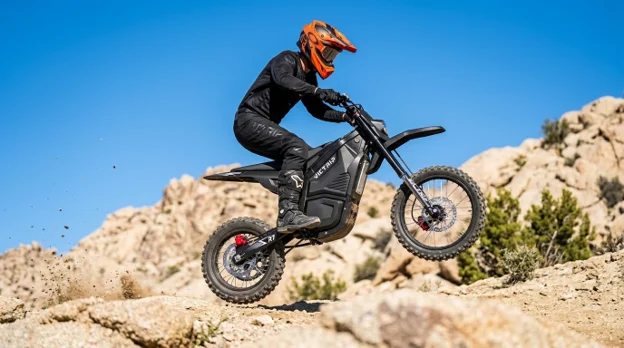
- Electric Dirt Bikes: For more aggressive off-road riding and recreational trail use in designated areas, electric dirt bikes offer performance characteristics akin to their gasoline-powered counterparts but with the benefits of electric power. These are typically designed for closed courses or private land and are not street-legal in most jurisdictions.
The selection of the appropriate e-bike type is a fundamental decision that directly influences performance, comfort, and overall suitability for your intended use.
3. Motor Mastery: Understanding Power and Performance
The heart of any electric bike is its motor, which dictates acceleration, hill-climbing prowess, and the overall responsiveness of the ride. A fundamental understanding of motor types is crucial for beginners. The two primary motor configurations are hub motors and mid-drive motors.
- Hub Motors: These motors are integrated directly into the hub of either the front or rear wheel. They are generally simpler in design, more cost-effective, and commonly found on commuter and entry-level e-bikes. Hub motors offer reliable assistance, particularly on flat terrain and for straightforward transportation needs. They are straightforward to maintain and replace.
- Mid-Drive Motors: Positioned in the crankset area of the bike, mid-drive motors transmit power through the bike’s drivetrain (chain and gears). This configuration offers several advantages, including better weight distribution for improved balance, superior hill-climbing ability due to their ability to leverage the bike’s gears, and a more natural riding feel. They are often favored by riders seeking enhanced performance across varied terrains and for more demanding riding styles.
Motor power is typically measured in watts (W), indicating the motor’s continuous output. Torque, measured in Newton-meters (Nm), quantifies the motor’s rotational force, which is particularly important for acceleration and climbing steep gradients. While higher wattage might seem appealing, it’s not always the definitive factor. The ideal motor power and torque rating depend heavily on your typical routes, the distances you intend to cover, and your personal performance expectations. For instance, a commuter might be well-served by a 250W-500W motor, while an off-road enthusiast might require 750W or more, subject to local regulations.
4. Battery Brilliance: Capacity and Real-World Range
The battery is the lifeblood of an electric bike, determining its operational duration on a single charge. While advertised range figures can be impressive, it is crucial to understand that real-world performance is influenced by a multitude of variables. These include riding speed, the nature of the terrain (flat versus hilly), the rider’s weight, prevailing weather conditions (wind resistance, temperature), and, significantly, the level of pedal assistance selected.
Electric bike batteries are rated in watt-hours (Wh), a metric that represents their energy storage capacity. A higher Wh rating generally translates to a longer potential range. Most contemporary e-bikes utilize lithium-ion batteries, renowned for their favorable balance of energy density, weight, durability, and lifespan. Responsible charging habits, such as avoiding complete depletion of the battery and storing it at moderate temperatures, can significantly prolong its operational life.
When comparing battery options, it is prudent to select a capacity that comfortably accommodates your typical riding distances with a buffer for unexpected detours or longer rides. Relying solely on maximum range claims can lead to range anxiety and disappointment. A carefully chosen battery will ensure consistent reliability and convenience for your daily use. For example, a daily commute of 10 miles round trip might comfortably be handled by a 300-400Wh battery, while longer recreational rides or commuting in hilly areas might necessitate a 500Wh or larger capacity.
5. Frame Fundamentals: Design and Riding Comfort
Comfort is a non-negotiable aspect of any bicycle, and for electric bikes, it plays an equally vital role in ensuring rider satisfaction. A powerful motor and a long-range battery can be rendered moot if the bike’s frame size, riding posture, or overall design is ill-suited to your body and preferred riding style.
The material used in the frame construction significantly impacts the bike’s weight, robustness, and handling characteristics. Aluminum alloy frames are prevalent due to their excellent strength-to-weight ratio, offering a practical balance for both performance and maneuverability. Crucially, selecting the correct frame size is paramount. A properly fitted bike enhances rider control, minimizes physical strain, and transforms even lengthy rides into more enjoyable experiences. Most manufacturers provide detailed sizing charts based on rider height.
Beyond the frame itself, numerous comfort-enhancing features can elevate the riding experience. Adjustable handlebars allow for customization of reach and angle, catering to different rider anatomies and preferences. Ergonomic saddles are designed to distribute pressure more evenly, reducing discomfort on longer rides. Suspension systems, particularly front suspension forks, are invaluable for absorbing shocks and vibrations from uneven road surfaces, smoothing out the ride considerably. More advanced suspension setups, found on some eMTBs, can offer a plush and controlled experience even on the most challenging terrain. Consider where and how frequently you intend to ride; a comfortable electric bike is far more likely to become an integral part of your daily routine.
6. Safety First: Braking Systems and Essential Features
Safety must be a paramount consideration when selecting any bicycle, and with electric bikes capable of achieving higher speeds than their conventional counterparts, a reliable braking system is absolutely essential for maintaining control and ensuring effective stopping power.
The vast majority of electric bikes are equipped with disc brakes, which offer superior stopping performance across a wider range of conditions, including wet and muddy environments, compared to rim brakes. There are two main types of disc brakes:
- Mechanical Disc Brakes: These are operated by a cable, similar to traditional caliper brakes. They are generally found on more affordable models and offer adequate stopping power for most urban riding.
- Hydraulic Disc Brakes: These utilize brake fluid to transmit force from the lever to the caliper. They generally provide smoother operation, significantly stronger stopping power, and more precise modulation (control over braking force), making them the preferred choice for performance and safety.
Beyond the braking system, riders should also scrutinize other safety-enhancing features. Integrated lights (front and rear) improve visibility, especially during dawn, dusk, or nighttime riding. Reflectors enhance conspicuity from various angles. High-quality tires with good tread patterns contribute to stability and traction. Clear, easy-to-read displays provide essential information like speed, battery level, and assistance mode, allowing riders to stay informed without distraction. The selection of tires should also align with your typical riding environment; specific tread patterns can enhance grip on pavement, gravel, or trails, further contributing to overall safety and confidence.
7. Quality and Reliability: The Cornerstone of Longevity
The build quality and the reliability of components are critical indicators of an electric bike’s long-term performance and value. A thorough evaluation should encompass the frame, drivetrain (gears, chain, derailleurs), wheels, tires, suspension components, battery connections, and the intricate electrical system.
A robust frame and high-quality, dependable components translate into fewer maintenance headaches and a greater return on investment over the lifespan of the bike. The electrical system, comprising the battery, motor, controller, and display, functions as an integrated unit. Well-engineered electrical components are crucial for smooth operation, consistent power delivery, and overall system reliability. Brands that prioritize robust electrical integration often deliver a more refined and dependable riding experience.
As the electric mobility market matures, consumers are increasingly gravitating towards manufacturers that demonstrate a commitment to practical design, durable components, and genuine everyday usability. Companies like VICTRIP Ebike, for instance, are noted for their efforts in developing electric bike solutions that emphasize performance, rider comfort, and a keen understanding of user needs. Nevertheless, prospective buyers should always conduct their own comparisons of specifications, features, and reported reliability against their personal requirements before making a final commitment.
8. Post-Purchase Assurance: Warranty, Support, and Parts
The purchase of an electric bike represents a significant investment, and understanding the manufacturer’s warranty, customer support infrastructure, and the availability of replacement parts is vital for long-term peace of mind. A comprehensive warranty can safeguard against unforeseen issues with critical components such as the motor, battery, controller, and other electrical systems.
Before finalizing a purchase, meticulously review the warranty coverage, its duration, and any specific terms and conditions. Battery support is particularly important, as battery replacement can represent one of the most substantial future expenses associated with e-bike ownership. Understanding the warranty on the battery, its expected lifespan under normal use, and the cost of replacement is a crucial financial consideration.
Furthermore, the availability of replacement parts is a practical concern that beginners should not overlook. Even the highest-quality electric bike may eventually require repairs or component replacements. Easy access to readily available parts and responsive customer service can significantly streamline the maintenance process and minimize downtime, ensuring you can get back to riding quickly. Opting for a brand with a reputation for dependable after-sales support instills greater confidence and contributes to a smoother ownership experience throughout the e-bike’s service life.
9. Understanding Maintenance: Keeping Your E-Bike in Top Shape
Regular and appropriate maintenance is the key to ensuring your electric bike remains safe, reliable, and operates at peak efficiency throughout its lifespan. While e-bikes are generally designed for ease of care, understanding basic maintenance practices is essential for protecting your investment and maximizing its longevity.
Battery care is of paramount importance. Adhering to proper charging protocols, avoiding exposure to extreme temperatures (both hot and cold), and storing the battery correctly when not in use can significantly preserve its performance and lifespan. Riders should also make it a habit to regularly check tire pressure. Properly inflated tires not only enhance riding comfort and handling but also improve energy efficiency, allowing you to travel further on a single charge.
Brake inspections are non-negotiable for safety, especially given the higher speeds achievable with electric assistance. Periodically checking brake pads for wear, cleaning brake components, and inspecting electrical connections related to the braking system can preempt potential problems and ensure reliable stopping power when you need it most. Implementing simple, consistent maintenance routines can demonstrably improve the bike’s durability, extend its operational life, and contribute to a consistently smoother and more enjoyable riding experience.
10. Value Proposition: Price Versus Long-Term Worth
When embarking on the purchase of your first electric bike, it is a common pitfall to fixate solely on the initial purchase price. While a lower upfront cost may seem appealing, a comprehensive assessment must extend to the long-term ownership costs. These can encompass routine maintenance, the acquisition of necessary accessories (helmets, locks, lights), the potential need for replacement parts, and, notably, the eventual cost of battery replacement.
A bicycle equipped with higher-quality components might command a higher initial price but often delivers superior reliability, enhanced durability, and more consistent performance over time. The lifespan and eventual replacement cost of the battery are particularly significant factors, as this can become a substantial expense after several years of dedicated use.
The ideal electric bike is not necessarily the cheapest or the most expensive option available. Instead, the optimal choice is a model that strikes the right equilibrium between comfort, performance, durability, and features, all meticulously tailored to your specific riding needs. A thoughtful and thorough comparison process undertaken before purchase can lead to a more satisfying ownership experience and a greater overall return on your investment.
Common Missteps by First-Time Buyers
Many individuals new to the world of electric bikes inadvertently make common mistakes that can diminish their overall riding experience. A frequent oversight is prioritizing a bike’s aesthetic appeal over its functional attributes, such as motor performance, battery capacity, and ergonomic comfort. While a stylish design is certainly a bonus, the bicycle must fundamentally align with practical requirements.
Another prevalent error is neglecting the quality and long-term implications of the battery, focusing instead on headline-grabbing range figures. Battery reliability, proper charging practices, and its performance over multiple charge cycles are equally, if not more, important. Selecting an incorrectly sized bike is also a common issue, leading to discomfort, reduced control, and a less enjoyable experience, particularly on longer rides.
Furthermore, some buyers overlook the crucial step of verifying warranty coverage and understanding the manufacturer’s customer support provisions before making a purchase. Familiarizing oneself with these details beforehand can prevent unexpected repair expenses and foster greater confidence in the ownership experience. Investing time in thorough research across these areas empowers beginners to make a more informed and ultimately more satisfying decision.
Conclusion: The Informed E-Bike Journey
The acquisition of one’s inaugural electric bike is a process that warrants diligent research and careful consideration. The ultimate choice hinges on a confluence of personal riding aspirations, the specific environmental context in which the bike will be used, and one’s overarching expectations. Factors such as motor performance, battery range, riding comfort, integrated safety features, overall build quality, and projected long-term costs all play a pivotal role in identifying the most suitable model.
Rather than making a decision based solely on superficial price points or aesthetic trends, it is imperative to contemplate the intended utility of the electric bike and which features will deliver the most enduring value. A judiciously selected e-bike has the potential to serve as a reliable mode of transportation, a source of enjoyable recreation, and a provider of long-term satisfaction when it authentically aligns with an individual’s lifestyle.
By thoroughly understanding these essential considerations prior to making a purchase, novice riders can approach the selection process with confidence, ultimately choosing an electric bike that offers superior performance, enhanced comfort, and a more rewarding ownership experience. Exploring reputable manufacturers and comparing their offerings can further illuminate the path towards finding a model that perfectly suits individual riding needs and preferences.