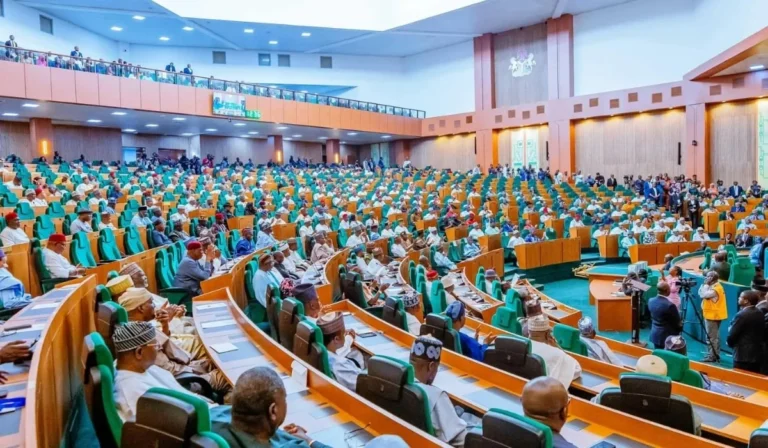
The Nigerian House of Representatives stands on the precipice of a momentous decision expected to reshape the nation’s security landscape, as lawmakers prepare for Thursday’s plenary session where a critical report from the Constitution Review Committee will be considered. This report proposes a significant amendment to the 1999 Constitution, aiming to formally establish State Police Services across Nigeria, a move that has been the subject of intense national debate for decades. The formal laying of this pivotal document before the House on Wednesday by the Deputy Speaker and Chairman of the House of Representatives’ Special Ad-hoc Committee on Constitution Review, Hon. Benjamin Kalu, marks a definitive step towards potentially decentralizing policing powers from the federal government to individual states.
Background to the Enduring Call for Decentralized Policing
The agitation for State Police in Nigeria is not a new phenomenon; it is deeply rooted in the nation’s complex federal structure and persistent security challenges. For years, various stakeholders, including state governors, civil society organizations, and security experts, have advocated for a decentralized policing system, citing the limitations of the current centralized Nigeria Police Force (NPF). Nigeria, a nation of over 200 million people, currently operates a unitary police structure, which many argue is ill-equipped to effectively manage the diverse and localized security threats prevalent across its 36 states and the Federal Capital Territory.
The existing NPF, established under the colonial era and retained post-independence, operates under a single command structure headquartered in Abuja. Critics contend that this model suffers from several fundamental flaws. Firstly, it often lacks adequate local intelligence and understanding of community dynamics, which are crucial for proactive policing and crime prevention. Officers are frequently deployed to states outside their geo-political zones, leading to language barriers, cultural misunderstandings, and a general disconnect from the communities they are meant to serve. Secondly, the centralized command structure often results in slow response times, particularly in remote areas, and a perceived lack of accountability to local populations. Instances of police brutality, corruption, and an inability to effectively tackle escalating insecurity have further eroded public trust in the NPF.
Nigeria currently faces a multi-faceted security crisis encompassing banditry, kidnapping for ransom, a lingering insurgency by Boko Haram and ISWAP in the North-East, farmer-herder clashes across the Middle Belt, cultism, and various forms of communal violence. Statistics paint a grim picture: according to data from the Nigeria Security Tracker, thousands of lives are lost annually to these conflicts, and the economic impact of insecurity, including disruptions to agriculture, trade, and investment, runs into billions of Naira. The current police-to-citizen ratio in Nigeria is estimated to be significantly lower than the United Nations recommended standard of 1:400, further exacerbating the challenge of maintaining law and order. While precise, up-to-date figures are often contested, estimates place the ratio closer to 1:500 or even higher in some regions, highlighting a severe manpower deficit.
Arguments for the Establishment of State Police
Proponents of State Police argue that decentralization would bring policing closer to the people, fostering better community engagement and intelligence gathering. State-controlled police forces would be more accountable to state governments and local communities, leading to improved responsiveness and a tailored approach to specific local security threats. Governors, who are constitutionally recognized as Chief Security Officers of their states but lack direct control over security apparatus, would finally have the operational leverage to implement localized security strategies. This model is common in many federal systems globally, including the United States, Canada, Australia, and Germany, where local, state, and federal police agencies coexist and cooperate, each with distinct but sometimes overlapping jurisdictions. In these systems, state or provincial police forces often handle major crimes and provide support to local departments, while municipal police address local law enforcement needs.
Furthermore, it is argued that State Police could address the problem of inadequate funding and resource allocation. While the NPF is federally funded, the sheer scale of its operations often means resources are stretched thin. With State Police, individual states would be responsible for funding, equipping, and training their forces, potentially leading to better-resourced and motivated personnel, especially in economically robust states. This could also create opportunities for local employment and specialized training tailored to specific regional challenges, such as combating cattle rustling in agrarian communities or piracy in coastal regions.
Concerns and Potential Pitfalls
Despite the compelling arguments for State Police, significant concerns have been raised by various groups. One of the primary fears is the potential for abuse by state governors, who might use state-controlled police forces as political tools to suppress opposition, intimidate rivals, or enforce partisan agendas. Critics point to past instances where state-funded vigilante groups or security outfits have been accused of partisan leanings and human rights abuses. Ensuring robust oversight mechanisms, independent disciplinary procedures, and strict adherence to constitutional provisions would be paramount to mitigate this risk.
Another major concern revolves around funding. While some states are financially buoyant, many Nigerian states struggle with revenue generation and rely heavily on federal allocations. The establishment and sustenance of a professional police force, including salaries, training, equipment, and infrastructure, would entail substantial financial commitments that poorer states might find challenging to meet. This could lead to disparities in policing quality, with wealthier states having well-equipped forces and poorer states having poorly funded, ineffective ones, potentially exacerbating regional inequalities in security provision.
Logistical and operational challenges also loom large. Issues such as the standardization of training, arms procurement, intelligence sharing between state and federal agencies, and jurisdiction over inter-state crimes would need careful consideration. There are fears that a fragmented policing system could lead to a lack of coordination, turf wars, and a breakdown in national cohesion, particularly when dealing with crimes that transcend state boundaries, such as banditry or terrorism. Furthermore, the existing NPF has a national presence, and the transition process, including the potential absorption of existing federal officers into state forces, would be complex and require meticulous planning to avoid disruptions to security operations.
The Legislative Journey and Current Developments
The journey towards this potential constitutional amendment has been a protracted one, reflecting the complexity and sensitivity of the issue. The current legislative push gained significant momentum under the 10th National Assembly, with the Presidency initiating the proposed legislation, signaling a potential shift in federal government’s stance on the matter. The bill, recognized as one of the most significant constitutional amendment bills before the current session, aims to create State Police Services alongside the existing federal policing structure, ensuring a dual system rather than a complete overhaul.
The Constitution Review Committee, under the leadership of Deputy Speaker Hon. Benjamin Kalu, has been at the forefront of this legislative effort. Earlier this week, the committee engaged in extensive deliberations, culminating in the harmonization of its position with the Senate’s version of the proposed State Police legislative framework. This harmonization process is crucial for ensuring a unified approach from both chambers of the National Assembly. On Monday, the committee formally opened its meeting, subsequently moving into an executive session to thoroughly review the Senate’s report and resolve any outstanding issues related to the proposed constitutional amendments. This collaborative effort underscores the seriousness with which both legislative bodies are approaching this critical national issue.
The formal laying of the report before the House on Wednesday signifies the culmination of these committee-level efforts. Following this, Deputy Speaker Kalu reportedly invited members of the Constitution Review Committee to an emergency meeting in his conference room shortly after Wednesday’s plenary. This move is widely interpreted as a strategic step to fine-tune the committee’s position and ensure a cohesive front before the report comes up for debate and possible adoption by the entire House during Thursday’s plenary. Such pre-emptive meetings are common parliamentary practices aimed at solidifying consensus and streamlining the legislative process, particularly for sensitive and far-reaching bills.
Implications for Nigerian Federalism and Governance
The successful passage of this constitutional amendment would represent a fundamental redefinition of Nigerian federalism. It would shift significant power and responsibility to the state governments, particularly in the critical area of security. This aligns with calls for true federalism, where states have greater autonomy and capacity to address their unique challenges. However, it also necessitates a re-evaluation of the financial architecture of the federation, potentially requiring adjustments to revenue allocation formulas to enable states to shoulder their new responsibilities effectively.
The establishment of State Police could also lead to diverse policing models across the country, reflecting the varying needs and capabilities of individual states. While some might argue this could lead to fragmentation, proponents suggest it allows for innovation and localized solutions that a "one-size-fits-all" federal approach cannot provide. The success of such a system would heavily depend on robust constitutional provisions, clear demarcation of powers, effective inter-agency cooperation protocols, and strong judicial oversight to prevent abuses and ensure human rights are protected.
The Road Ahead: Thursday’s Plenary and Beyond
During Thursday’s plenary, lawmakers are expected to engage in a clause-by-clause consideration of the Constitution Review Committee’s recommendations. This detailed scrutiny will involve debates, potential amendments to specific clauses, and ultimately, a vote on the proposed constitutional alteration. Given the national significance and the long-standing nature of the State Police debate, the proceedings are anticipated to be thorough and potentially passionate.
Should the House vote in favor of the amendment, it would still need to pass through several other critical stages. A constitutional amendment requires the approval of a two-thirds majority in both the House of Representatives and the Senate. Following this, it would need to be ratified by a resolution of at least two-thirds of the State Houses of Assembly (i.e., 24 out of 36 states). Only after successfully navigating these intricate legislative hurdles would the proposed amendment be sent to the President for assent, at which point it would officially become part of the 1999 Constitution, as amended.
The outcome of Thursday’s vote will be closely watched by Nigerians across all strata of society. It represents not just a legislative decision, but a potential turning point in the nation’s struggle with insecurity and its ongoing quest for a more effective and responsive governance structure. Further details and reactions are expected to emerge as proceedings unfold on the floor of the House, shaping the discourse on Nigeria’s security future.