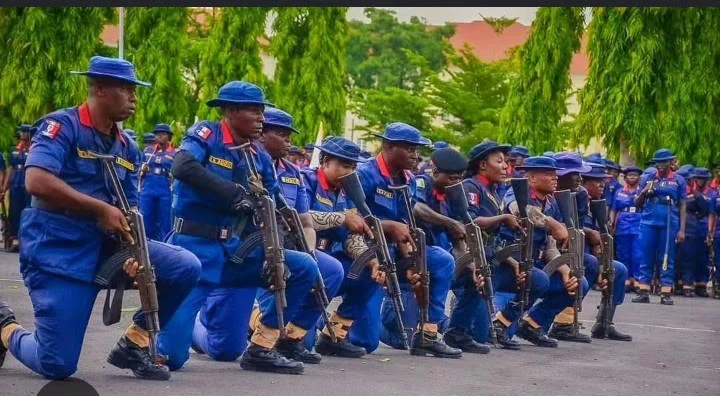
The Nigeria Security and Civil Defence Corps (NSCDC) has escalated its internal disciplinary procedures following the tragic deaths of several suspected illegal miners while in the custody of the agency in Niger State. As of Sunday, the number of personnel detained at the national headquarters in Abuja has risen to 24, as the federal government ramps up efforts to uncover the circumstances surrounding the incident that occurred on September 17, 2026. This development marks a critical juncture in the ongoing efforts by the Ministry of Interior to address allegations of professional misconduct and human rights abuses within the paramilitary organization.
Chronology of the Niger State Incident
The events leading to the current crisis began on September 17, 2026, when an operation against illegal mining activities in Niger State resulted in the detention of several individuals. Shortly after their apprehension, reports emerged regarding the death of the suspects while they were held in the custody of the state command.
Following the initial reports, the federal government moved swiftly to contain the fallout. On Saturday, September 19, 2026, the Minister of Interior, Olubunmi Tunji-Ojo, announced the formation of a 10-member independent investigative committee. This committee was established under the express directive of President Bola Tinubu, who mandated a comprehensive, transparent, and unhindered inquiry to determine the cause of death and identify any institutional failures or individual acts of negligence.
By Sunday, the NSCDC confirmed that the initial count of 21 detained officers had risen to 24, following the identification and suspension of three additional personnel. The entire cadre of officers linked to the operation in the Niger State Command has been relocated to the agency’s national headquarters in Abuja to ensure they remain available for interrogation by both the internal disciplinary board and the Presidential Independent Investigation Committee.
Key Personnel Under Scrutiny
The scope of the investigation is extensive, reaching into the upper echelons of the Niger State Command. Among those currently in detention are high-ranking officials tasked with oversight and operational command. These include the suspended Niger State Commandant, Subaru Siyaka Aniviye; the Head of Intelligence and Investigation, Ajayi Philips; the Head of Operations, John Agrahau Chagwa; and the Officer-in-Charge of Legal, Stephen Tsado. The inclusion of these figures indicates that the investigation is looking not only at the frontline officers who conducted the arrests but also at the administrative and command-level decisions that preceded the incident.
In a move to signal the agency’s commitment to mourning the loss of life, the Commandant General of the NSCDC, Ahmed Audi, issued an order for all flags across all formations nationwide to be flown at half-mast for three days, commencing on Sunday.
Official Statements and Internal Accountability
The NSCDC leadership has adopted a posture of strict accountability. Spokesman for the Corps, Assistant Commandant of Corps Babawale Afolabi, emphasized that the decision to bring the officers to the national headquarters was a tactical measure to facilitate "rigorous interrogation and administrative disciplinary action."
"As a Corps built on integrity, professionalism, discipline, and absolute respect for the rule of law, we do not condone unprofessional conduct, high-handedness, or any action that undermines the fundamental rights of citizens or the sacred trust reposed in us," Commandant General Audi stated during a press briefing. He underscored that the agency is cooperating fully with the Presidential committee, noting that the suspects will be made available for further investigation and potential prosecution should the evidence warrant it.
The Minister of Interior, Olubunmi Tunji-Ojo, has maintained a firm stance, insisting that the suspension of all officers allegedly involved in the operation is a necessary prerequisite for a fair and objective investigation. The ministry has made it clear that no individual, regardless of rank, will be shielded if found culpable in the deaths of the detainees.
Contextualizing Illegal Mining in Niger State
The incident in Niger State occurs against a backdrop of increasing government efforts to regulate the mining sector. Niger State, rich in solid minerals such as gold, lead, and zinc, has become a hotbed for unregulated mining activities. These activities have frequently brought artisanal miners into conflict with federal security agencies tasked with enforcing mining laws and protecting natural resources.
Historically, the enforcement of mining regulations in rural areas of Niger State has been fraught with challenges. The terrain is often difficult, and the proliferation of informal mining pits creates significant environmental and security hazards. However, the use of force in detaining suspects has become a subject of intense debate. Civil society organizations have long called for a shift from a purely securitized approach to one that incorporates formalization and environmental oversight.
Broader Implications and Institutional Reform
The deaths of the detainees have triggered a wider conversation regarding the conduct of paramilitary forces during law enforcement operations in Nigeria. The formation of an independent panel by the federal government is being viewed by legal experts as a litmus test for the current administration’s commitment to upholding human rights.
For the NSCDC, the incident represents a significant reputational challenge. As an agency responsible for protecting critical national infrastructure and maintaining civil order, any allegation of state-sanctioned violence against citizens undermines its primary mandate. The rigorous nature of the ongoing interrogation at the Abuja headquarters suggests that the Corps is attempting to preemptively address potential systemic rot and prevent a loss of public confidence.
Furthermore, the legal implications for the 24 detained officers are severe. If the investigation concludes that there was a breach of standard operating procedures, these individuals could face charges ranging from criminal negligence to culpable homicide. The presence of the Head of Legal among the detainees suggests that the inquiry is also examining whether the detainees were denied their constitutional rights to due process and access to counsel.
Analyzing the Path Forward
The Presidential Independent Investigation Committee faces the difficult task of reconstructing the events of September 17. The committee is expected to examine autopsy reports, incident logs, and testimony from witnesses to determine if the deaths resulted from natural causes, physical abuse, or a failure to provide adequate care while in custody.
The committee’s report will likely inform future policy directives concerning how the NSCDC and other security agencies interact with illegal mining communities. There is a growing expectation that the government may mandate new, stricter training protocols for field officers, emphasizing de-escalation tactics and the humane treatment of detainees.
As the nation watches the progress of this investigation, the three-day mourning period serves as a solemn reminder of the gravity of the situation. For the families of the deceased, the investigative process represents a search for justice, while for the Nigerian security apparatus, it serves as an opportunity to reinforce the values of professional conduct and adherence to the rule of law.
The coming weeks will be pivotal. With 24 officers now in custody and a high-level committee conducting its work, the findings will likely serve as a benchmark for how the Nigerian state holds its own security agencies accountable in the future. The ability of the government to deliver a transparent, unbiased, and prompt resolution will be the ultimate measure of the success of this investigation.