The narrative of cancer is often framed as a binary struggle between life and death, where the ultimate victory is the medical declaration of remission. However, for a growing population of survivors in India, the end of chemotherapy and radiation marks the beginning of a different, more protracted conflict: the fight for economic survival and social reintegration. As diagnostic capabilities and treatment protocols improve, India is witnessing a surge in cancer survivorship, yet the nation’s socio-economic infrastructure remains ill-equipped to support those who have beaten the disease. Survivors frequently find themselves trapped in a cycle of "financial toxicity," where the cost of staying alive leads to debt, and the stigma of the diagnosis leads to systemic exclusion from the workforce.
The experience of Deeba Fariyal, a 27-year-old lawyer based in Delhi, serves as a poignant illustration of this crisis. Six years ago, Fariyal was diagnosed with synovial sarcoma, an exceptionally rare and aggressive soft-tissue cancer that predominantly strikes young adults. Since her initial diagnosis, she has endured six relapses. In the world of oncology, synovial sarcoma is notorious for its persistence and limited treatment pathways. For Fariyal, the medical ordeal has been harrowing; two years ago, the disease left her temporarily paralyzed. While she has since regained her mobility, the physical toll remains evident in the tumors currently residing in her lungs and spine.
However, Fariyal maintains that the physical pain and the respiratory distress exacerbated by Delhi’s notorious air pollution are secondary to the crushing weight of financial instability. In India’s bifurcated healthcare system, patients are often forced to choose between the overcrowded, under-resourced public sector and the prohibitively expensive private sector. "Everything is so expensive. Treatment at a private hospital in India can easily cost between $20,000 and $30,000," Fariyal noted. For a young professional at the start of her career, such figures are astronomical. Even the maintenance of her condition is a financial drain; the targeted therapy she requires costs over $120 per dose—a sum that exceeds the monthly income of many Indian households.
The alternative to private care is the government-run hospital system, which, while offering free or subsidized treatment, is crippled by its own success in providing access. The patient-to-doctor ratio in Indian public oncology wards often leads to waitlists that can span months. "If you’re diagnosed with Stage I cancer, by the time your appointment comes, you could be in Stage IV," Fariyal warned. This "wait-time mortality" forces those with any means—or the ability to borrow—into the private sector, where they are then vulnerable to job loss due to the time-intensive nature of treatment.

The Statistical Reality of Post-Cancer Unemployment
The struggle to maintain a livelihood is not merely anecdotal; it is supported by decades of global research that India is only now beginning to reckon with. A landmark 2009 study published in the Journal of the American Medical Association (JAMA) revealed that cancer survivors were 1.37 times more likely to be unemployed than their healthy counterparts. Specifically, the study found a 33.8% unemployment rate among survivors, compared to 15.2% in the general population.
In the Indian context, the scale of this issue is expanding. According to the Indian Council of Medical Research (ICMR), the country records more than 1.4 million new cancer cases annually, with projections suggesting a 12.8% increase by 2025. As of 2017-2018, India was estimated to have approximately 2.1 million cancer survivors. Globally, this number exceeds 32 million. While these figures represent a triumph of medical science, they also represent a massive demographic of people who are often deemed "high risk" or "unproductive" by potential employers.
Workplace Hostility and the Myth of Productivity
For 36-year-old Richa Rana from Saharanpur, Uttar Pradesh, the battle with breast cancer in 2022 was followed by a shocking betrayal by her employer. Working in the private sector, Rana expected a degree of professional support. Instead, she was placed on six months of unpaid leave. Upon her initial recovery, she returned to her desk and proved her capability, only to face a relapse. Following her second round of successful treatment, the response from her Human Resources department was cold: the company wished to "separate" from her.
Rana’s case highlights a common corporate strategy in India: using medical leave as a pretext for termination, even when the leave is unpaid and the employee’s performance remains high. "They admitted they had no issue with my work. I lost my job because I had taken those two medical leaves," Rana said. The subsequent job hunt revealed a deeper, more systemic bias. Despite clearing multiple interviews, the moment she disclosed her status as a survivor, the offers were rescinded. Employers frequently operate under the assumption that survivors will require frequent time off or will possess lower cognitive and physical stamina—a phenomenon often referred to as "chemobrain" in clinical settings, though it rarely impacts long-term professional competency.
Rana eventually secured employment only by omitting her medical history entirely. "I only told my manager after I’d been in the role for more than six months and had proved myself," she explained. This forced secrecy is a common survival tactic, yet it prevents survivors from accessing the very accommodations—such as flexible hours or remote work—that might help them manage long-term recovery.
Macroeconomic Implications and the Informal Sector
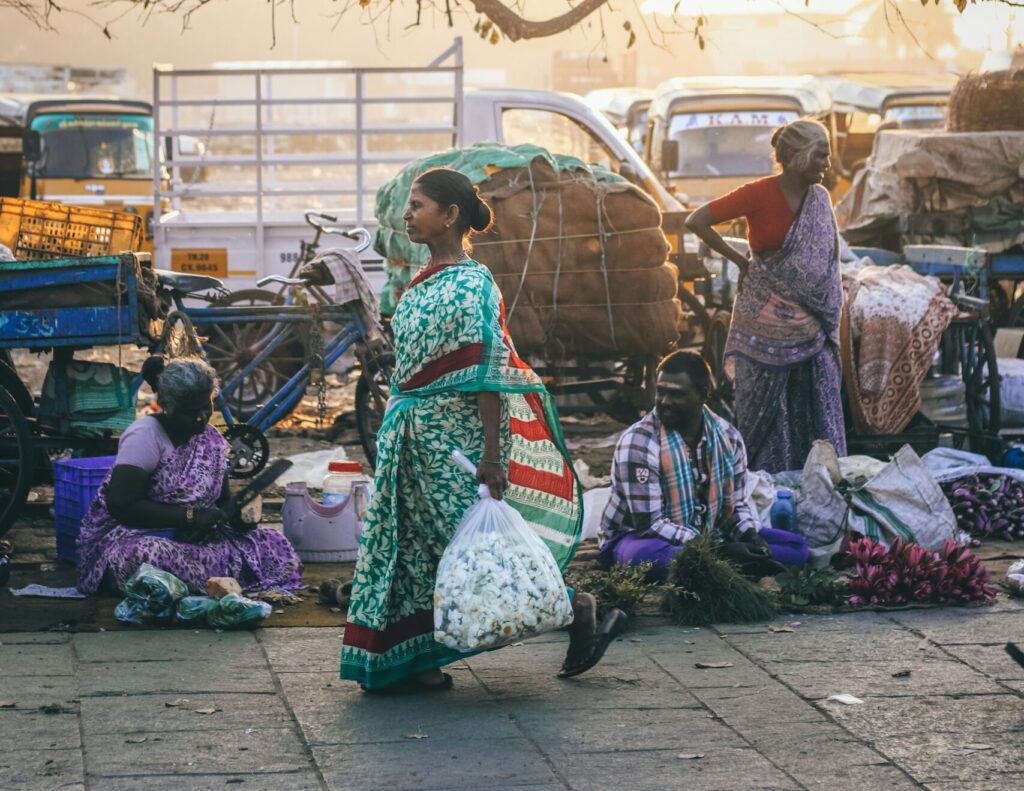
The vulnerability of Indian cancer survivors is exacerbated by the unique structure of the country’s labor market. Professor Arun Kumar, a prominent labor economist, points out that nearly 94% of India’s workforce is employed in the informal sector. These workers lack the most basic social protections, including paid sick leave, health insurance, or any form of job security. For an informal laborer, a cancer diagnosis is almost invariably a sentence of immediate poverty.
Even within the 6% of the workforce in the formal sector, the protections are thin. "The country’s high unemployment allows companies to replace workers who develop serious illnesses with little consequence," Kumar told Health Policy Watch. He further argued that the way India measures economic progress is flawed. While increased spending on cancer treatments, drugs, and hospitalizations adds to the Gross Domestic Product (GDP), Kumar classifies this as "negative growth." It is an economic activity born of suffering and illness rather than a reflection of improved societal well-being.
The lack of a robust social safety net means that the financial burden of cancer often falls on the extended family, leading to multi-generational debt. In India, "catastrophic health expenditure"—defined as health spending that exceeds 40% of a household’s non-subsistence income—is one of the leading causes of families falling below the poverty line. Cancer is the primary driver of this trend.
The Legal Void and the Need for Policy Reform
Urvashi Prasad, a public policy specialist and a Stage IV cancer survivor herself, argues that India is currently in a legislative vacuum regarding the rights of the chronically ill. While the Rights of Persons with Disabilities Act (2016) provides some protection, it does not explicitly cover cancer survivors unless the disease results in a permanent, specified disability.
Prasad points to the United Kingdom’s Equality Act 2010 as a potential model. Under UK law, cancer is recognized as a disability from the point of diagnosis, making it illegal for employers to discriminate against an individual based on their medical history. However, Prasad is quick to note that legislation is only the first step. "Even where legal protections exist, implementation remains weak," she said, citing India’s maternity benefit laws, which are frequently bypassed by employers during the hiring process.
For a cancer survivor, the prospect of pursuing a legal battle against a former employer is often impossible. Litigation in India is famously slow and expensive, and a survivor who is already struggling with medical bills and physical fatigue rarely has the resources to fight a multi-year court case for wrongful termination.
A Call for Institutional and Cultural Change
The resolution to this crisis requires a multi-pronged approach involving government intervention, corporate sensitization, and a shift in public perception.
- Legal Protections: There is an urgent need for an amendment to labor laws that explicitly prohibits discrimination based on a history of life-threatening illness. This should include mandatory "return-to-work" programs and protections against termination during treatment phases.
- Social Security for the Informal Sector: Expanding health insurance schemes like Ayushman Bharat to cover a wider range of rare cancers and providing a basic income floor for workers undergoing long-term treatment is essential.
- Corporate Responsibility: Companies must move beyond viewing medical leave as a liability. Implementing flexible work arrangements and sensitivity training for HR departments can help retain talent and foster a more inclusive workplace.
- Public Awareness: Reducing the stigma associated with cancer is crucial. Survivors are often viewed through a lens of fragility or impending mortality, ignoring the fact that many remain highly skilled and motivated professionals.
As India continues to modernize its healthcare infrastructure, it must also modernize its social and legal frameworks. The victory over cancer is hollow if the survivor is left with a life defined by unemployment, debt, and discrimination. Ensuring that survivors like Deeba Fariyal and Richa Rana can return to their careers is not just a matter of social justice; it is an economic necessity for a country that cannot afford to discard the potential of millions of its citizens. The true measure of a society’s progress is not just how it treats the sick, but how it welcomes back those who have recovered.