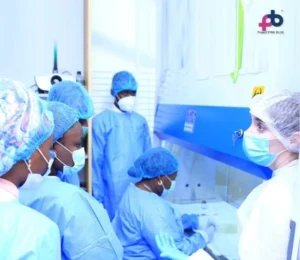
Prime Minister Dr. Kamil Idris chaired a pivotal expanded meeting in Khartoum on Tuesday to deliberate on the strategic establishment and development of specialized healing centers across Sudan, a move signaling a major shift in the government’s approach to post-conflict recovery and public health restoration. The high-level assembly brought together a consortium of the nation’s top administrative and medical leadership, including the Minister of Interior, the Minister of Health, the Wali (Governor) of Khartoum State, the Humanitarian Aid Commissioner-General, and the Prime Minister’s Adviser, Nizar Abdullah Mohamed. This meeting marks a critical juncture in the transitional government’s efforts to address the catastrophic collapse of the national health infrastructure and to provide specialized medical and psychological care to a population ravaged by months of systemic instability.
During the session, the Minister of Health, Dr. Haitham Mohamed Ibrahim, delivered a comprehensive presentation detailing a multi-phase plan for the rollout of these healing centers. The plan is designed not merely as a temporary emergency measure but as a permanent fixture of the national healthcare architecture, aiming to bridge the gap between primary emergency care and long-term rehabilitative services. The Prime Minister and the attending council commended the progress made thus far, while simultaneously emphasizing that the success of the initiative hinges on seamless coordination between security, health, and humanitarian sectors.
The Strategic Context of the Healing Centers Initiative
The initiative to establish "healing centers" comes at a time when Sudan’s healthcare system is facing an unprecedented existential crisis. Since the outbreak of large-scale conflict in April 2023, nearly 70% to 80% of hospitals in conflict-affected areas, particularly in Khartoum and the Darfur regions, have been rendered non-functional. The destruction of medical warehouses, the targeted looting of pharmacies, and the flight of specialized medical personnel have left millions without access to basic surgical or maternal care.
In this context, the "healing centers" proposed by Dr. Haitham Mohamed Ibrahim are envisioned as integrated hubs. Unlike traditional primary clinics, these centers are designed to handle complex trauma—both physical and psychological. They are expected to serve as the primary points of contact for war-wounded civilians, victims of gender-based violence, and those suffering from the long-term effects of malnutrition and infectious diseases such as cholera and malaria, which have seen a resurgence during the period of instability.
The decision to hold this meeting in Khartoum is also symbolic. As the administrative heart of the country and a primary theater of recent operations, the restoration of specialized services in the capital is seen as a prerequisite for the return of displaced persons and the normalization of civil life.
Detailed Chronology of the Healthcare Crisis and Response
The development of the current comprehensive plan is the result of months of inter-departmental assessments. To understand the gravity of the Tuesday meeting, one must look at the timeline of the healthcare decline and the government’s subsequent pivot toward specialized healing centers:
- April – June 2023: The initial phase of the conflict saw the immediate shutdown of major tertiary hospitals in Khartoum. The Ministry of Health was forced to operate from temporary headquarters in Port Sudan, focusing primarily on emergency trauma kits and basic aid.
- Late 2023: The World Health Organization (WHO) and the Sudanese Ministry of Health reported a sharp rise in "silent deaths"—fatalities resulting from the inability to manage chronic conditions like diabetes, kidney failure, and hypertension due to the destruction of specialized clinics.
- Early 2024: The Prime Minister’s office commissioned a task force to evaluate the feasibility of "protected medical zones." This led to the conceptualization of healing centers that could operate with high-level security and independent supply chains.
- August 2024: Preliminary pilot centers were tested in safer states, such as River Nile and Red Sea states, focusing on physical rehabilitation for amputees and trauma counseling.
- October 2024: The current expanded meeting chaired by Dr. Kamil Idris represents the finalization of the "National Expansion Phase," which aims to re-enter Khartoum and other volatile states with robust, well-funded medical facilities.
Supporting Data: The Scale of the Challenge
The data presented during the meeting underscored the magnitude of the task facing the Ministry of Health and the Wali of Khartoum. According to recent humanitarian reports:
- Displacement Impact: Over 10 million people have been displaced internally and externally, creating a massive "mobile patient" population that requires decentralized care.
- Infrastructure Loss: Approximately 65% of the pre-war medical equipment in Khartoum State has been destroyed or stolen, necessitating a total "ground-up" rebuild of the healing centers.
- Specialized Needs: It is estimated that over 25,000 individuals require specialized orthopedic and prosthetic services due to war-related injuries, a demand that existing general hospitals cannot meet.
- Mental Health Crisis: Preliminary surveys indicate that 40% of the population in conflict zones exhibits symptoms of severe Post-Traumatic Stress Disorder (PTSD), making the "healing" aspect of these centers (psychological support) as vital as the "medical" aspect.
The plan presented by Dr. Haitham Mohamed Ibrahim allocates specific budgets for the importation of advanced diagnostic machinery and the recruitment of international medical consultants to train local staff in trauma management.
Inter-Agency Coordination and Official Responses
A central theme of the meeting was the "necessity for continued coordination." The presence of the Minister of Interior and the Wali of Khartoum State highlights the security and logistical dimensions of the plan. For a healing center to function in the current climate, it must be protected from looting and its staff must be guaranteed safe passage.
The Minister of Interior reportedly pledged the deployment of specialized security units to guard the perimeter of these centers, categorizing them as "sovereign protected zones." This is intended to reassure both the medical staff and the patients that the facilities are neutral ground, dedicated solely to humanitarian purposes.
The Wali of Khartoum State, in his contribution to the meeting, focused on the urban integration of these centers. He highlighted the need to utilize existing but damaged government buildings, converting them into modern medical hubs. This "adaptive reuse" strategy is expected to save time and resources compared to building entirely new structures.
The Humanitarian Aid Commissioner-General emphasized the role of international partners. While the government is leading the initiative, the Commissioner-General noted that the procurement of specialized medicines and the funding for the centers’ long-term operations would require intensified collaboration with organizations such as the Red Cross, Médecins Sans Frontières (MSF), and various UN agencies. The Commissioner-General stressed that the "healing centers" would serve as the primary distribution points for international medical aid, ensuring that supplies reach the intended beneficiaries without being diverted.
Analysis of Implications and Future Outlook
The establishment of these healing centers carries profound implications for Sudan’s socio-political landscape. From a factual standpoint, the initiative represents a transition from "emergency response" to "institutional recovery."
1. Restoring Public Trust:
By providing tangible services like specialized surgeries and mental health support, the government under Dr. Kamil Idris aims to rebuild the social contract. In many regions, the absence of state services has led to a reliance on informal or unregulated care. The healing centers serve as a visible manifestation of the state’s return to its core responsibilities.
2. Economic Recovery:
A healthy workforce is essential for the eventual reconstruction of the economy. By addressing the long-term health needs of the population, particularly the youth who have been disproportionately affected by the conflict, the government is investing in the country’s future human capital.
3. Strategic Decentralization:
The plan to develop centers across "the capital and the states" is an attempt to rectify the historical centralisation of healthcare in Khartoum. By establishing high-quality centers in the peripheral states, the Ministry of Health aims to reduce the burden on Khartoum’s infrastructure and ensure equitable access to care for rural and displaced populations.
4. Challenges to Implementation:
Despite the optimism expressed in the meeting, several hurdles remain. The primary challenge is the volatile security situation. If the conflict flares up in areas slated for development, the construction and staffing of these centers could be delayed indefinitely. Furthermore, the global economic climate and the freezing of certain international aid packages to Sudan present a significant funding gap that the Humanitarian Aid Commission will need to navigate carefully.
Conclusion and Next Steps
The meeting concluded with a directive from Prime Minister Dr. Kamil Idris to form a technical follow-up committee. This committee, led by the Prime Minister’s Adviser Nizar Abdullah Mohamed, will be tasked with monitoring the "on-the-ground" implementation of the plan and providing bi-weekly progress reports to the cabinet.
The Prime Minister’s closing remarks emphasized that the "comprehensive plan" is a living document, subject to adjustments based on the evolving security and health needs of the Sudanese people. The immediate focus will now shift to the procurement phase and the securing of site locations within the Khartoum metropolitan area.
As Sudan moves forward, the success of these healing centers will likely be viewed as a benchmark for the government’s ability to manage the complexities of a multi-faceted national crisis. For the millions of Sudanese citizens currently lacking adequate medical care, the implementation of this plan represents a glimmer of hope for a more stable and healthier future. The international community will undoubtedly be watching closely to see if the coordination praised during Tuesday’s meeting translates into a functional reality that can save lives and mend the fabric of a nation in distress.